
hange Sperm and Later Lay Cocoons
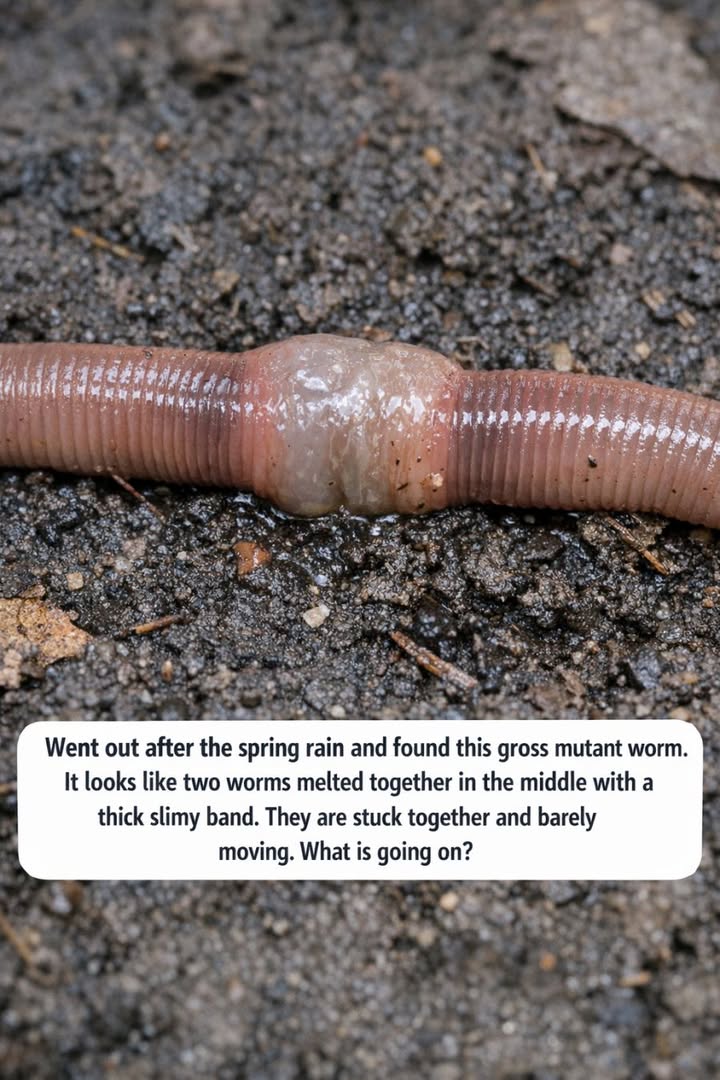
After two earthworms have successfully mated, they each store the sperm received from the other in special sacs called receptacles. Later, as the clitellum secretes a mucus ring, the worm backs out of it, and the ring passes over the reproductive organs, picking up both the worm’s eggs and the stored sperm.
Once fully passed, the mucus ring slides off the worm’s head and closes to form a cocoon, within which fertilization occurs. These cocoons are then deposited in the soil, where the eggs will develop into juvenile worms. This efficient reproductive strategy ensures the continuation of the earthworm population.
7. Is This Dangerous or a Sign of Pollution? What It Actually Means
The sight of mating earthworms may raise concerns about environmental health, but it is a completely natural and healthy sign. The presence of earthworms is generally an indicator of good soil quality, as they thrive in environments rich in organic matter and free from excessive pollutants.
Rather than indicating danger or pollution, the mating of earthworms signifies a robust ecosystem. It suggests that the soil is fertile and capable of supporting life, which is beneficial for gardens and agricultural lands alike.
