
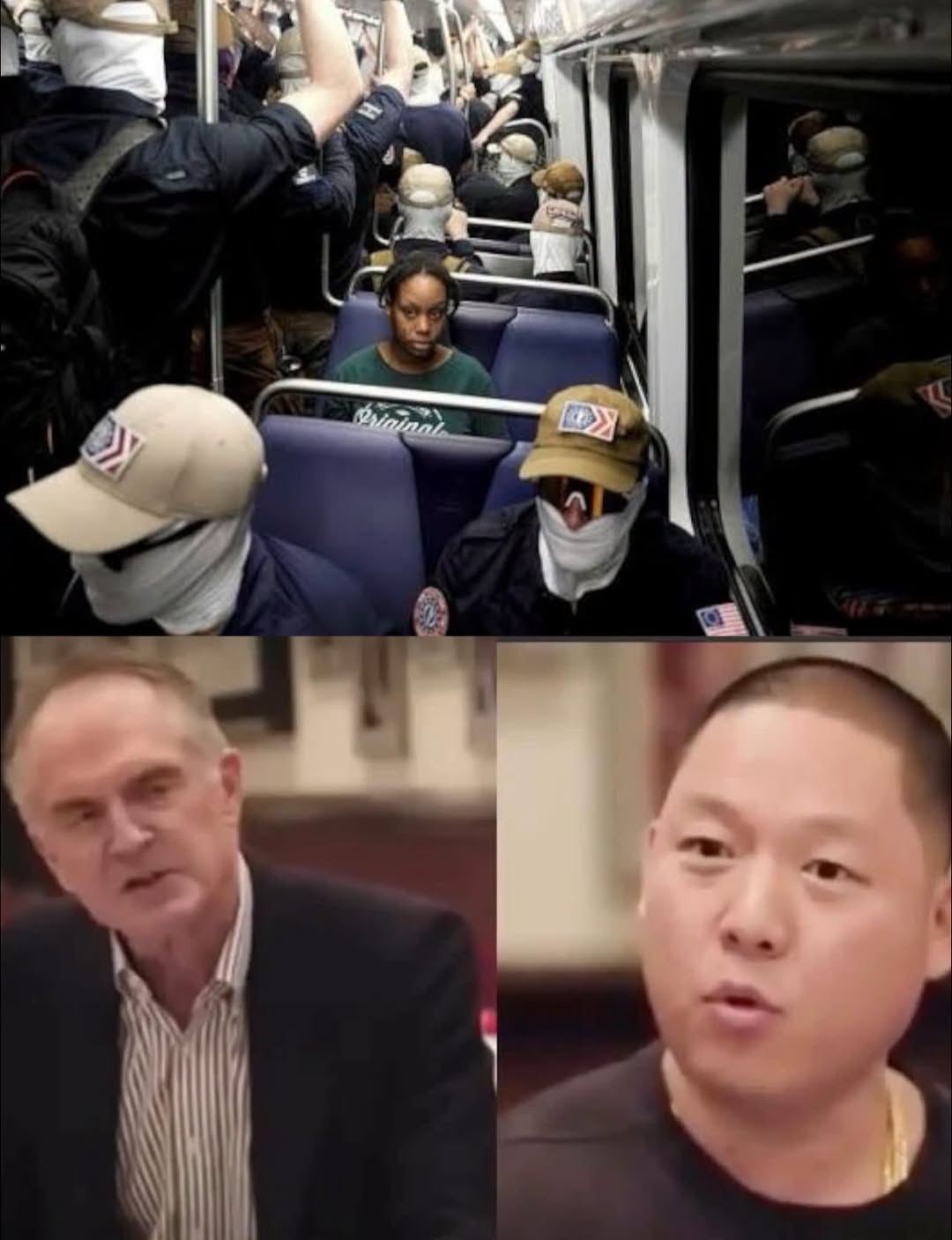
On the Fourth of July, while Americans celebrated Independence Day with fireworks, parades, and family gatherings, another march captured the nation’s attention. Hundreds of masked men walked through the streets of Washington, D.C., wearing matching khaki clothing, white face coverings, sunglasses, and beige caps. They carried both American flags and Confederate flags, presenting themselves as defenders of a version of America they claimed was being taken away.
For many who watched the footage, the images were shocking. The masks, uniforms, and coordinated march seemed to embody the face of modern extremism. Yet focusing only on that spectacle risks missing a far more troubling reality.
The greatest threat posed by white supremacy has never been the people willing to march openly in uniform. Throughout history, its most lasting influence has often come from those who never needed a disguise at all.
Hate Doesn’t Always Look Like Hate
Popular culture often teaches us to recognize extremists by obvious symbols—hoods, masks, swastikas, Confederate flags, or angry crowds. These images make hatred easy to identify.
Reality is rarely that simple.
Many of the ideas that have shaped racial inequality in America have not been promoted through shouting crowds. Instead, they have been expressed calmly in television interviews, political speeches, academic essays, corporate boardrooms, and legislative chambers.
History shows that discrimination often succeeds not because it appears extreme, but because it presents itself as reasonable.
Sometimes the most dangerous words are spoken in the quietest voice.
A Conversation That Revealed More Than a Protest
Years before today’s headlines, chef and television host Eddie Huang sat down with Jared Taylor, founder of the white nationalist publication American Renaissance, during an episode of Huang’s World.
Rather than staging a confrontation, Huang allowed Taylor to explain his beliefs in his own words.
Taylor calmly argued that immigration should be reduced because he believed it would slow what he described as the “dispossession” of white Americans. He expressed concerns about demographic changes and framed his views as matters of preservation rather than prejudice.
There were no raised voices.
No dramatic outbursts.
No obvious display of anger.
That calm delivery made the conversation more unsettling than if it had been filled with shouting.
The discussion illustrated how exclusionary ideas can be presented as rational policy debates instead of openly acknowledged prejudice.
The Difference Between Appreciating Culture and Accepting People
One of the most striking aspects of the interview was its setting.
The conversation took place over Asian food.
The irony was difficult to ignore.
Modern white nationalist movements have often embraced elements of cultures they simultaneously argue should remain outside the national identity. Food, fashion, music, sports, and entertainment are celebrated, while the communities that created them continue to face suspicion or rejection.
This contradiction has appeared throughout history.
Societies have frequently adopted cultural traditions while resisting equal acceptance of the people behind those traditions.
The issue has rarely been culture itself.
The issue has been equality.
Respectability Can Become a Disguise
Extremist beliefs do not always arrive wrapped in inflammatory language.
Sometimes they wear suits.
Sometimes they appear polite.
Sometimes they speak softly, thank the waiter, compliment the meal, and discuss controversial ideas as though they were ordinary administrative decisions.
Respectability has long served as one of prejudice’s most effective disguises.
Throughout American history, segregation, voter suppression, exclusionary immigration laws, and discriminatory housing policies were often defended not with emotional outrage but with carefully constructed legal arguments.
The language changed.
The consequences often did not.
Why Spectacle Can Become a Distraction
The recent masked march drew widespread condemnation because it was visually dramatic.
Uniforms.
Flags.
Face coverings.
Organized chanting.
These images are unmistakable.
But focusing solely on public demonstrations can create a dangerous illusion—that extremism only exists when it announces itself so clearly.
In reality, ideas often spread long before they march.
They move through conversations, social media, political rhetoric, policy proposals, and institutions. By the time they become visible in the streets, they may already have influenced public opinion for years.
The spectacle attracts cameras.
The quieter work shapes societies.
The Language of Exclusion Evolves
Modern debates about immigration, national identity, citizenship, and demographic change are often presented in technical or bureaucratic terms.
Not every discussion about these issues is rooted in prejudice, and democratic societies must be able to debate public policy openly.
However, history reminds us that exclusionary ideologies frequently adapt their language to fit the times. Arguments once framed in openly racial terms may later appear as discussions about “preserving culture,” “protecting heritage,” or “maintaining national identity.”
The vocabulary changes.
The underlying assumptions sometimes remain remarkably familiar.
Recognizing this distinction requires careful attention to both language and intent.
History Repeats Familiar Patterns
America has repeatedly confronted moments when equality expanded, only to face organized resistance.
After Reconstruction, new laws and institutions emerged that limited the rights of formerly enslaved people while maintaining an appearance of legal order.
During the Civil Rights Movement, resistance often came not only from violent extremists but also from officials who defended discrimination using procedural language and legal arguments.
The lesson is not that history repeats itself exactly.
It is that ideas often survive by adapting.
They become less explicit.
More polished.
More politically acceptable.
The Comfort of Recognizable Villains
There is something psychologically reassuring about seeing extremists dressed alike in public.
Visible symbols allow society to believe the threat is easy to identify.
We know who they are.
We know where they stand.
We know what they represent.
But history suggests that intolerance rarely remains confined to the people willing to display it openly.
It also survives through everyday assumptions, institutional decisions, coded language, and social acceptance.
That is far more difficult to confront.
Looking Beyond the Mask
The images from Washington will likely remain part of the public memory of this moment.
Yet future historians may spend less time discussing the masks than examining the ideas behind them.
Masks can hide identities.
They cannot create ideologies.
The more important question is not why some extremists choose to cover their faces.
It is why certain beliefs continue to find audiences even when presented politely, respectfully, and without obvious hostility.
Democracies depend not only on rejecting hatred when it marches through the streets but also on recognizing it when it appears in quieter forms.
Because history has repeatedly shown that prejudice does not always announce itself with slogans and uniforms.
Sometimes it arrives with perfect manners.
Sometimes it smiles.
And sometimes, that is precisely what makes it most dangerous.
