
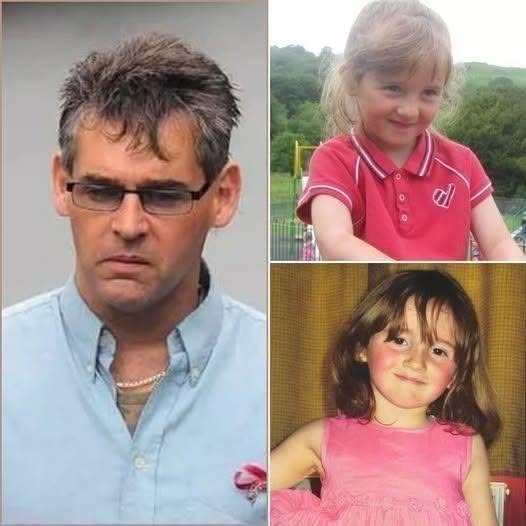
The long shadow of grief.
The endurance of parental love.
And the difficult, ongoing process of learning how to live in a world that has irrevocably changed.
The Silence That Follows Shock
In the immediate aftermath of a national tragedy, the world reacts loudly.
News spreads quickly.
Discover more
Cooking & Recipes
Language Resources
parental
Communities gather.
Messages of support appear across social media and public spaces.
But when the cameras move on and the headlines change, something quieter begins for the family at the center of it all.
Silence.
Not peace.
Not closure.
But a different kind of silence—one filled with absence.
For the parents of April Jones, life did not return to anything resembling normality after the devastating events that reshaped their lives. Instead, they entered a reality defined by what was missing.
Discover more
Social Sciences
child
Family Law
A child’s voice that no longer filled the home.
A routine that could no longer be maintained.
A future that had to be reimagined in ways no parent is ever prepared for.
Grief, in this form, is not an event.
It is a condition.
Living With Loss Instead of Moving Past It
One of the most persistent misunderstandings about grief is the idea that time “heals” in a complete or final way.
In reality, time does something more complicated.
It allows people to adapt, but not to erase.
For parents who lose a child, grief does not diminish—it changes shape.
It becomes quieter on some days, louder on others.
It integrates into daily life in unexpected ways:
in empty spaces at the dinner table
in birthdays that feel incomp…
