
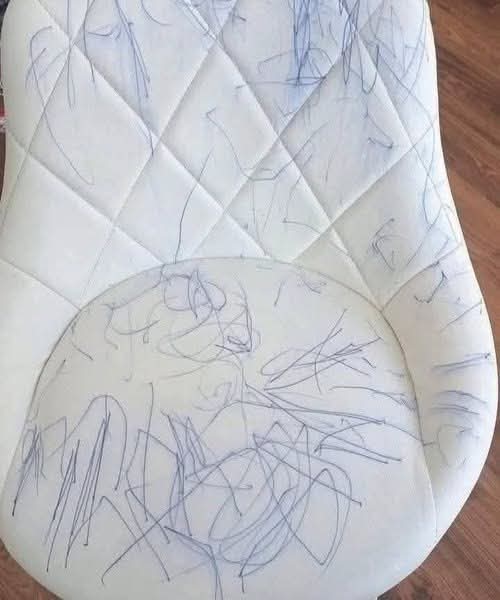
My Nephew Did This to My Chair — What Should I Do?
Finding a favorite chair damaged after a child has been using it can be incredibly frustrating.
Your first reaction might be anger. You may immediately wonder why the child touched it in the first place, especially if you had already asked him not to.
But before turning a damaged chair into a major family conflict, there is a better approach: find out exactly what happened, understand why it happened, and then decide how to respond.
A broken or damaged piece of furniture can often be repaired or replaced. The way an adult handles the situation, however, can have a much more lasting effect on a child.
First, Find Out What Actually Happened
Before confronting your nephew, take a close look at the chair.
Try to determine exactly what has been damaged.
Is it scratched? Stained? Broken? Torn? Is a piece missing? Did a leg come loose? Is the damage something that could have happened accidentally?
There is a significant difference between a child accidentally damaging something while playing and deliberately destroying it.
You shouldn’t make that judgment before hearing his side of the story.
Sometimes children don’t understand how fragile or valuable certain objects are. What seems obvious to an adult may not be obvious to a young child.
Ask Him Calmly
Instead of immediately shouting, ask a simple question:
“Can you tell me what happened to the chair?”
Then listen.
Children can become frightened when they think an adult is about to punish them, and fear can sometimes make it harder for them to explain what happened honestly.
A calm conversation gives the child an opportunity to tell you whether the damage was accidental, caused while playing, or something he did intentionally.
You may discover that the situation was completely different from what you initially assumed.
Don’t Automatically Assume He Meant to Damage It
Children often interact with furniture differently from adults.
A chair might look like something to climb on, stand on, rock in, or use during a game.
A child may not understand that putting too much weight on it can break it.
That doesn’t mean the behavior should simply be ignored.
It means the lesson should focus on why the behavior was unsafe or inappropriate rather than immediately labeling the child as bad.
For example, you can explain that chairs are designed for sitting and that climbing or jumping on them can damage the furniture and potentially cause a serious injury.
What If He Did It on Purpose?
That’s a different situation.
If your nephew deliberately damaged the chair after being told not to touch it, then he should understand that actions have consequences.
But the consequence doesn’t need to be extreme.
Depending on his age, he might help clean the chair, assist with a simple repair, or take another appropriate step to make amends.
The objective isn’t revenge.
The objective is to teach responsibility.
A child should learn that other people’s belongings deserve respect and that deliberately damaging something creates consequences.
Talk to His Parents
Because this is your nephew, his parents should generally be involved if the damage is significant or the behavior was intentional.
Try to describe what happened objectively rather than making accusations.
Instead of saying:
“Your son destroyed my chair.”
you could say:
“He was playing on the chair and it was damaged. I wanted to talk to you about what happened.”
That difference may seem small, but it can completely change the tone of the conversation.
You’re describing the situation rather than attacking the child or his parents.
His parents can then decide how they want to address the behavior with him.
Don’t Throw the Chair Away Too Quickly
Before deciding that the chair is ruined, inspect the damage carefully.
Continue reading on the next page
