
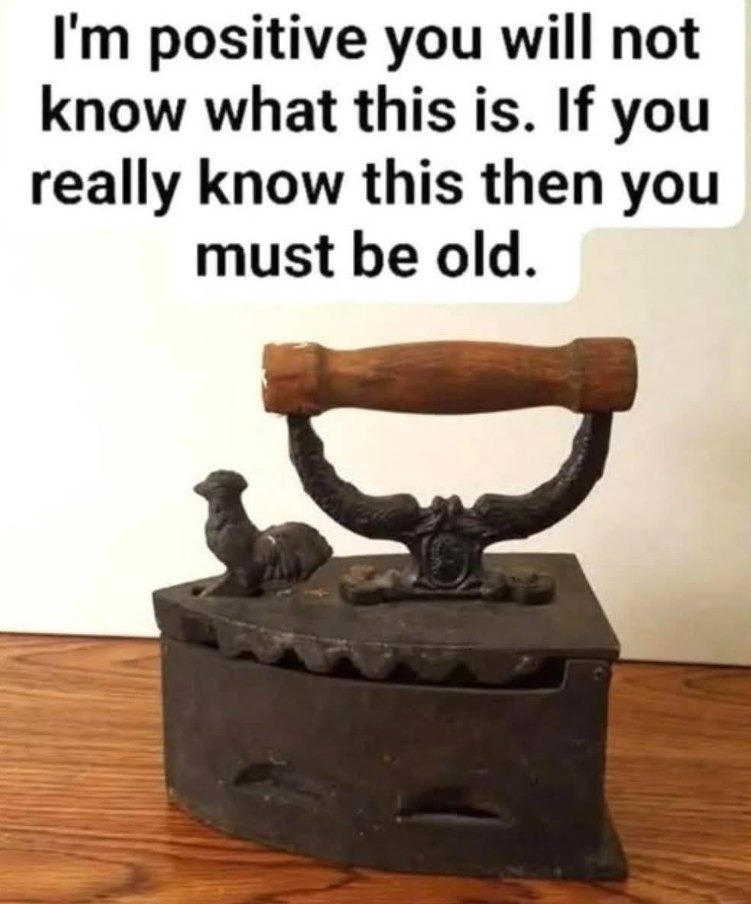
- Cast-Iron Body with Internal Cavity
The iron wasn’t solid—it was a hollow box designed to hold hot charcoal. This allowed heat to radiate from within, keeping the soleplate hot far longer than solid irons. - Hinged Lid with Decorative Latch
Often shaped like a rooster, bird, or floral motif, the latch wasn’t just pretty—it was functional. The lid could be opened to add fresh coals or remove ash without setting the whole iron down.
🐓 Fun fact: The rooster—a symbol of vigilance and domestic order—was a popular motif, reflecting the iron’s role in maintaining a tidy household. - Wooden Handle
Made from beech, oak, or other dense wood, the handle stayed cool because wood is a poor conductor of heat. This allowed users to iron for extended periods without burning their hands. - Air Vents & Scalloped Edges
Slots along the sides and decorative cutouts weren’t just ornamental—they allowed oxygen to flow, keeping the charcoal glowing steadily rather than smoldering out. - Heavy, Smooth Soleplate
🔥 How It Was Used: A Delicate Dance with Fire
Advertisement
