
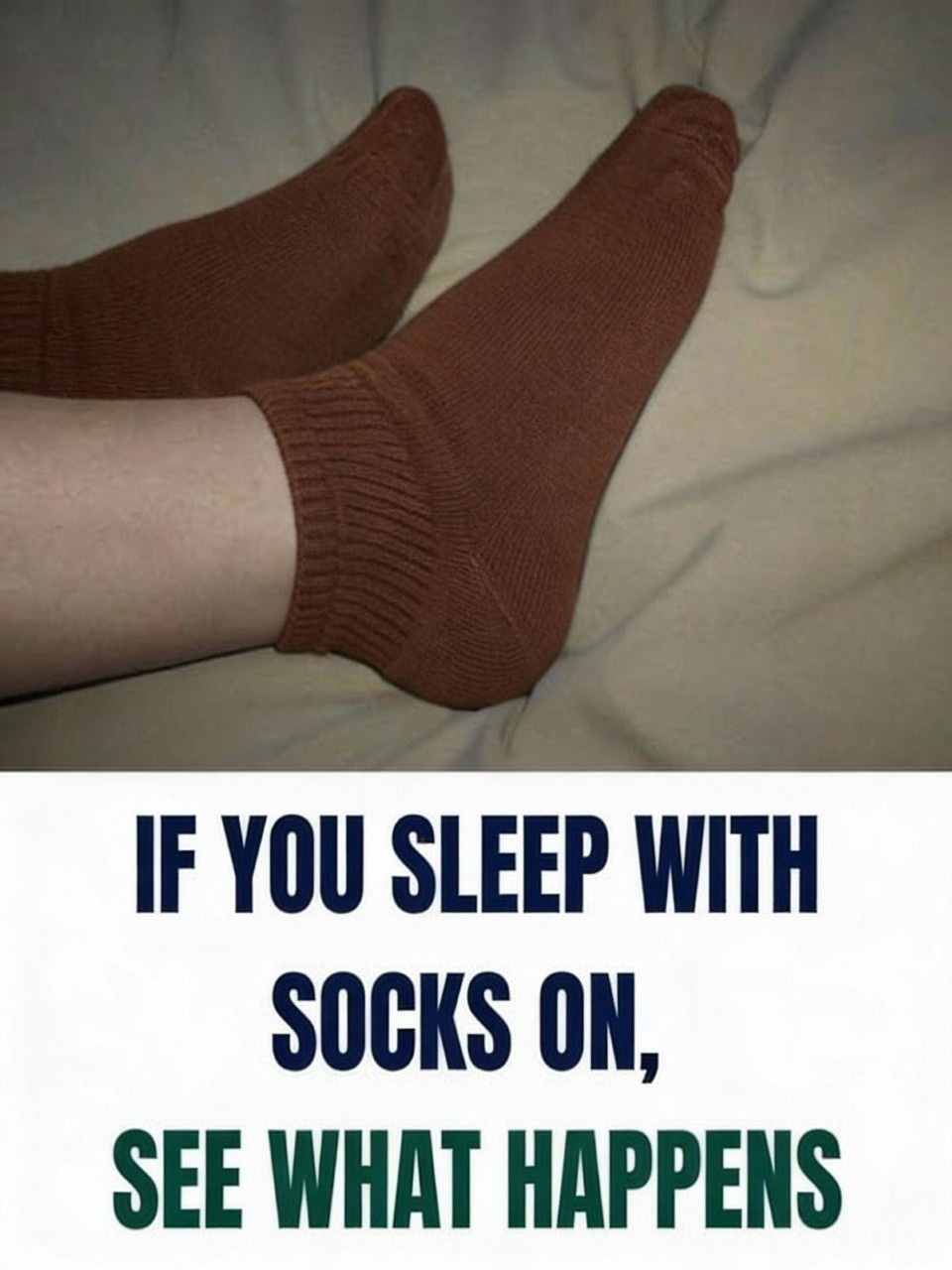
⚠️ The Hidden Risks (And How to Avoid Them)
While beneficial for many, sleeping in socks can backfire—if you choose the wrong kind.
- Fungal Infections (Athlete’s Foot)
Tight, non-breathable socks trap moisture—creating a breeding ground for fungus.
Dermatologist tip: “Feet sweat up to half a pint per night. If socks don’t wick moisture, you’re inviting infection.”
- Skin Irritation & Dryness
Rough seams, synthetic fibers, or elastic bands can cause redness, itching, or cracked heels. - Overheating
If you’re a hot sleeper, socks may raise your core temperature too much—leading to restless, fragmented sleep.
Advertisement
🧦 How to Sleep in Socks Safely (Doctor-Approved Tips)
Not all socks are created equal. Follow these guidelines for maximum benefit—and zero risk.
✅ Choose the Right Socks
| Feature | Recommendation |
|---|---|
| Material | Merino wool, bamboo, or moisture-wicking cotton blends |
| Fit | Loose, non-constricting—no tight elastic bands |
| Seams | Flat or seamless toe to prevent irritation |
| Thickness | Lightweight—avoid bulky winter socks unless you’re very cold |
❌ Avoid These
- Nylon, polyester, or acrylic socks (trap sweat)
- Compression socks (unless prescribed by a doctor)
- Wet or damp socks (always put on dry ones!)
