
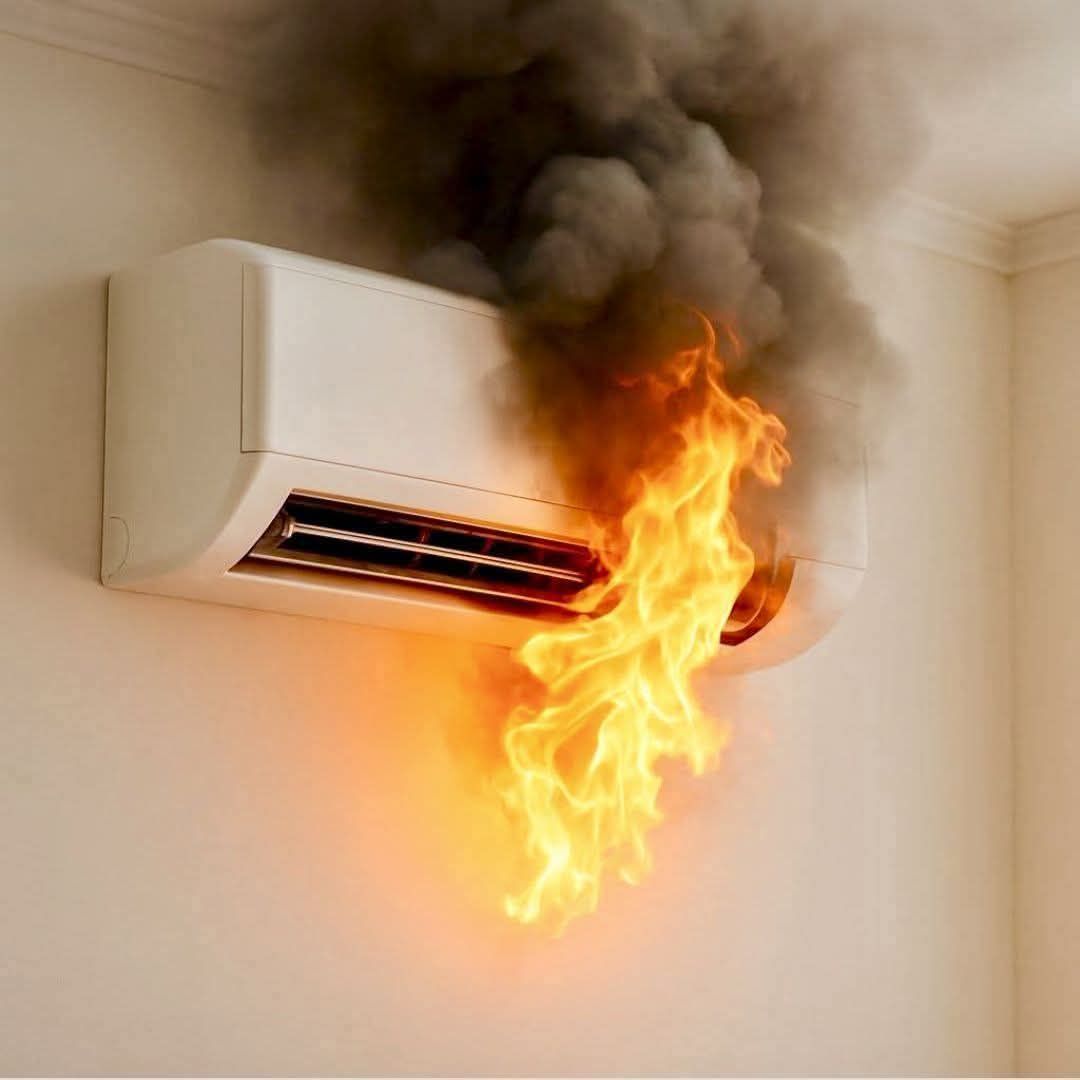
Refrigerant is the chemical compound that makes air conditioning possible — it circulates through the system, absorbing heat from the indoor air and releasing it outside, creating the cooling effect you rely on. In normal, properly functioning systems, refrigerant stays contained within sealed lines and poses no risk. But when refrigerant lines crack, corrode, or develop pinhole leaks — which is more common in older or poorly maintained systems — the situation can escalate from an efficiency problem into a genuine safety crisis.
The immediate health risks of refrigerant exposure are significant: skin contact causes severe frostbite, and eye exposure can cause permanent vision impairment. Inhaling refrigerant fumes can lead to asphyxiation, loss of coordination, increased heart rate, and serious respiratory damage, particularly in enclosed spaces with reduced oxygen levels. From a fire and explosion standpoint, the situation is especially concerning in systems that use older or less common flammable refrigerant formulations. When leaked refrigerant gas accumulates in an enclosed space and contacts an ignition source — an electrical spark, a flame, or even excessive heat — it can combust or explode with sudden and violent force.
Warning signs to watch for: Ice forming on the refrigerant lines or the evaporator coils, a noticeable hissing or bubbling sound coming from the unit, a sharp or slightly sweet chemical odor near the system, reduced cooling performance despite the system running continuously, or an unexpectedly higher-than-usual electricity bill without a clear explanation.
Prevention: Never attempt to handle refrigerant yourself — technicians are legally required to hold EPA 608 certification before they are permitted to handle refrigerants. Schedule regular professional inspections where the technician checks the system for refrigerant leaks and addresses any issues before they escalate.
Hazard #3: Overheating Due to Dirty or Clogged Components
One of the most insidious and frequently overlooked fire hazards in air conditioning systems is also one of the simplest to prevent: accumulated dirt, dust, debris, and grime on critical components. Your AC system moves enormous quantities of air continuously, and over time, particles accumulate on filters, coils, condenser fins, and motor components. When these components become clogged or excessively dirty, the system has to work dramatically harder to achieve the same cooling result — and that extra strain generates heat.
Dirty condenser coils are particularly problematic. The condenser coil's job is to release heat from the refrigerant to the outside air. When it is coated in dirt, dust, pollen, grass clippings, or other debris, it cannot release heat efficiently. The result is excessive heat buildup within the system — heat that has nowhere to go and that places enormous pressure on the compressor and other components. This buildup of pressure and temperature can eventually lead to a mechanical failure or, in severe cases, a fire or catastrophic compressor failure that sends metal fragments flying outward like shrapnel.
