
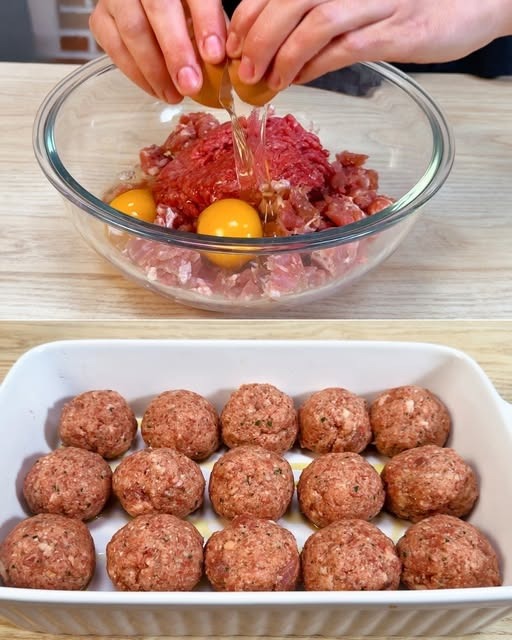
There is a reason that Italian meatballs in tomato sauce have endured as one of the most beloved comfort food recipes in the world for generations.
When they are made correctly — and that is the crucial qualification — they are something genuinely magical: tender enough that a fork slides through them with almost no resistance, juicy enough that every bite releases a burst of rich, savory flavor, and smothered in a deep, slow-cooked tomato sauce that clings to both the meatballs and the pasta with equal devotion. This is the recipe that Italian grandmothers have been passing down for decades, refined and perfected until every technique serves a clear purpose. Follow it carefully and you will produce meatballs that deserve every compliment they receive.
The Secrets to Perfectly Juicy, Tender Meatballs
Before getting to the recipe itself, it is worth understanding the principles that separate an outstanding meatball from a merely acceptable one. These are not trivial distinctions — they are the difference between a meatball that melts in your mouth and one that fights back.
- Use the right meat ratio: A blend of 80 to 85 percent lean ground beef combined with ground pork is the classic foundation. The fat content in both meats is essential — it keeps the meatballs moist during cooking and carries flavor throughout every bite. Using meat that is too lean produces dry, dense, flavorless results. Ground veal, when you can find it, adds an almost creamy richness that elevates the final dish further still
- The panade is non-negotiable: A panade is the mixture of bread soaked in milk that gets incorporated into the meat. This is the single most important technique for achieving tender, juicy meatballs. The soaked bread creates pockets of moisture within the meatball and prevents the proteins from contracting too tightly during cooking, which is the primary cause of tough, rubbery meatballs. Never skip this step and never substitute dried breadcrumbs for milk-soaked fresh bread if you want truly exceptional results
- Do not overwork the mixture: Mix the meatball ingredients together just until combined. Overworking the meat develops the proteins in a way that makes the finished meatball dense and chewy rather than tender and light. Use your hands, work gently, and stop the moment everything is evenly distributed
- Roll loosely: When forming the meatballs, roll them lightly between your palms rather than pressing them firmly together. A meatball rolled too tightly will be compact and dense rather than open-textured and tender
- Brown before simmering: Browning the meatballs in a hot pan before adding them to the sauce creates the Maillard reaction on the exterior — producing hundreds of new flavor compounds that enrich both the meatballs themselves and the tomato sauce they finish cooking in. Do not skip this step even if you plan to finish them in the sauce
- Finish in the sauce: After browning, transferring the meatballs to the simmering tomato sauce to finish cooking is what produces the ultimate texture — a slightly crisp exterior that gradually gives way to a supremely juicy, tender interior that has absorbed the flavors of the sauce throughout
Ingredients for the Meatballs
- ½ pound (225g) ground beef (80–85% lean, ideally ground chuck)
- ½ pound (225g) ground pork
- 2 slices white sandwich bread, crusts removed, torn into small pieces
- ¼ cup whole milk
- 2 egg yolks
- ½ cup freshly grated Parmesan cheese
- 3 cloves garlic, finely minced
- 3 tablespoons fresh flat-leaf parsley, finely chopped
- 1 teaspoon dried Italian seasoning
- 1 teaspoon fine salt
- ½ teaspoon freshly ground black pepper
- 2 tablespoons olive oil for browning
