
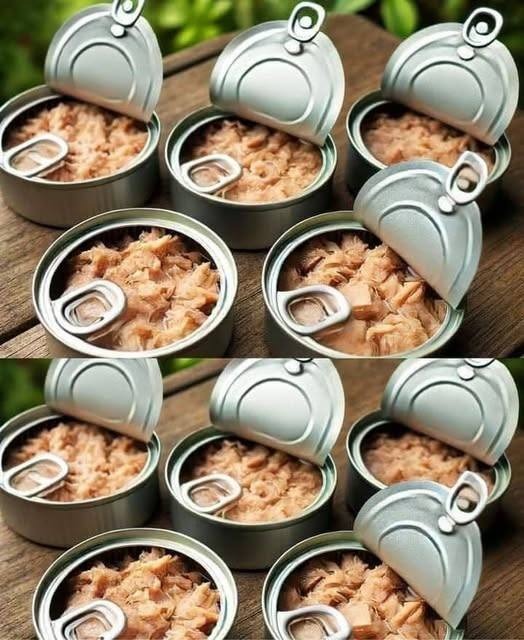
7. Magnetic Spice Storage for the Refrigerator
This is one of the most practically clever uses for empty tuna cans in the kitchen. Glue or tape a small round magnet to the back of a clean, dry tuna can and it will stick firmly to the side of your refrigerator. Fill each can with a different spice, dried herb, or condiment packet, and suddenly your refrigerator side panel has become a compact, accessible, completely visible spice rack that frees up cabinet space and makes cooking faster and more organized. Label the front of each can with a small sticker or piece of masking tape and a marker. If you eat enough tuna to accumulate six to twelve cans, you can create an entire organized spice wall that looks like a thoughtful, deliberate kitchen design choice.
8. Pin Cushions and Sewing Organizers
For anyone who sews, knits, or crafts regularly, a tuna can makes an exceptionally practical and charming sewing organizer. The low, wide shape is ideal for this purpose. Take a piece of thick foam or a sponge cut to fit the interior diameter of the can and wrap it tightly in fabric — choose a bold, patterned fabric that coordinates with your craft room aesthetic. Secure the fabric-wrapped foam inside the can using strong craft glue or silicon adhesive. The result is a stable, weighted pin cushion that will not tip over when you push needles and pins into it. The can itself can hold additional small sewing supplies like seam rippers, thimbles, and a small pair of scissors alongside the cushion.
9. Wind Chimes and Garden Decorations
Multiple tuna cans strung together make wonderfully rustic and charming wind chimes for outdoor spaces. Punch a hole in the bottom of each can and thread a length of sturdy twine or wire through it, knotting it to secure. Hang several cans at varying lengths from a horizontal dowel rod, a piece of driftwood, or a metal rod. Paint each can a different color or wrap them in colorful yarn before assembling. When the wind catches them, they clink together with a gentle, pleasant metallic sound. For garden decoration, painted tuna cans mounted directly onto a fence or garden wall make attractive miniature planters for trailing plants that soften the appearance of vertical surfaces with green and color.
10. Children's Crafts and DIY Musical Instruments
Tuna cans are sturdy, safe when edges are properly smoothed, and wonderfully versatile for children's crafts — which makes them ideal for family creative projects. Children can decorate the exterior of clean cans with paint, stickers, glitter, colored paper, and washi tape to create personalized storage containers for their small toys, crayons, or craft supplies. For musical instrument projects, a tuna can filled with a small amount of dried rice, beans, or beads and sealed securely with tape or a glued piece of cardboard becomes a rattle or shaker instrument. Stretched fabric or paper glued tightly over the opening with a rubber band creates a small drum surface that children can play with wooden dowels as drumsticks. These projects combine creativity with recycling awareness in a way that children genuinely enjoy.
11. Gift Boxes and Presentation Packaging
A clean tuna can decorated with ribbon, fabric, lace, or patterned paper becomes an unexpectedly elegant small gift box — perfect for presenting jewelry, small chocolates, a handwritten note, or any other compact gift that deserves special packaging. Cut a circle of cardboard or thin wood to fit the top as a lid, cover both the can and the lid in coordinating materials, and tie them together with a ribbon. The recipient receives both the gift inside and the charming, handmade container itself as part of the present. These homemade gift boxes have a personal, artisan quality that purchased packaging simply cannot replicate, and they cost almost nothing to make.
A Few Important Safety Notes
Before repurposing any tuna can, always wash it thoroughly with hot soapy water, rinse completely, and allow it to dry fully. For any use that involves contact with food — kitchen molds, spice storage, or similar applications — always remove the external label completely and inspect the interior for any signs of rust or damage. If using cans for crafts where children will handle them, always smooth any sharp edges with fine-grit sandpaper or cover them with strong tape before allowing children to work with them. For outdoor uses like garden planters or decorative items, a coat of spray paint designed for metal surfaces will prevent rust and significantly extend the life of your project.
Final Thoughts
The humble tuna can is genuinely one of the most underappreciated and overlooked resources in the average household. It is sturdy, versatile, heat-resistant, perfectly sized, and completely free — a combination of properties that would make it valuable even if you had to pay for it. From plant pots and candle holders to kitchen molds, organizers, clocks, and children's craft projects, the possibilities for repurposing these small metal containers are genuinely remarkable. Every can you save from the recycling bin and give a second life to is a small but real contribution to reducing household waste — and quite often, the result is something more charming and more personal than anything you would have bought at a shop. Next time you finish a can of tuna, take a moment before you throw it away. Its most useful life may still be ahead of it.
