
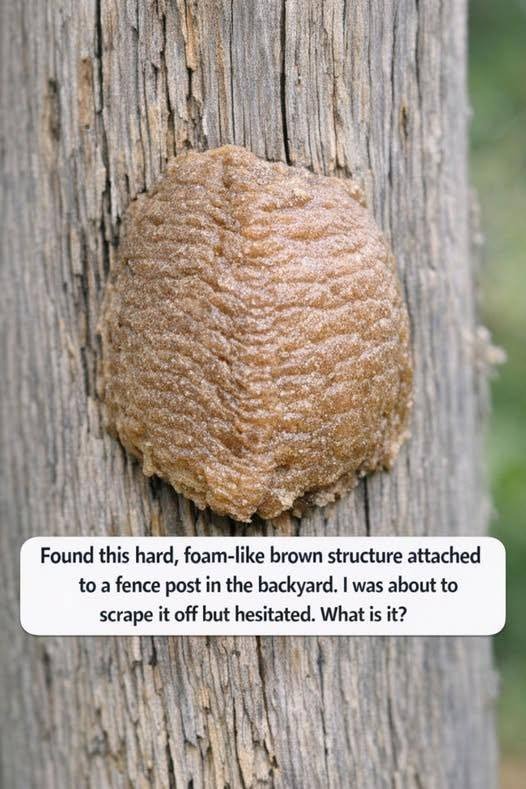
2. The Hunter Behind the Brown Case
Praying mantises are well-known for their elongated bodies and folded forelegs, which are perfectly adapted for catching prey. As skilled predators, they feed on flies, crickets, caterpillars, and many other insects that might otherwise damage plants.
Belonging to the order Mantodea, mantises are found in many parts of the world and are especially appreciated in gardens. Recognizing their egg cases is the first step in understanding how each new generation begins—with hundreds of tiny mantises developing inside a single protective shell.
3. What an Ootheca Looks and Feels Like
An ootheca is created in late summer or fall after mating. The female mantis secretes a frothy substance that quickly hardens into a durable casing around her eggs. The finished structure looks oblong and slightly ridged, with compartments inside that hold multiple eggs.
It feels firm yet faintly spongy, strong enough to endure winter conditions. This clever construction keeps the eggs insulated and secure until warmer weather signals it’s time to hatch.
