
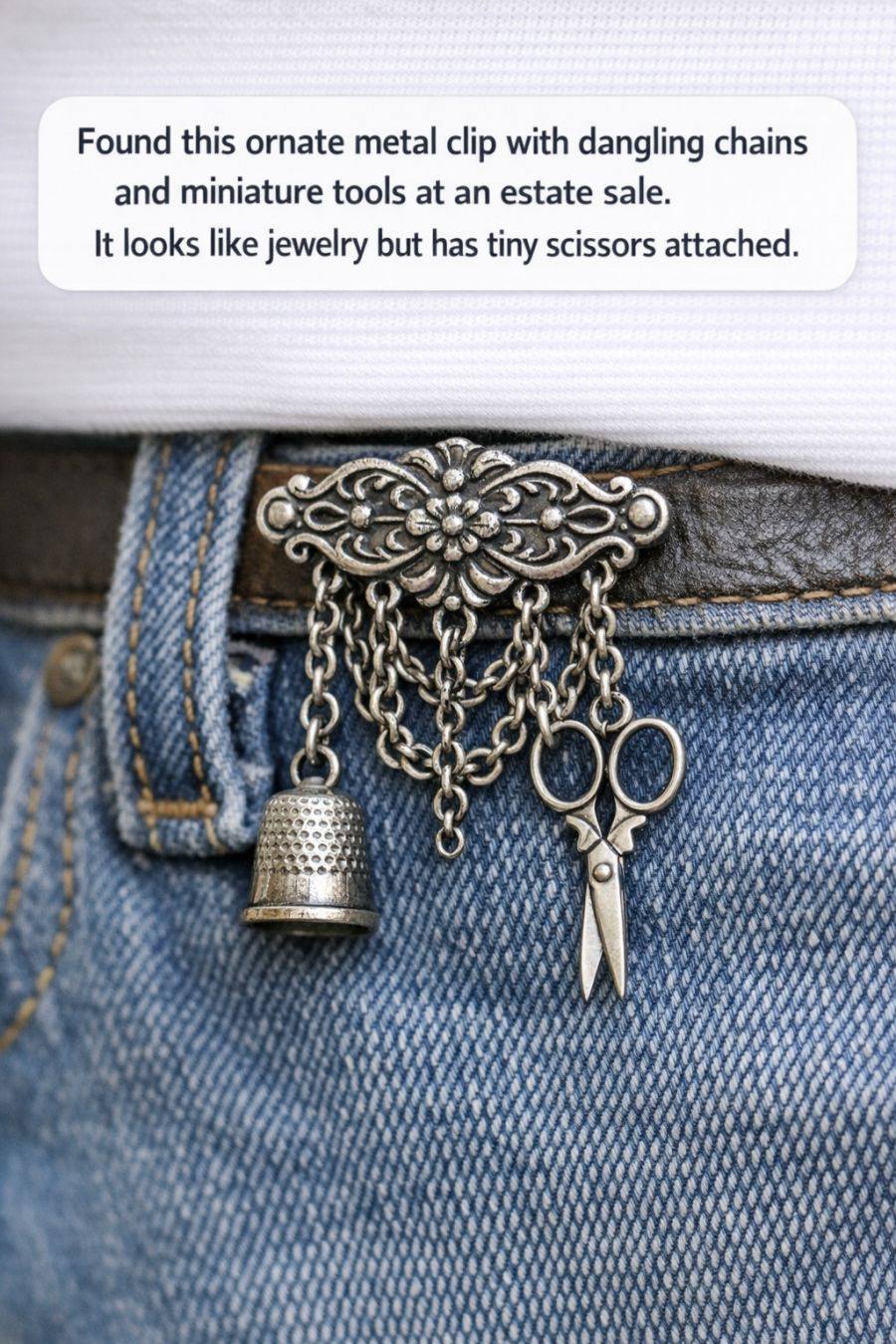
3. How These Miniature Tools Replaced Pockets
In the Victorian era, women's fashion did not typically include pockets as part of their garments. This presented a practical challenge, as women needed a way to carry small, essential items. The chatelaine offered a solution by providing a means to keep these items close at hand, without the need for pockets.
Each tool on a chatelaine was carefully chosen for its utility, allowing the wearer to perform everyday tasks with ease. The miniature tools were designed to be lightweight yet functional, ensuring they did not weigh down the garment or detract from the overall aesthetic. This clever combination of practicality and style made the chatelaine an indispensable accessory for many women during this period.
4. Decoding The Tiny Scissors And Other Attachments
The tiny scissors attached to a chatelaine are a perfect example of the multi-functional nature of this accessory. Measuring just a few inches in length, these scissors were sharp enough to perform small cutting tasks, such as snipping threads or opening letters. Their presence on a chatelaine signified the wearer's role in managing household duties, where such tasks were commonplace.
Other common attachments might include a thimble, used for sewing; a vinaigrette, which held aromatic substances to counteract unpleasant odors; and a small notebook or pencil. Each of these items served a specific purpose, reflecting the practical needs of the Victorian woman. The design of these attachments was often as ornate as the chatelaine itself, showcasing the craftsmanship and attention to detail of the period.
5. Common Materials, Motifs, And Makers To Look For
Chatelaines were crafted from a variety of materials, with silver, gold, and brass being the most common. The choice of material often depended on the wealth and status of the wearer. Silver chatelaines were particularly popular, prized for their durability and the ease with which they could be engraved.
The motifs on chatelaines varied widely, from floral and nature-inspired designs to more abstract patterns. Some featured intricate repoussé work or were set with semi-precious stones and enamel. Notable makers of chatelaines included renowned silversmiths and jewelry houses of the time, such as Tiffany & Co. and Gorham, whose marks can often be found on authentic pieces.
