
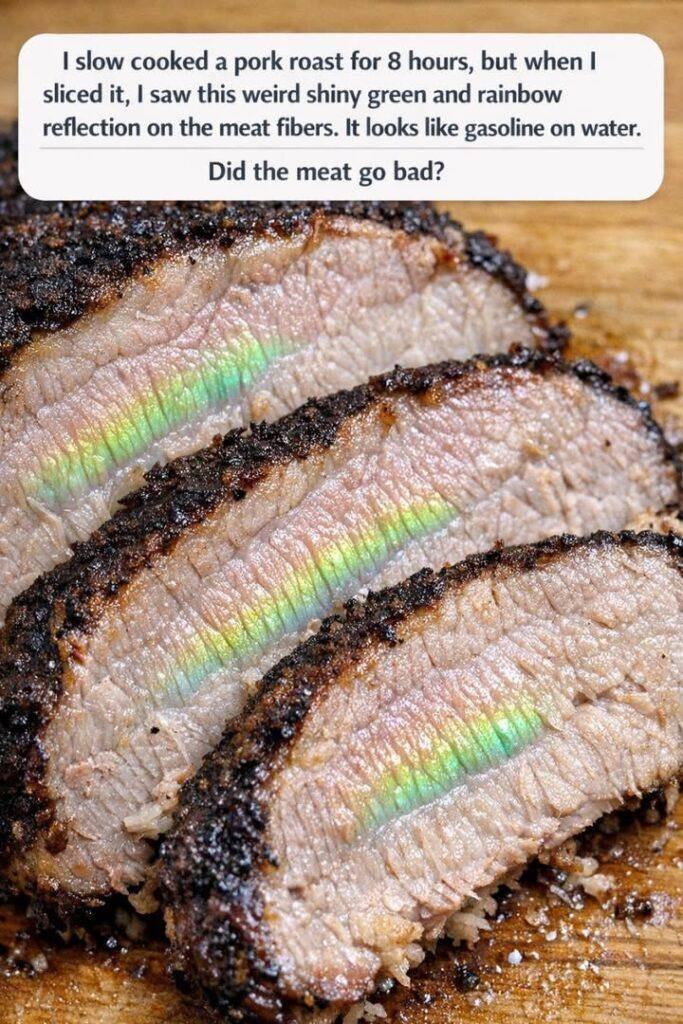
4. When Iridescent Pork Is Harmless—and Totally Safe to Eat
In the majority of cases, an iridescent sheen on pork is harmless and does not indicate spoilage. The key factor is the source of the sheen, which, as mentioned, is typically due to light diffraction. If the pork was stored properly, cooked to the appropriate temperature, and shows no other signs of spoilage, it is safe to consume.
It’s important to ensure that the pork reaches an internal temperature of at least 145°F (63°C), as recommended by food safety guidelines. This temperature is sufficient to kill harmful bacteria and ensure that the meat is safe to eat.
5. Red Flags That Mean Your Pork Roast Actually Went Bad
While an iridescent sheen is often harmless, there are other signs to watch for that could indicate spoilage. A sour or off-putting smell is a strong indicator that the pork may have gone bad. Additionally, sticky or slimy textures on the surface of the meat can be a sign of bacterial growth.
Discoloration, particularly a dull or grayish hue, can also suggest that the meat is no longer fresh. If any of these signs are present, it is best to err on the side of caution and avoid consuming the meat.
6. Smell, Texture, and Color Checks You Should Always Do
To ensure your pork is fresh and safe to eat, a few simple checks can go a long way. First, give the pork a sniff test. Fresh pork should have a mild, meaty smell, while spoiled pork may have a sour or ammonia-like odor.
Examine the texture by gently pressing the meat. Fresh pork should be firm and slightly moist, while a sticky or slimy surface can indicate spoilage. Lastly, check the color. Fresh pork typically has a pinkish hue, while a grayish or greenish tint may be a red flag.
7. Does Slow Cooking for 8 Hours Make Food Poisoning More Likely?
Slow cooking is a popular method for preparing tender, flavorful meats, but it does come with food safety considerations. Cooking meat at low temperatures for extended periods may potentially keep it in the ‘danger zone’ of 40°F to 140°F (4°C to 60°C), where bacteria can thrive.
To prevent food poisoning, it’s essential to ensure that the slow cooker reaches a high enough temperature to bring the pork to a safe internal temperature of at least 145°F (63°C). Using a meat thermometer to check the temperature can provide peace of mind that your meal is safe to consume.
