
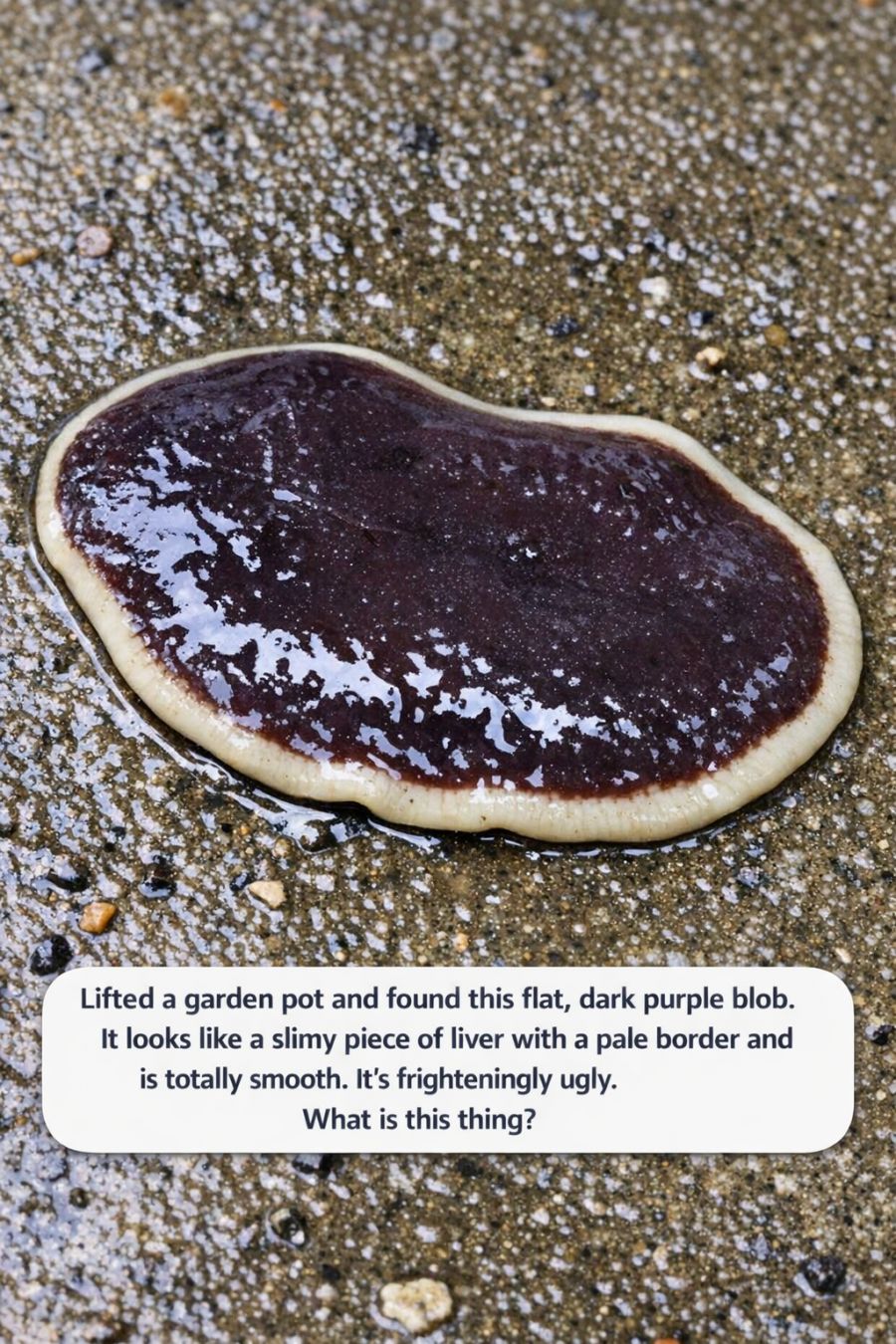
The flat, plate-like body you are looking at is called a thallus — the technical term for a plant body that has not been differentiated into distinct stems and leaves. In thallose liverworts like the ones most commonly found under garden pots, the thallus typically has a relatively flat, ribbon-like shape that forks as it grows, spreading outward in a branching pattern. The upper surface is usually green, while the underside — which is what you were looking at when you lifted the pot — is often purple, particularly in species like Reboulia hemisphaerica. The pale border you noticed around the edges is the actively growing tip of the thallus, which is typically lighter in color and may appear almost translucent or whitish compared to the darker, more mature tissue toward the center.
Why Was It Under Your Garden Pot?
This is not mysterious at all once you understand what liverworts need to survive and thrive. They are organisms of moisture, shade, and humidity — and the underside of a garden pot sitting on damp soil in a partially shaded area of a garden is essentially a perfect liverwort habitat. Garden pots create a stable, protected microenvironment that maintains consistent moisture and temperature while blocking the direct sunlight that would dry out and kill a liverwort. The dark, humid space between the pot base and the soil surface is precisely the kind of sheltered, damp niche these ancient organisms seek out.
Liverworts are also commonly found on the upper surface of potting compost in containers, on shaded stone paths and paving, on the damp soil of garden borders and raised beds, on the bark of stressed or mature trees, on the sides of terracotta pots that stay consistently wet, and along the banks of streams or garden water features. In the Pacific Northwest and other regions with cool, damp winters, liverwort growth in gardens is particularly common from early autumn through late spring. They flourish in exactly the conditions that describe a well-watered, shaded garden — which is why so many gardeners encounter them.
Is It Harmful? The Honest Answer
For the vast majority of garden situations, liverworts are essentially harmless. They have no true roots, which means they cannot penetrate soil or compete with garden plants the way rooted weeds do. They do not steal nutrients from your plants in any meaningful way. They do not inject toxins or release chemicals that damage surrounding vegetation. They are not parasitic — they simply grow on top of whatever surface they find suitable, anchoring themselves with those superficial rhizoids rather than boring into or damaging the substrate beneath them.
In fact, liverworts play a genuinely useful ecological role in the garden. They contribute to the breakdown of organic matter, help maintain soil moisture, and provide microhabitats for tiny beneficial organisms. Some gardeners actually appreciate them for the naturalistic, aged appearance they lend to stone paths, garden walls, and terracotta containers — the same way moss on a garden wall is considered attractive rather than problematic.
