
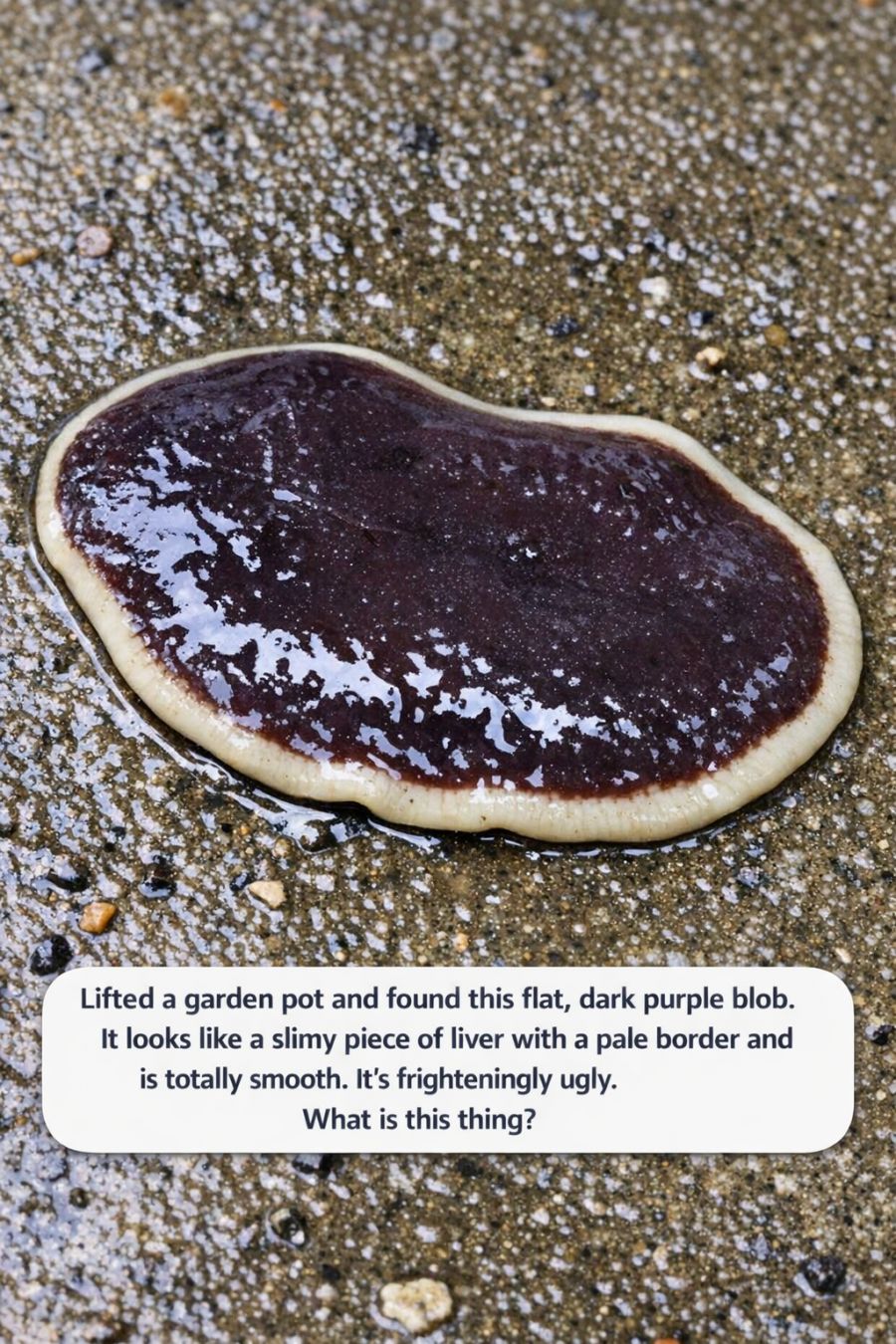
If the blob is soft, brightly colored (yellow, orange, or white rather than purple), and appears to be spreading or slowly moving — or if it has an irregular, foam-like texture — you may be looking at a slime mold. Slime molds are not plants at all but rather a bizarre category of organism that sits in its own biological kingdom. The most commonly encountered species in gardens is Fuligo septica, sometimes called Dog Vomit Slime Mold, which typically starts as a yellow or cream-colored blob and transitions through orange to dark brown as it matures. Like liverworts, slime molds are essentially harmless to plants and garden soil — they feed on bacteria, fungi, and decaying organic matter rather than on living plant tissue.
If what you found is soft, moves when prodded, and has a slug-like body, you are simply looking at a slug that was sheltering under the pot — which is one of the most common things gardeners find in that location and one that does require attention, as slugs genuinely do damage garden plants by feeding on leaves and stems at night.
How to Remove Liverworts If You Want To
If the liverwort you found is simply growing on the underside of a pot or on stone surfaces and is not causing any actual problems, the easiest and most sustainable approach is simply to leave it alone. It will not spread aggressively into your garden beds or cause harm to your plants. Many gardeners come to appreciate the naturalistic quality it adds to their outdoor spaces.
However, if you want to remove it — particularly if it is growing on the surface of compost in containers with young or delicate plants — physical removal is the most effective method. Liverworts have no true roots, which means they can be scraped off surfaces easily using a hoe, trowel, or stiff-bristled brush. The debris is safe to add to a garden compost heap. On pot surfaces or hard landscaping, vigorous scrubbing with a stiff brush is usually sufficient. On path and paving surfaces, allowing more light and air circulation to reach the area — by cutting back overhanging plants or sweeping away leaf litter — makes conditions less inviting for future liverwort growth.
For liverworts on the compost surface of container plants, remove the top centimeter or so of compost along with the liverwort and replace it with fresh compost. This also removes any spores that may be present in the upper layer. Improving drainage and reducing overwatering will make the compost surface less hospitable to liverwort re-establishment. Liverworts thrive in moist, compacted, low-light conditions — reducing any or all of these factors is the most effective long-term control strategy.
