
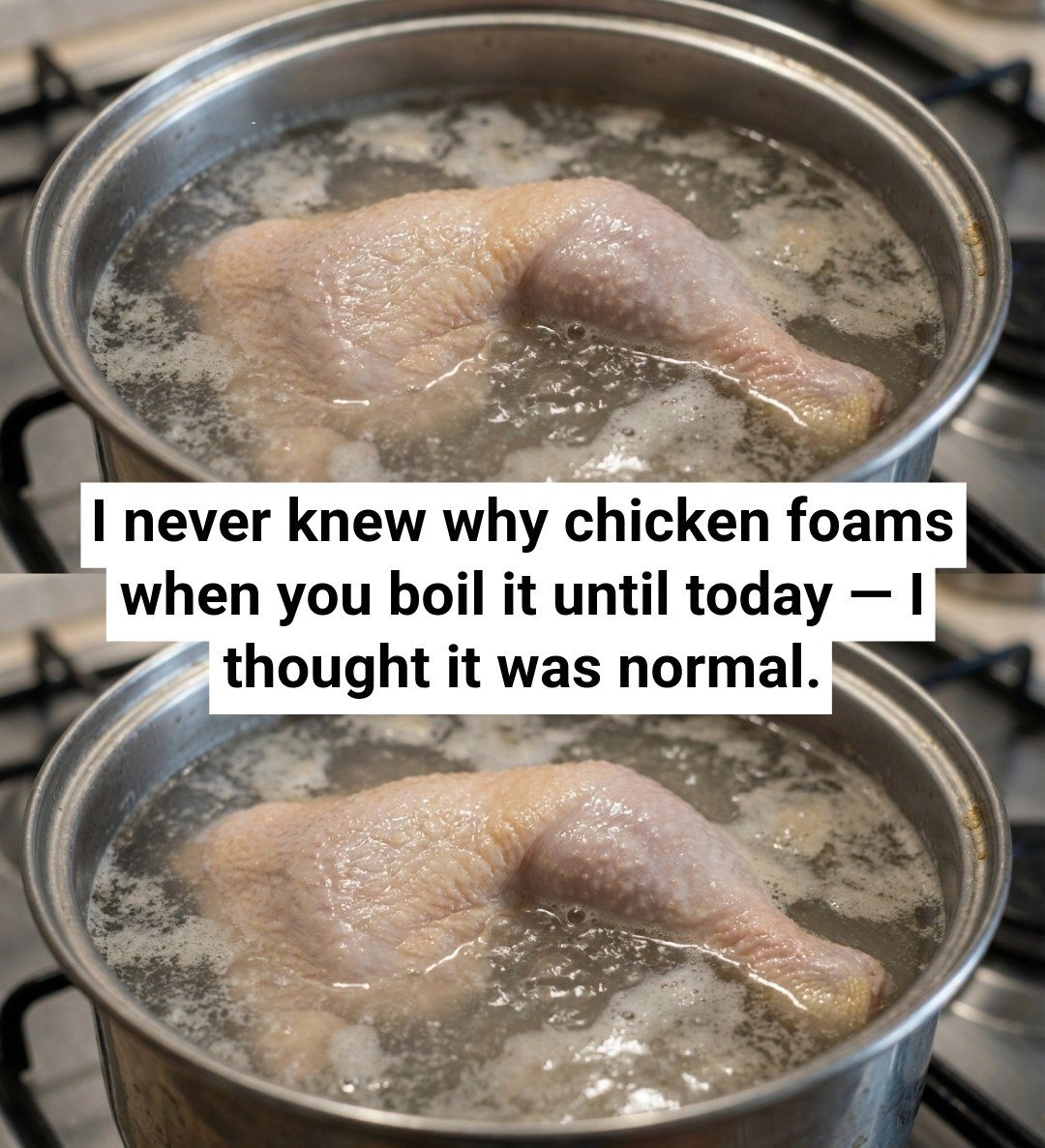
• Frozen chicken appears to release more water and proteins during cooking, which leads to more foam.
• Bone-in or skin-on chicken will produce more foam than boneless, skinless chicken. There is more material for the proteins to break down.
• Higher levels of protein, particularly in leaner cuts of chicken such as breasts, produce more foam.
• Boiling the chicken quickly instead of gently simmering will result in significantly more foam production.
Additionally, I found that there is some variation in foam produced based upon store-bought versus fresh chicken, but I would caution against jumping to conclusions. It is not indicative of “bad” chicken; rather, it reflects variations in how the chicken was processed or stored.
Will Foaming Affect Taste or Quality?
Here is the truth: the foam itself does not taste like much. It does not have a sour or unpleasant taste. However, if you are making a broth or soup and leave the foam in the liquid, the broth will appear cloudy and somewhat murky.
I have found that when I do not skim the foam off the top of the liquid, my broth loses that clear, golden quality. While it does not affect the taste, it does affect the visual appeal of the liquid.
Therefore, to achieve a clearer broth, I recommend skimming off the foam. Removing the foam will provide you with a cleaner-tasting broth, especially if you are making a light-colored broth or soup such as ramen, pho, or chicken consommé.
On the other hand, if you are making a hearty stew or shredding the chicken for taco salads, it is not a significant issue if you leave the foam in.
