
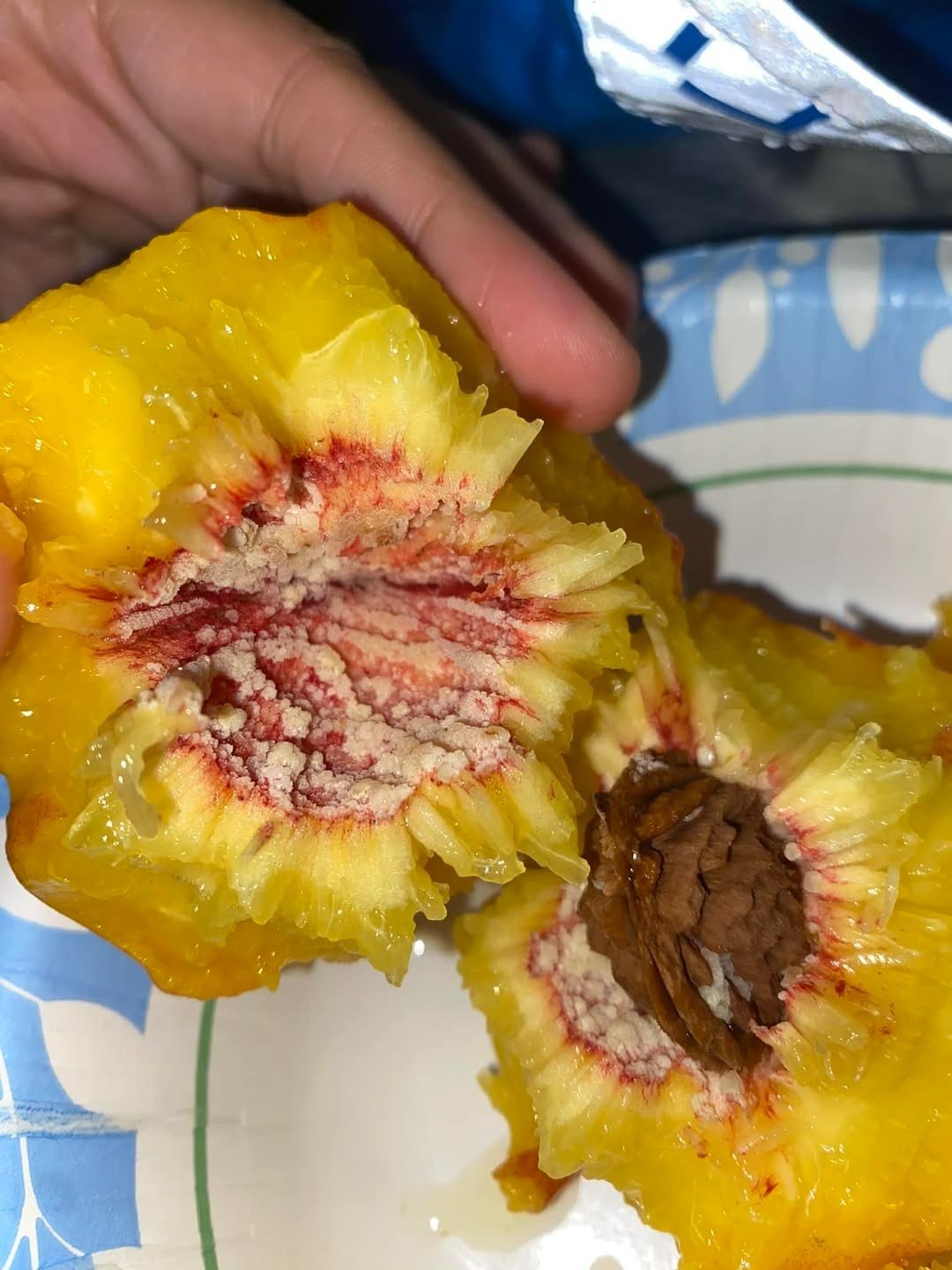
Natural seed development
Bacterial growth
Fungal activity
Sometimes, yeast or naturally occurring fungi begin to break down sugars in the pit area, resulting in a white film or slime-like texture.
Other times, moisture buildup causes fermentation or mild spoilage — especially if the peach was bruised or stored in warm conditions.
🧼 How to Safely Handle Peaches
Store them in the refrigerator once ripe
Wash them thoroughly before eating or slicing
Avoid bruising by handling gently
Use within 3–5 days of ripening
Discard any fruit that smells off or shows visible mold
When in doubt, trust your senses : If it looks bad, smells bad, or feels slimy — don’t eat it.
🤔 Common Myths About Peach Pits
There are a few myths floating around about peach pits and the white stuff inside. Let’s set the record straight:
“That white stuff is insect eggs”
Very unlikely — insects typically don’t lay eggs inside intact pits
“It’s always mold — throw it out”
Not true; most white coatings are natural seed residue
“Eating the seed is dangerous”
Technically yes — peach seeds contain small amounts of cyanogenic glycosides (which can release cyanide), so they should
never be eaten raw
“All fuzzy white spots are mold”
No — some are just natural oils or seed coatings
🍽 Can You Still Use the Peach Flesh?
If the white stuff is limited to the pit and the fruit itself is firm, fragrant, and free of mold or off-smells, then yes — the peach is still edible .
Just scoop out the pit carefully and discard it. You can use the peach for:
