
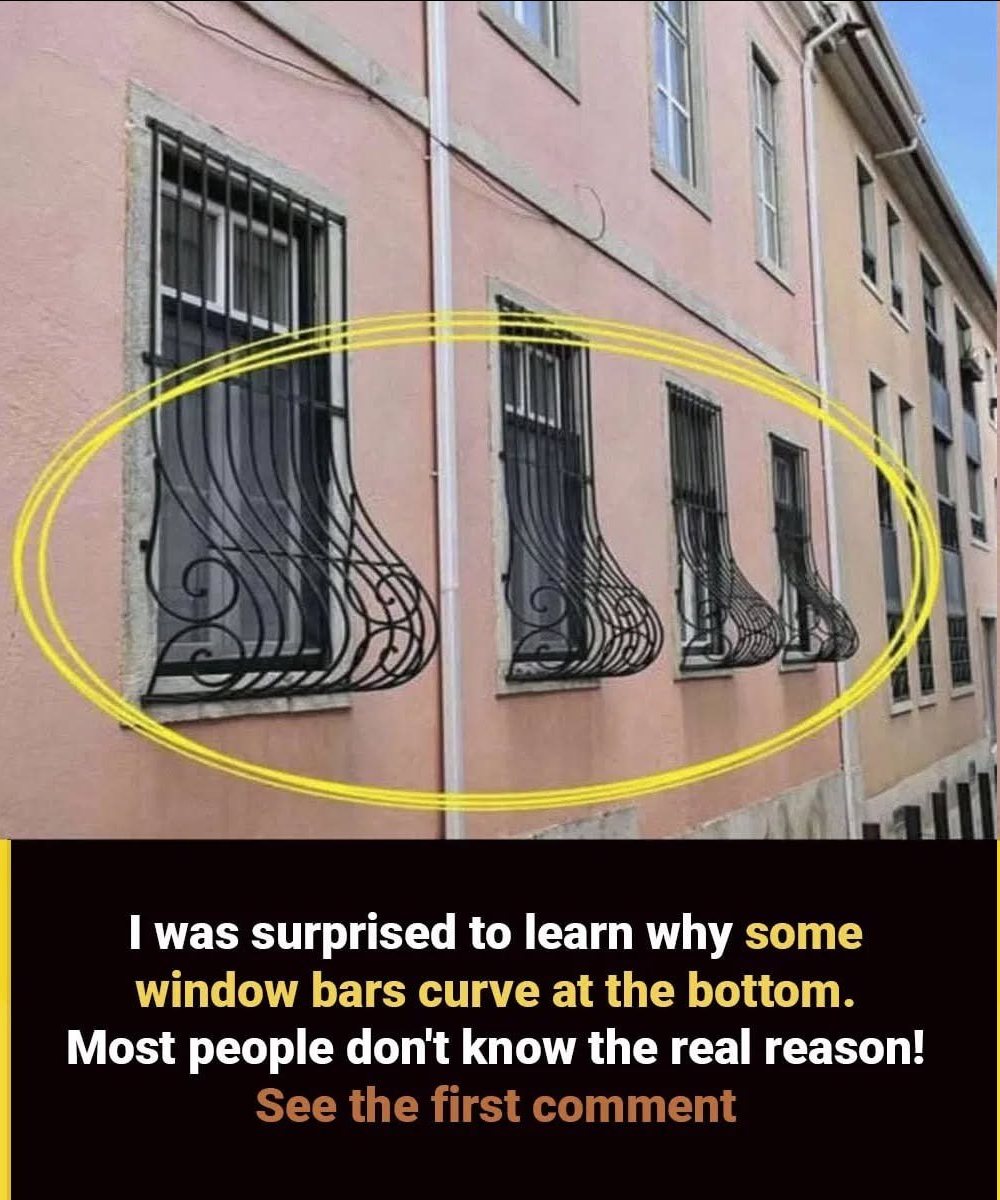
3. To Allow Windows to Open Properly
For certain types of windows — particularly tilting or casement windows that jut outward at the bottom when opened — curved bars are a practical necessity. Straight bars would prevent these windows from being opened at all. The potbelly curve gives the window panel ample space to swing or tilt outward without obstruction, allowing full functionality even with security bars in place.
4. To Give a Better View and Safer Leaning Space
The curved design also creates a wider gap between people inside the building and the outside world. This enforced space means that those inside have ample room to lean out and get a better view of the street below, while those attempting to reach inside from outside are pushed farther back — making unauthorized access significantly more difficult. It’s a clever security detail that also improves daily comfort for the residents.
5. Water Drainage and Debris Prevention
From a maintenance standpoint, the curved design also helps with water drainage. The outward curve prevents standing water, leaves, and other debris from accumulating at the base of the grill, reducing the risk of rust and long-term wear. This keeps the bars looking good and functioning well for much longer than flat-bottomed designs might.
The Aesthetic and Cultural Appeal
Beyond their practical uses, potbelly window grills are genuinely beautiful architectural features. Curved window bars are a great way to add a stylistic element to a building’s façade, evoking an old-world European, Mediterranean, or Latin American feel — regions where this style has been used and celebrated for centuries. In Charleston, South Carolina, for example, iron window bars became a beloved tradition, often featuring local motifs like palmetto shapes and other ornate designs.
