
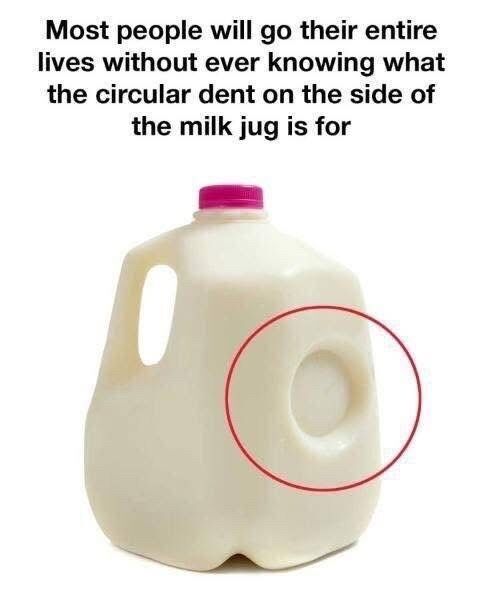
The dent also works as a built-in shock absorber.
Milk jugs are constantly handled — loaded into trucks, stacked in stores, dropped into shopping carts, bumped on kitchen counters. That indentation helps distribute impact if the jug is knocked or dropped, reducing the likelihood of splitting open.
Think of it like a mini crumple zone for your milk.
There’s also an environmental advantage.
By incorporating that dent, manufacturers can use less plastic overall without sacrificing strength. Less material means lighter jugs. Lighter jugs mean more efficient transportation. More efficient transportation means lower fuel consumption and reduced carbon emissions.
Even recycling benefits.
The dent makes the jug easier to crush, helping it collapse more efficiently in recycling systems. That improves storage and transport of recyclable materials.
