
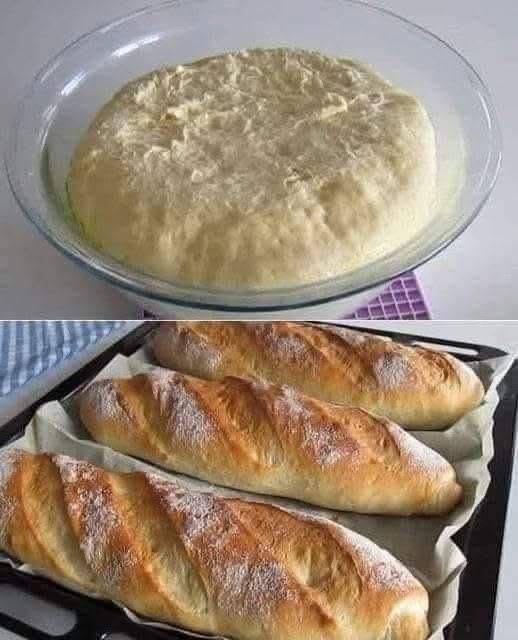
Add the salt and vegetable oil to the proofed yeast mixture and stir briefly to combine. Begin adding the flour one cup at a time, stirring well after each addition. Continue adding flour until the dough becomes too thick and stiff to stir easily with a spoon. At this point, turn the dough out onto a well-floured work surface and begin kneading by hand. To knead, push the dough away from you with the heel of your hand, fold it back toward you, rotate it slightly, and repeat. The motion is rhythmic and actually quite satisfying once you find the right pace. Knead for about 8 minutes, adding small amounts of flour as needed to prevent the dough from sticking to the work surface or to your hands, until the dough is smooth, elastic, and no longer sticky to the touch. When you press a floured finger into the surface of the dough and it springs back slowly, it is ready.
Step 3: First Rise
Shape the kneaded dough into a smooth ball and place it into a large bowl that has been lightly greased with a little oil. Turn the dough ball once in the bowl so that all sides are lightly coated with oil — this prevents a dry crust from forming on the surface during rising. Cover the bowl tightly with plastic wrap or a clean kitchen towel and place it somewhere warm. A warm oven that has been briefly heated and then turned off works well, as does a spot on top of the refrigerator or near a sunny window. Allow the dough to rise until it has doubled in size, which typically takes between one and one and a half hours depending on the warmth of your kitchen.
Step 4: Shape the Loaves
Once the dough has doubled, punch it down firmly with your fist to release the accumulated gas inside — this step should feel slightly satisfying. Turn the deflated dough onto a lightly floured work surface and divide it cleanly in half. Working with one piece at a time, shape each half into a log roughly the length of your loaf pan by rolling the dough under your hands and tucking the ends under. Grease two standard 9-by-5-inch loaf pans well with butter or cooking spray, then place each shaped piece of dough seam-side down into a pan. The dough should fill the pan roughly halfway at this point.
