
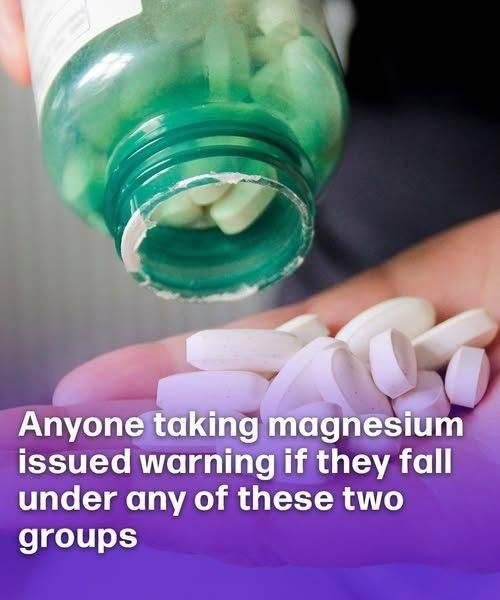
Magnesium has become one of the most popular supplements on pharmacy shelves, and for good reason. It supports more than 300 chemical processes in the body, regulates blood pressure and blood sugar, contributes to muscle function and nerve health, and plays an important role in bone density. Many people take it to improve sleep quality, reduce migraine frequency, or support gut health. For most people, a daily magnesium supplement taken at a reasonable dose is safe and beneficial. But there is an important warning that anyone currently taking prescription medications needs to understand before adding magnesium to their routine: magnesium supplements interact in clinically significant ways with several widely used medications, and in some cases those interactions can meaningfully reduce the effectiveness of the drugs you are depending on to manage serious health conditions.
Because dietary supplements are not regulated by the Food and Drug Administration in the same way that prescription medications and food products are, they are not reviewed or approved before they reach store shelves. This means that potential interactions between supplements and medications are not always prominently labeled or widely known until after problems have been reported. Magnesium specifically carries a moderate potential for drug interactions, according to pharmacists and nutrition researchers, and those interactions can run in both directions — magnesium can reduce the absorption of certain medications, and certain medications can deplete magnesium levels in the body. Understanding these interactions is essential for anyone managing a health condition with prescription drugs.
What Magnesium Actually Does in the Body
Magnesium is an essential mineral — one that the body requires but cannot produce on its own, meaning it must be obtained through diet or supplementation. It is essential to the production of adenosine triphosphate, or ATP, the molecule that serves as the primary energy currency of every cell in the body. This foundational role gives magnesium influence over a remarkably wide range of physiological processes: it regulates blood pressure and blood sugar, supports healthy muscle contraction and relaxation, facilitates nerve signal transmission, contributes to DNA synthesis and repair, and is a major component of bone tissue. Most people who eat a balanced diet containing nuts, seeds, legumes, whole grains, and leafy green vegetables get adequate magnesium from food alone. Supplementation becomes relevant primarily for people with gastrointestinal conditions that impair mineral absorption, kidney disease, or type 2 diabetes, which is associated with higher rates of magnesium deficiency.
The reason supplements interact with medications in ways that food sources of magnesium generally do not is the concentration and isolation of the dose. When magnesium is consumed as part of food, it arrives alongside other nutrients and fiber in a form the body processes gradually. When it is taken as a supplement, a concentrated, isolated dose of the mineral enters the digestive tract all at once, where it can directly compete with or chemically interact with any medications present at the same time. This distinction is why the FDA and major medical organizations recommend consulting a healthcare provider before starting any new supplement regimen, even one as broadly used and generally well-tolerated as magnesium.
The Warning: Medications That Interact With Magnesium
1. Antibiotics — Tetracyclines and Fluoroquinolones
Two of the most commonly prescribed antibiotic classes interact significantly with magnesium supplements. Tetracyclines — which include doxycycline, minocycline, and tetracycline itself — are widely used to treat bacterial infections including acne, respiratory infections, Lyme disease, chlamydia, and traveler's diarrhea. Fluoroquinolones — which include ciprofloxacin, levofloxacin, and norfloxacin — are a powerful class used to treat complicated infections including urinary tract infections, pneumonia, and certain gastrointestinal infections.
When magnesium is taken at the same time as either of these antibiotic classes, the mineral can form a chemical complex with the antibiotic molecules in the digestive tract that dramatically reduces how much of the antibiotic is absorbed into the bloodstream. The practical consequence is that the antibiotic may not reach effective levels in the body, leaving the bacterial infection inadequately treated. In serious infections, this can have genuinely dangerous consequences. The solution is straightforward: take these antibiotics at least two hours before your magnesium supplement, or at least four to six hours after. This separation prevents the two substances from being present together in the gut at the same time.
