
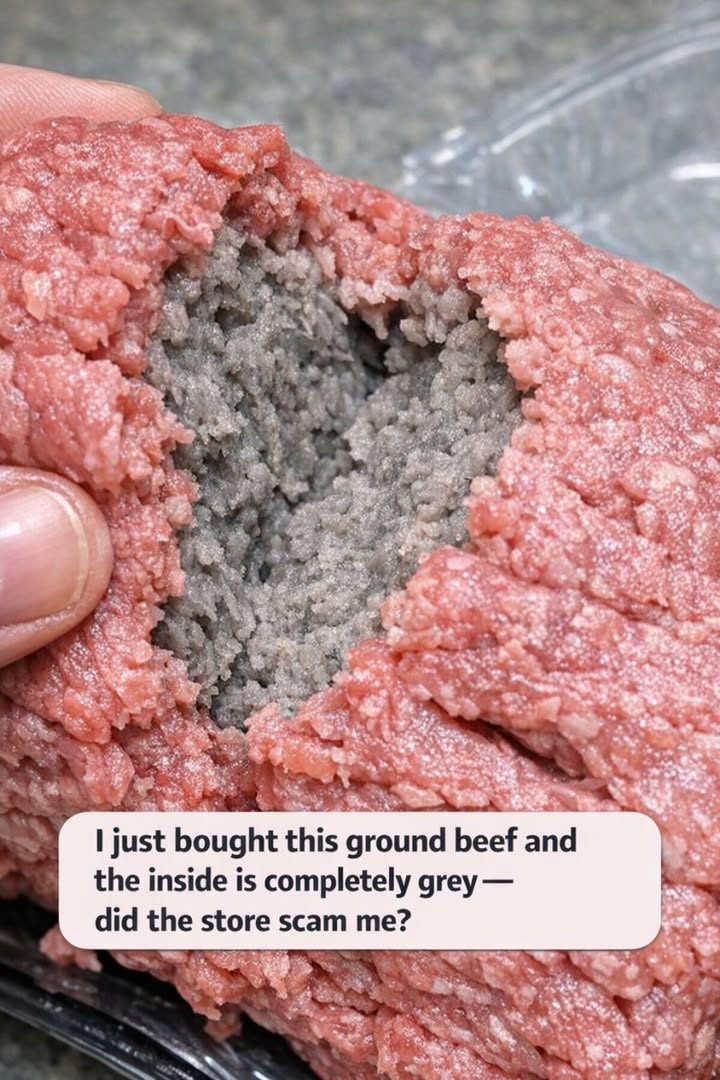
You bring home a package of ground beef, open it to start dinner, and find that while the outside is the familiar bright red you expected, the interior of the package is an unappealing shade of grey. Your first instinct is that something went wrong — that the store sold you old meat, that it has spoiled, or that something is genuinely off. Before you throw it away or demand a refund, there is some straightforward food science worth understanding, because the grey color you are looking at is almost certainly not a sign that anything is wrong at all.
The color of raw beef is determined almost entirely by a single protein called myoglobin. Myoglobin is the protein responsible for delivering oxygen to muscle cells, and its color changes depending on how much oxygen it has been exposed to. When myoglobin comes into contact with oxygen, it forms a compound called oxymyoglobin, which is the bright cherry-red color that consumers associate with fresh beef. Within about fifteen minutes of fresh meat being cut and exposed to air, the surface turns that characteristic red. But here is the critical detail: the interior of a package of ground beef has no meaningful access to oxygen. It is sealed inside a dense mass of packed meat surrounded by plastic wrap, and oxygen cannot penetrate more than a few millimeters into the surface. The meat underneath — which is the majority of what is in the package — stays in a low-oxygen state and retains the purple-grey color of myoglobin without oxygen exposure.
Why the Inside Is Grey While the Outside Is Red
The red exterior and grey interior of a ground beef package are both completely normal and are happening simultaneously for the same reason: oxygen access. The very thin outer layer of beef that is pressed against the transparent packaging film gets just enough oxygen exposure to turn red. Everything beneath that thin surface layer — which again, is most of the package — stays grey because oxygen simply cannot reach it. This is not a sign of age, poor handling, or spoilage. It is basic chemistry. The meat was likely ground, packed, and sealed within hours of when you are looking at it, and the grey interior developed immediately during that packaging process.
The same phenomenon happens with beef stored in the freezer. Frozen ground beef frequently has a grey interior for the same reason — the freezing process prevents oxygen from reaching the interior, and the meat maintains its oxygen-free grey color throughout. Defrosted frozen ground beef is perfectly safe to eat even when grey throughout, assuming it was properly frozen and handled.
