
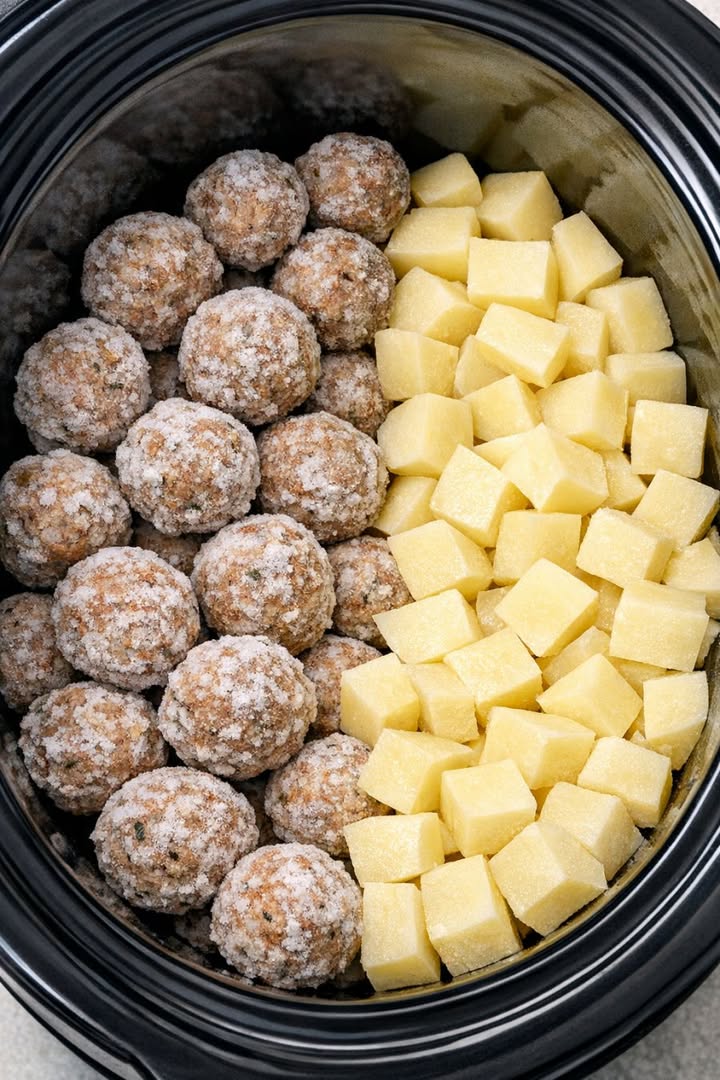
About 30 minutes before you plan to serve, mix the flour and cold water together with a fork until completely smooth with no lumps — this is called a slurry. Gently stir the slurry into the stew, being careful not to break the meatballs. If you are adding frozen peas, add them at this point as well. Replace the lid and continue cooking for 20 to 30 minutes, during which the stew will thicken noticeably. If you prefer a thinner broth, you can skip the slurry entirely — the stew will be more soup-like but still excellent. If you want an even thicker consistency, add a slightly larger slurry or allow the stew to cook uncovered for the last 15 to 20 minutes.
Step 6: Taste, Adjust, and Serve
Before serving, taste the stew and adjust the seasoning if needed — a little extra salt, a grind of black pepper, or a splash more Worcestershire sauce can make a final difference. Ladle into deep bowls and garnish with chopped fresh parsley if desired. Serve with crusty bread, dinner rolls, or over egg noodles or rice if you want to stretch the stew further.
Tips for the Best Result
The choice of potato matters more than it might seem. Waxy potatoes like Yukon Gold and red potatoes hold their shape through hours of slow cooking and produce distinct, identifiable potato chunks in the finished stew. Starchy potatoes like russets will cook faster, may break down into the broth, and can make the stew cloudy — which is not necessarily bad, but it is a different result. If you use russets, consider cutting them into slightly larger pieces and checking doneness earlier than the recipe specifies.
Do not overfill the slow cooker. Leave at least an inch of space below the lid to allow the stew to cook evenly and to prevent the liquid from bubbling over during cooking. A five or six quart slow cooker is the right size for this recipe. If you want to double the recipe, make sure your slow cooker is large enough to accommodate the extra volume without being more than two-thirds full.
For a creamier variation, stir in half a cup of heavy cream or sour cream in the last 20 minutes of cooking. This turns the stew into something richer and more indulgent, with a slightly different character than the standard tomato-and-broth base. A spicy variation is as simple as adding a pinch of red pepper flakes or a dash of hot sauce to the broth at the start. Adding a bay leaf or two during cooking and removing them before serving is another easy way to add depth to the broth.
Serving and Storage
Leftover meatball and potato stew keeps well refrigerated in an airtight container for up to four days. The flavors continue to develop overnight and the stew is often even better the following day. Reheat gently on the stovetop over medium-low heat, adding a splash of broth or water if the stew has thickened too much in the refrigerator. The stew also freezes well for up to three months — portion it into freezer-safe containers and thaw overnight in the refrigerator before reheating. Note that the potatoes may have a slightly different texture after freezing and thawing, as potatoes do not freeze as well as most other stew ingredients. If you plan to freeze the stew, consider undercooking the potatoes slightly so they hold up better through the freeze-thaw cycle.
