
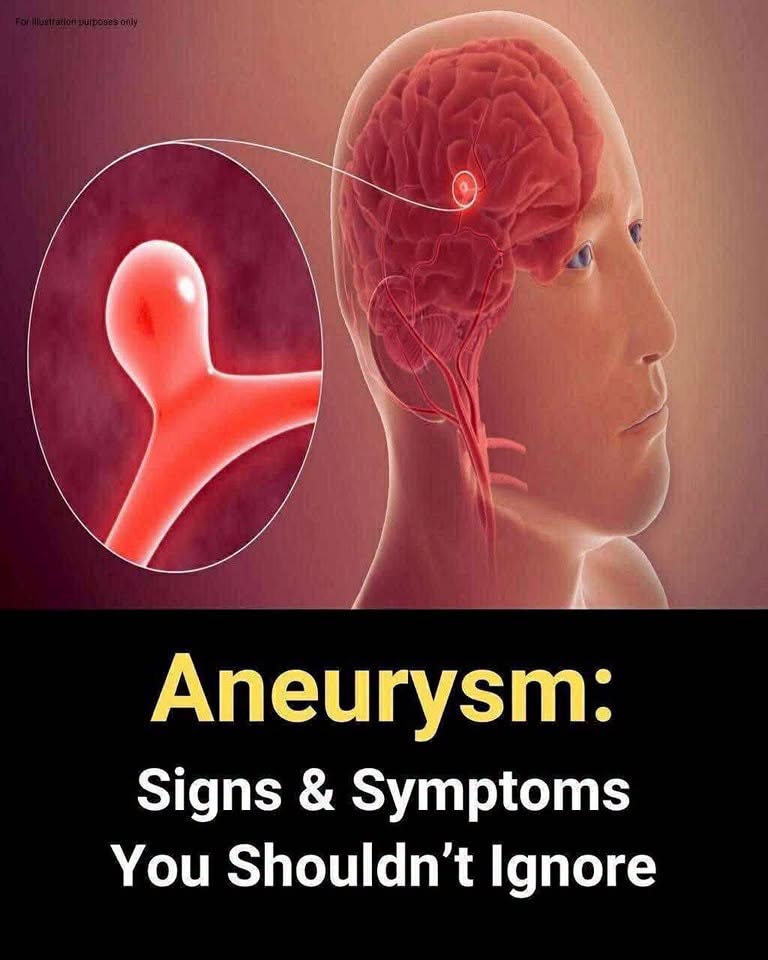
Confusion, mood swings, memory lapses, or uncharacteristic behavior can occur if an aneurysm affects frontal brain regions.
🆘 Action: Sudden cognitive/emotional shifts warrant medical review.
⚠️ Critical Distinction: Unruptured vs. Ruptured
| Unruptured Aneurysm | Ruptured Aneurysm |
|---|---|
| May cause no symptoms or mild warnings (eye pain, vision changes) | Causes sudden, severe symptoms (thunderclap headache, loss of consciousness) |
| Often found incidentally during imaging for other issues | Medical emergency—requires immediate intervention |
| Treatment: Monitoring, coiling, or clipping to prevent rupture | Treatment: Emergency surgery + intensive care to limit damage |
💡 Key insight: Many aneurysms are discovered before rupture during scans for unrelated issues. If you have risk factors (family history, smoking, high blood pressure), ask your doctor about screening.
🩺 Who's at Higher Risk?
While anyone can develop an aneurysm, risk increases with:
- Family history of brain aneurysms
- Smoking or heavy alcohol use
- High blood pressure (hypertension)
- Age (most common in adults 40–60)
- Certain conditions: Polycystic kidney disease, connective tissue disorders
- Head trauma or drug use (especially cocaine)
🌟 Good news: Managing blood pressure, quitting smoking, and limiting alcohol significantly reduce risk.
🆘 When to Seek Emergency Care
Call 911 or go to the ER immediately if you or someone else experiences:
✅ Sudden, severe headache ("worst ever")
✅ Headache + vomiting, stiff neck, or vision changes
✅ Loss of consciousness, seizure, or confusion
✅ Slurred speech, facial drooping, or weakness on one side
