
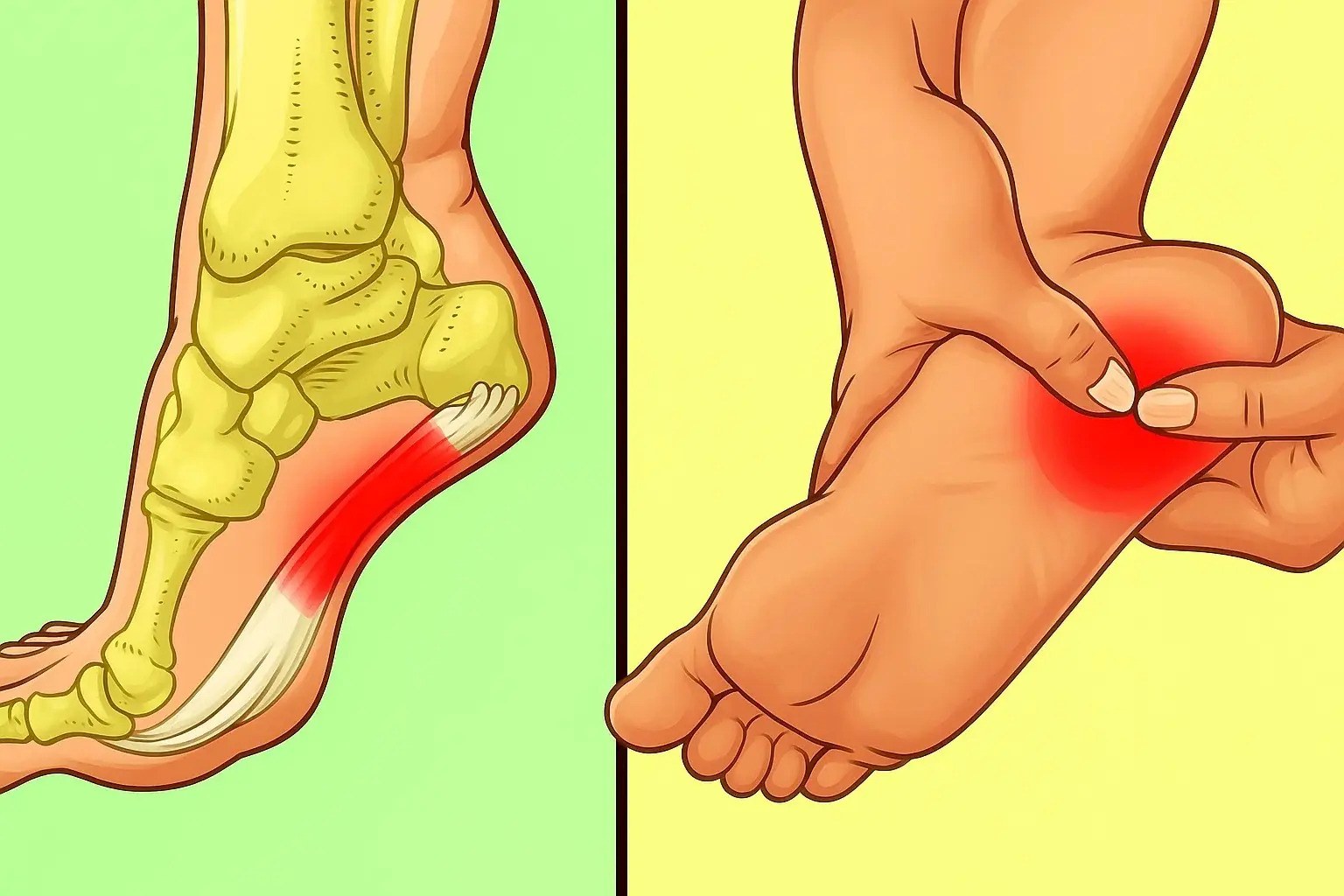
Numerous studies suggest that treating symptoms without addressing the underlying mechanics is like bailing water out of a leaking boat without fixing the hole.
Stretching (the “release”): Tightness in the calf muscles and the plantar fascia increases tension. Stretching helps reduce this tension and signals the nervous system to relax.
Strengthening (the “shield”): Exercises such as high-load strength training—for example, heel raises with a towel under your toes—help train the body to tolerate greater load. Over time, this encourages the tissue to adapt and become stronger through a process known as mechanotransduction.
Your Road to Recovery
The road to recovery isn’t always a straight line, but it is predictable based on research data. Most evidence-based programs suggest a timeframe of 4–8 weeks for meaningful structural changes to occur. Think of it like preparing for a 5K—you can’t rush the body’s adaptation process.
Stretching (2–3 times per day): Targets “first-step” pain. By stretching your calves and toes before getting out of bed, you reduce the risk of micro-tears caused by suddenly loading cold, stiff tissue.
Strength training (1–2 times per day): This involves progressive overload. Start gradually—the goal is to activate the muscles without triggering a flare-up that carries into the next day.
Conclusion
Heel pain isn’t just physical—it can become mentally exhausting, turning something as simple as a walk in the park into something you have to think twice about. It’s frustrating when “quick fixes” like expensive inserts or ice packs only offer short-term relief.
By focusing on a steady routine of stretching and strengthening, you’re not just covering up the pain—you’re working on the root of the problem. Be patient with your feet; they’ve carried you a long way. With a consistent, research-based approach, you’re not only moving toward recovery—you’re helping make sure the pain doesn’t come back.
Please SHARE this article with your family and friends on Facebook.
