
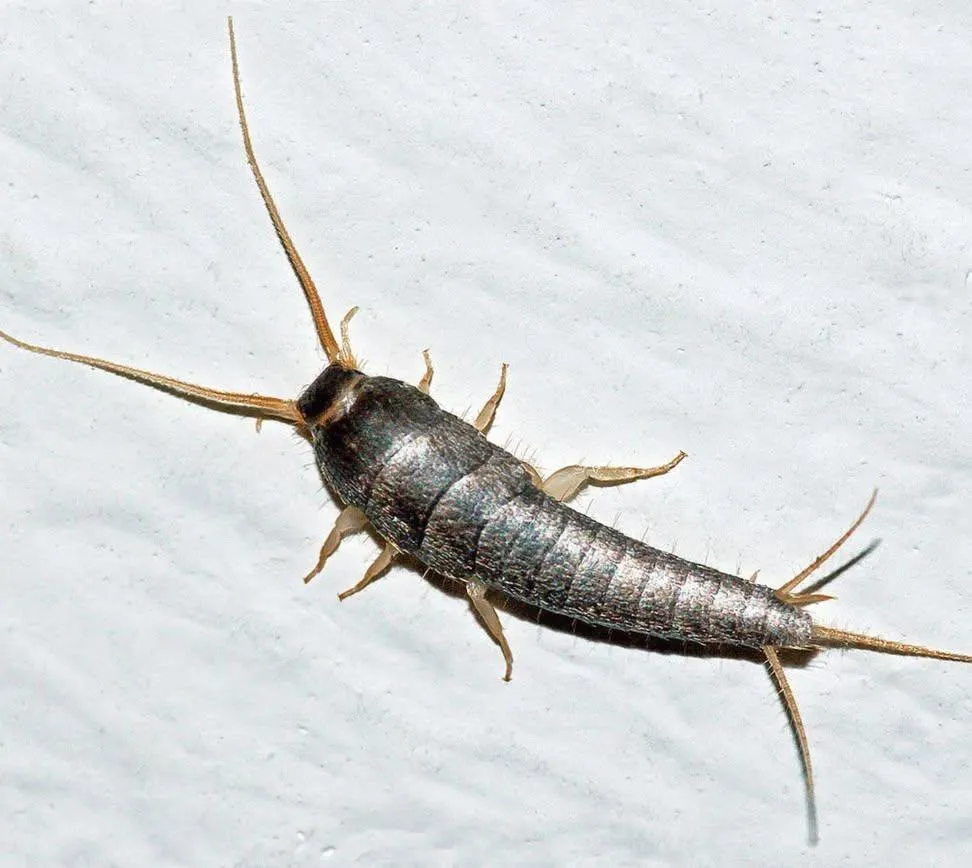
Books & paper – They’ll eat all the glue and pages.
Clothing & linens – Especially if they are kept for long.
Wallpaper – They chase the glue!
Food – Specifically pantry items like flour, oats, and cereal.
Worst of all, silverfish are very fast breeders. One or two could be a nightmare within a few months. So yes — they have to go.
How You Know You Have a Silverfish Problem
Other than the obvious — seeing one wiggle across your floor — silverfish signs may include:
- Yellow stains or little holes on paper or fabric.
- Shedded skin – Silverfish molt and leave a little shell behind.
- Droppings – Little black, peppery drops in dark corners.
- Wallpaper damage – Often along seams and corners.
If any of these signs appear in a damp area in your home — you have silverfish.

Getting Rid of Silverfish in Your Home
So what now? You’ve identified them and are packing them up. Here’s how:
1. Dry the Environment
Silverfish cannot live in dry conditions. A dehumidifier is a good idea — particularly in basements and bathrooms. Air must circulate. Ventilation is key.
2. Eliminate Their Food Sources
Clear out stacks of old paper, cardboard boxes, and books kept in damp places. Store pantry items in airtight containers. Vacuum frequently — yes, even those weird corners under the
furniture.
