
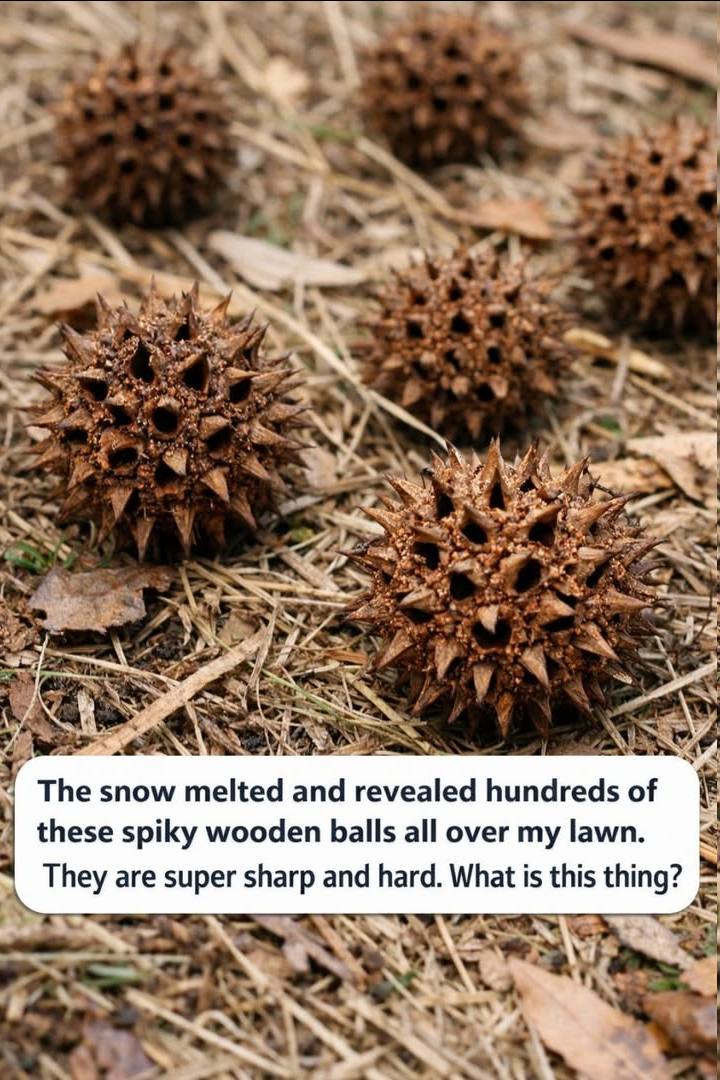
3. Why Your Yard Is Suddenly Covered After the Snow Melts
The presence of sweetgum balls often becomes most apparent after snow melts for a couple of reasons. During the winter, the snow covers the ground, hiding the fallen pods from view. As the temperature rises and the snow melts, the pods are suddenly visible.
Moreover, sweetgum trees typically shed their seed pods in late fall and throughout the winter. This means that by the time spring arrives, your lawn may be covered with an entire season’s worth of fallen pods, creating the illusion that they appeared overnight.
4. Are Sweetgum Balls Dangerous for Kids, Pets, and Lawnmowers?
Sweetgum balls can pose several hazards around the home. For children and pets, the sharp spikes can cause injuries if stepped on with bare feet or chewed on by curious animals. It’s important to monitor play areas and remove pods promptly to prevent accidents.
Lawnmowers can also be affected by sweetgum balls. Running over these hard pods can dull mower blades, and in some cases, the pods can become projectiles, posing a risk to people and property. Regular removal of the pods can help mitigate these risks and protect your lawn equipment.
5. The Science Behind Their Super Sharp, Woody Spikes
The spikes on sweetgum balls serve a biological purpose. They help with seed dispersal by deterring animals from eating the seeds and by providing a mechanism for the pods to catch in the fur of animals, thus spreading the seeds over a wider area. The spikes are made of lignin, a complex organic polymer that provides rigidity and strength, making the pods incredibly durable.
This durability ensures that the seed pods remain intact long after they fall, allowing them ample opportunity to distribute their seeds effectively. While this is beneficial for the tree, it can be a nuisance for homeowners.
