
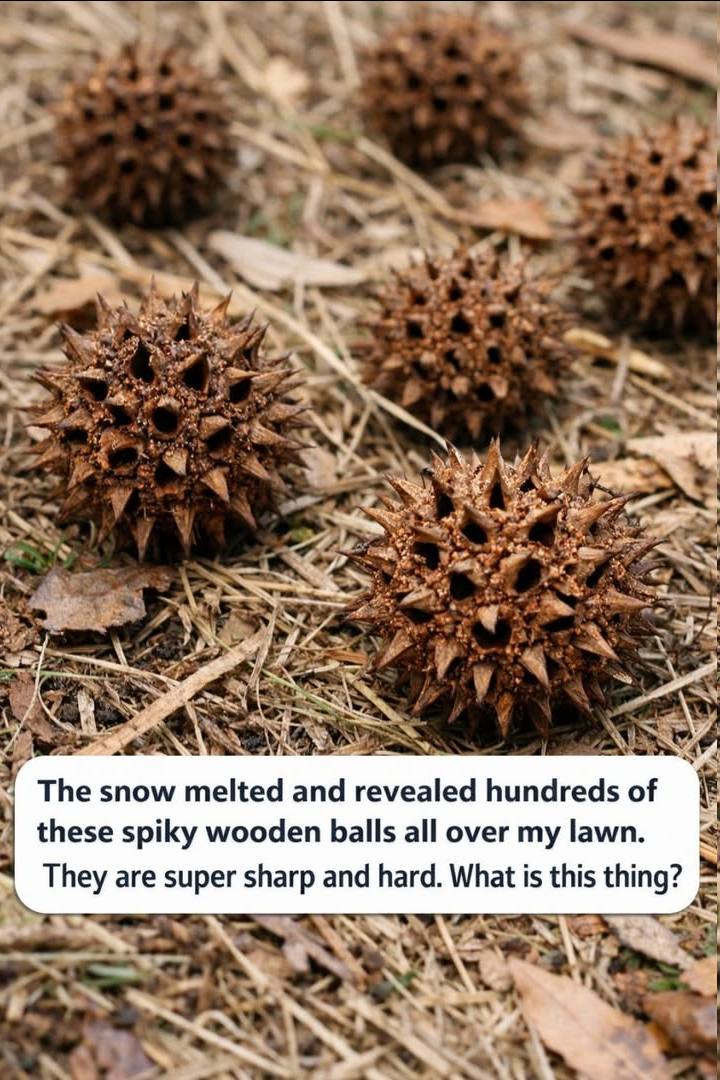
11. When To Call an Arborist About Your Sweetgum Tree Problem
If managing sweetgum balls becomes overwhelming, it might be time to consult a professional arborist. An arborist can provide expert advice on tree health, pruning techniques, or removal options. They can also assess the tree for any signs of disease or structural issues.
Arborists can help develop a maintenance plan tailored to your specific situation, ensuring that the sweetgum tree contributes positively to your landscape rather than becoming a persistent headache. Professional guidance can make all the difference in maintaining a harmonious and beautiful yard.
7. Smart Tools and DIY Hacks To Make Cleanup Less Miserable
Several tools and techniques can aid in sweetgum ball cleanup. A specialized tool known as a nut gatherer or nut roller can pick up pods easily by rolling over them, trapping them in a wire basket. A shop vacuum with a strong suction capability can also be used for small areas.
For a DIY approach, attaching a piece of hardware cloth or chicken wire to a rake can help in catching more pods with each pass. Additionally, spreading a tarp under the tree before the pods fall can simplify collection, as you can simply gather the tarp and dispose of the pods.
8. Creative Uses for Sweetgum Balls in Crafts and Décor
While sweetgum balls are often seen as a nuisance, they can also be a resource for creative projects. Their unique appearance makes them ideal for crafting decorations such as wreaths, ornaments, or table centerpieces. Painting the pods in festive colors can transform them into holiday decorations.
Additionally, sweetgum balls can be used in garden projects. They can be spread around flower beds as a decorative mulch, adding texture and interest. With a bit of creativity, these pods can be repurposed in a variety of ways.
9. Can You Compost or Mulch These Hard, Spiky Pods?
Composting sweetgum balls is possible, but it requires patience. Due to their hard, woody nature, they decompose slowly and should be shredded or crushed before adding them to a compost pile to speed up the process. It’s best to mix them with other organic materials to balance the compost.
As mulch, sweetgum balls can be used to deter pests due to their spiky nature. However, they should be spread in areas where people and pets won’t frequently walk, as the spikes can be uncomfortable underfoot. Over time, they will break down and enrich the soil.
