
* Senior living communities
* Shopping centers with inclusive design initiatives
* Airports and transportation hubs
In these environments, many visitors may not have formal disability permits but still need extra support—such as elderly individuals, patients recovering from surgery, or caregivers assisting others.
## 🧠 Why This Symbol Exists
Modern accessibility design is evolving. It’s no longer just about meeting minimum legal requirements—it’s about creating environments that work for **real people with diverse needs**.
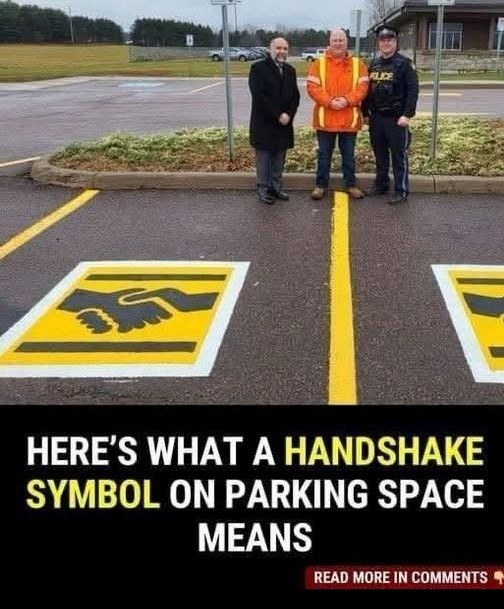
The handshake symbol reflects this shift.
It acknowledges that:
* Not all disabilities are visible
* Not all needs are permanent
* Assistance is often a shared effort
For example:
* A person recovering from an injury may need help getting in and out of a vehicle
* A caregiver may need extra space to assist someone
* An elderly individual may not qualify for a permit but still struggles with mobility
The handshake symbol creates space—literally and figuratively—for these situations.
## 🚗 The Ethics of Using These Spaces
Because handshake-designated spaces are often less strictly regulated, they rely heavily on **driver awareness and courtesy**.
This raises an important question:
**Should you park in a handshake space if you don’t need assistance?**
Legally, the answer may vary. But ethically, the answer is clearer.
These spaces are intended for people who need **extra time, space, or help**. Using them without need can:
* Limit access for those who rely on them
* Create unnecessary stress for vulnerable individuals
* Undermine the purpose of inclusive design
In other words, it’s not just about rules—it’s about respect.
## 🌍 A Growing Trend in Inclusive Design
The handshake symbol is part of a broader movement toward **inclusive and human-centered design**.
Around the world, designers and planners are rethinking how public spaces function. Instead of focusing only on categories (disabled vs. non-disabled), they are considering a spectrum of needs.
This includes:
* Flexible parking solutions
* Multi-use accessibility zones
* Clearer signage for diverse users
* Community-based approaches to shared spaces
The handshake symbol fits perfectly into this philosophy. It’s simple, intuitive, and universally understood—even without words.
