
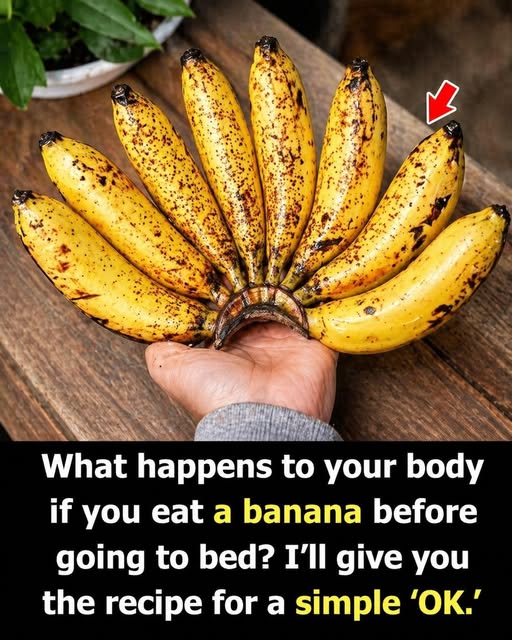
You’re lying in bed after a long day, your stomach still feels a bit empty, and you quietly reach for a banana thinking it’s the “safe” choice.
But then… you wake up in the middle of the night, restless, slightly bloated, and wondering what went wrong. It feels harmless, even healthy but something doesn’t quite add up. Here’s the surprising part: the timing of that banana might matter more than you think, and what happens inside your body at night could change the way you look at this simple habit forever.
What Really Happens When You Eat a Banana Before Bed?
At first glance, bananas seem like the perfect nighttime snack. They are soft, easy to digest, and packed with nutrients. But your body behaves differently at night compared to daytime.
Here’s what’s happening inside:
Bananas contain natural sugars like glucose, fructose, and sucrose. These provide a quick energy boost. That’s great in the morning, but at night, your body is preparing to slow down, not speed up.
They are also rich in magnesium and potassium. These minerals help relax muscles and support nerve function. This is why some people feel calmer after eating bananas.
And here’s where it gets interesting…
Bananas contain tryptophan, an amino acid linked to serotonin and melatonin production. These are hormones involved in mood and sleep regulation.
But that’s not the whole story.
The sugar content can slightly raise blood sugar levels. For some people, especially older adults, this may lead to small energy spikes followed by drops that disrupt sleep.
So yes, bananas can both help and disturb sleep depending on timing and individual response.
Are Bananas Good or Bad for Sleep? The Balanced Truth
Image
Let’s clear the confusion once and for all.
The truth is not black and white.
Bananas are not “bad,” but they are not universally ideal before bed either.
Here’s a simple comparison to understand better:
Factor Potential Benefit Possible Drawback
Magnesium Helps relax muscles Effect may be mild
Tryptophan Supports sleep hormones Needs proper timing
Natural sugar Prevents hunger May increase alertness
Fiber Aids digestion Can cause bloating at night
But here’s the part many people miss…
As we age, digestion slows down. That means food eaten late at night stays longer in the stomach. This can lead to discomfort, mild acid reflux, or interrupted sleep.
So while a banana is healthier than processed snacks, it’s not always the best late-night option for everyone.
Why Older Adults Should Be More Careful With Late Night Eating
Image
This is where things become especially important.
If you are over 50, your body processes food differently than it did in your 20s.
Here’s what changes:
Your metabolism slows down
Your digestive system becomes more sensitive
Your sleep becomes lighter and easier to disrupt
Now imagine adding sugar and fiber into your system right before lying down.
It can lead to:
A feeling of heaviness in the stomach
Increased nighttime urination due to potassium balance
Mild heartburn or acid reflux
Interrupted sleep cycles
And here’s something many people feel but rarely talk about…
Waking up tired despite “sleeping enough” hours.
That could be linked to what you eat before bed.
The Right Way to Eat Bananas Without Affecting Your Sleep
Image
Now comes the practical part you’ve been waiting for.
You don’t have to give up bananas. You just need to use them wisely.
Follow these simple steps:
Eat bananas earlier in the evening
Try to have them at least 2 to 3 hours before bedtime
Keep portions small
Half a banana is often enough, especially at night
Pair with protein
Combine banana with yogurt or a few nuts to stabilize blood sugar
Avoid very ripe bananas late at night
The riper the banana, the higher the sugar content
Listen to your body
If you notice bloating or poor sleep, adjust timing or reduce intake
And here’s the key takeaway…
Timing matters more than the food itself.
Better Alternatives to Bananas Before Bed
Image
If you’re looking for a more sleep-friendly option, consider these alternatives:
Warm milk
Contains natural compounds that support relaxation
Chamomile tea
Known for calming effects without added sugar
A small handful of almonds
Provides magnesium without spiking blood sugar
Kiwi fruit
Some studies suggest it may support better sleep quality
But remember…
Even healthy foods can become a problem if eaten too close to bedtime.
Actionable Night Routine for Better Sleep
Image
Let’s put everything together into a simple routine you can start tonight:
Step 1
Finish your last meal at least 3 hours before sleep
Step 2
If hungry, choose a light snack 1 to 2 hours before bed
Step 3
Keep portions small and avoid high sugar foods
Step 4
Stay hydrated but limit fluids right before sleep
Step 5
Create a calming routine like reading or gentle stretching
This is where many people see the biggest difference.
Not from one food, but from consistent habits.
Conclusion: Should You Eat Bananas at Night?
Bananas are nutritious, natural, and generally safe. But eating them right before bed may not be ideal for everyone, especially older adults.
The key is balance.
Eat them earlier, keep portions moderate, and pay attention to how your body reacts.
Sometimes, small changes like adjusting snack timing can make a noticeable difference in sleep quality.
And that “harmless” banana before bed?
Now you know it’s not just about what you eat, but when.
Frequently Asked Questions (FAQ)
1. Can eating a banana at night help me sleep better?
It can for some people due to magnesium and tryptophan, but others may experience mild sleep disruption from sugar content.
2. Is it bad to eat fruit before bed?
Not necessarily, but timing and portion size matter. Eating too close to bedtime may affect digestion and sleep.
3. What is the best time to eat a banana?
Late afternoon or early evening is generally a better time to enjoy bananas without affecting sleep.
Disclaimer
This article is for informational purposes only and does not replace professional medical advice. Always consult a qualified healthcare provider for personalized guidance.
Conclusion: Should You Eat Bananas at Night?
Bananas are nutritious, natural, and generally safe. But eating them right before bed may not be ideal for everyone, especially older adults.
The key is balance.
Eat them earlier, keep portions moderate, and pay attention to how your body reacts.
Sometimes, small changes like adjusting snack timing can make a noticeable difference in sleep quality.
And that “harmless” banana before bed?
Now you know it’s not just about what you eat, but when.
Frequently Asked Questions (FAQ)
1. Can eating a banana at night help me sleep better?
It can for some people due to magnesium and tryptophan, but others may experience mild sleep disruption from sugar content.
2. Is it bad to eat fruit before bed?
Not necessarily, but timing and portion size matter. Eating too close to bedtime may affect digestion and sleep.
3. What is the best time to eat a banana?
Late afternoon or early evening is generally a better time to enjoy bananas without affecting sleep.
Disclaimer
This article is for informational purposes only and does not replace professional medical advice. Always consult a qualified healthcare provider for personalized guidance.
