
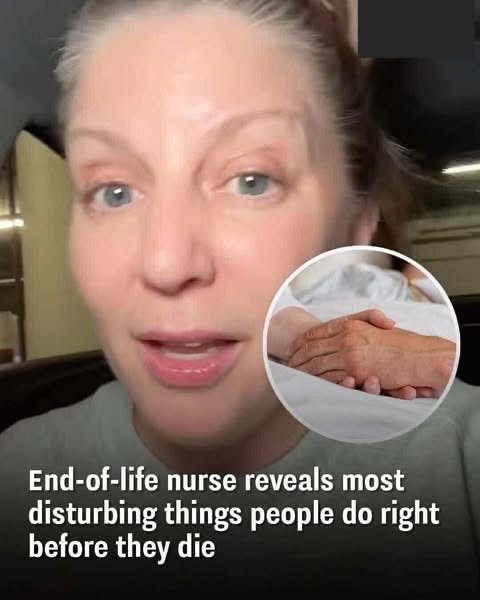
“Usually around the one month mark is when people will start seeing ‘the unseen’, they have the visioning. They’ll be seeing dead relatives, dead loved ones, dead pets, old friends who have died,” Julie said in one of her videos. “Again, not everyone — but many, many people will start seeing these things at around one month.”
Other people who have been working in hospice also share the same things happening with those who are nearing their life. Among them is Angela Morrow, a registered nurse at Verywell Health, who also agrees that people in the final stage of life often report sensing or hearing from those who have already passed away.
In her view, caregivers and relatives should not confront patients while discussing their encounters with the spirits of deceased persons or animals. Rather, they should listen patiently and answer with empathy, despite the strangeness of the situation. This way, they will ensure a feeling of security among patients instead of making them confused, upset, or uncomfortable.
“You might feel frustrated because you can’t know for sure whether they’re hallucinating, having a spiritual experience, or simply confused. The uncertainty can be unsettling, but it’s part of the process,” Morrow writes.

In the final part of the video, Nurse Julie discusses the indicators used by nurses working in the area of palliative care for determining the stage of dying. According to her, the important aspects considered include eating, drinking, and sleeping habits. In fact, she mentions that before a person dies, usually a couple of weeks before death, they sleep much more than they are awake.“Most people, a few weeks out from death, will be sleeping more than they are awake. And they will be barely eating and barely drinking,” she said.
According to her, hospice care typically entails “allowing the body to be the guide” because the nurse watches all these changes very closely and guides the patient during the last phase of life. The nurse does not impose anything on the patient but only comforts and guides them.
Nurse Julie’s work has resonated deeply with many people online, especially those going through end-of-life experiences with loved ones. Her videos have offered reassurance during emotionally difficult moments. “My mom is in hospice right now and she’s currently, I think, hours or days from death. Your TikToks have helped me out tremendously,” Deb wrote. Others have shared similar feelings of comfort and understanding. “My grandma passed away in February, and she experienced all of this. this page brings me peace knowing everything she went through was natural,” Jaida added.
Healthcare workers have also expressed appreciation for her educational content. “Thanks, Julie. I volunteer in a hospice end-of-life facility, and this helps educate the families. Your posts are wonderful,” Grandma Nita wrote.
Ultimately, death is a subject that is so hard to deal with partly because of its unpredictable nature. Through her open discussion of what she had been through, Julie McFadden brings some understanding to this topic by demonstrating that the process of dying is usually a normal process rather than an unexpected event. The message brought out by her is that hospice care is not about giving up but supporting the process.
Please SHARE this article with your family and friends on Facebook.
