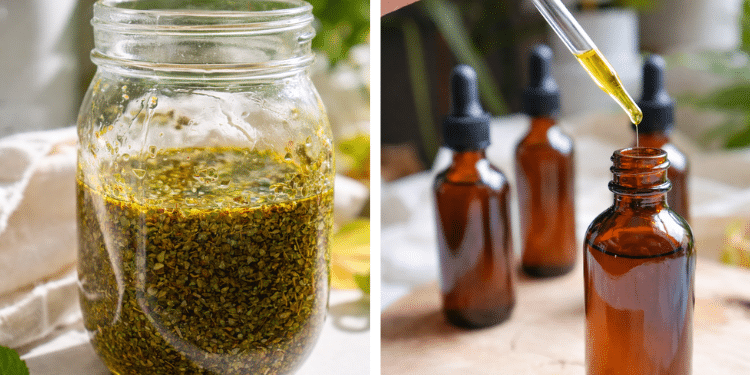
Do not leave on for extended hours without guidance.
Important Safety Information
Oregano oil is powerful. Even homemade infused oil can cause irritation if overused.
Follow these safety guidelines:
- Always dilute further before topical use.
- Never apply essential oregano oil directly to skin.
- Avoid contact with eyes and mucous membranes.
- Do not use during pregnancy without medical advice.
- Do not give to young children without professional supervision.
- Avoid internal use unless advised by a healthcare professional.
Excessive use may irritate skin or digestive lining.
Infused Oil vs. Essential Oil: Know the Difference
Homemade oregano oil is an infusion. It is much milder than oregano essential oil, which is highly concentrated.
Essential oregano oil can contain very high levels of carvacrol and must be diluted heavily before use.
If purchasing essential oil, ensure it is labeled for therapeutic use and follow strict dilution ratios.
How to Store Oregano Oil Properly
To maintain potency:
- Store in a dark glass bottle
- Keep away from heat and sunlight
- Use within 2–3 months
- Discard if odor changes
Carrier oils can go rancid over time, especially if exposed to air.
Can Oregano Oil Replace Medical Treatment?
No.
While oregano oil has a strong traditional reputation, it should not replace prescribed antibiotics, antifungals, or digestive treatments.
It can be used as a supportive wellness tool – not as a cure.
Yes, you can make potent oregano oil at home with just two simple ingredients. When prepared correctly, this herbal infusion offers a concentrated source of oregano’s traditional plant compounds.
Often called “liquid gold,” oregano oil has been used for immune support, digestive balance, and topical care for centuries. But with its potency comes responsibility.