
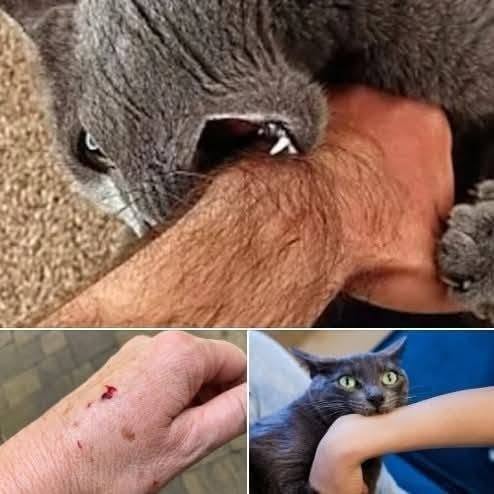
3. Overstimulation
Just like people, cats can become overwhelmed. Too much petting, noise, or physical interaction can lead to sensory overload. When that happens, a quick bite may be their way of saying, “I need a break.” Learning to recognize the signs of overstimulation—such as twitching tails or flattened ears—can help avoid these moments.
4. Fear or Stress
If a cat feels threatened, cornered, or scared, biting becomes a natural defense. It’s their way of protecting themselves when they sense danger—even if the threat isn’t obvious to you.
5. Pain or Discomfort
Sudden biting—especially from a cat that’s usually calm—can sometimes be a red flag. It might be their way of signaling pain or illness. If your cat starts biting out of nowhere, a visit to the vet is a smart move to rule out any hidden health issues.
6. Territorial Behavior
Cats are famously territorial. If they feel like their space, favorite napping spot, or cherished toy is being invaded, they might bite to assert control. This instinctive behavior is rooted in their wild ancestry, where protecting territory was key to survival.
7. Kittens and Young Cats
Kittens love to bite during play—it’s how they learn about boundaries. But allowing them to bite your hands or feet might send the wrong message. If not corrected early, this behavior can continue into adulthood, and those playful nips can turn painful fast.
To avoid this, redirect their biting to toys. Teaching young cats that human skin isn’t a toy helps them grow into gentle, well-behaved adults and fosters a safer, happier relationship for both of you.
