
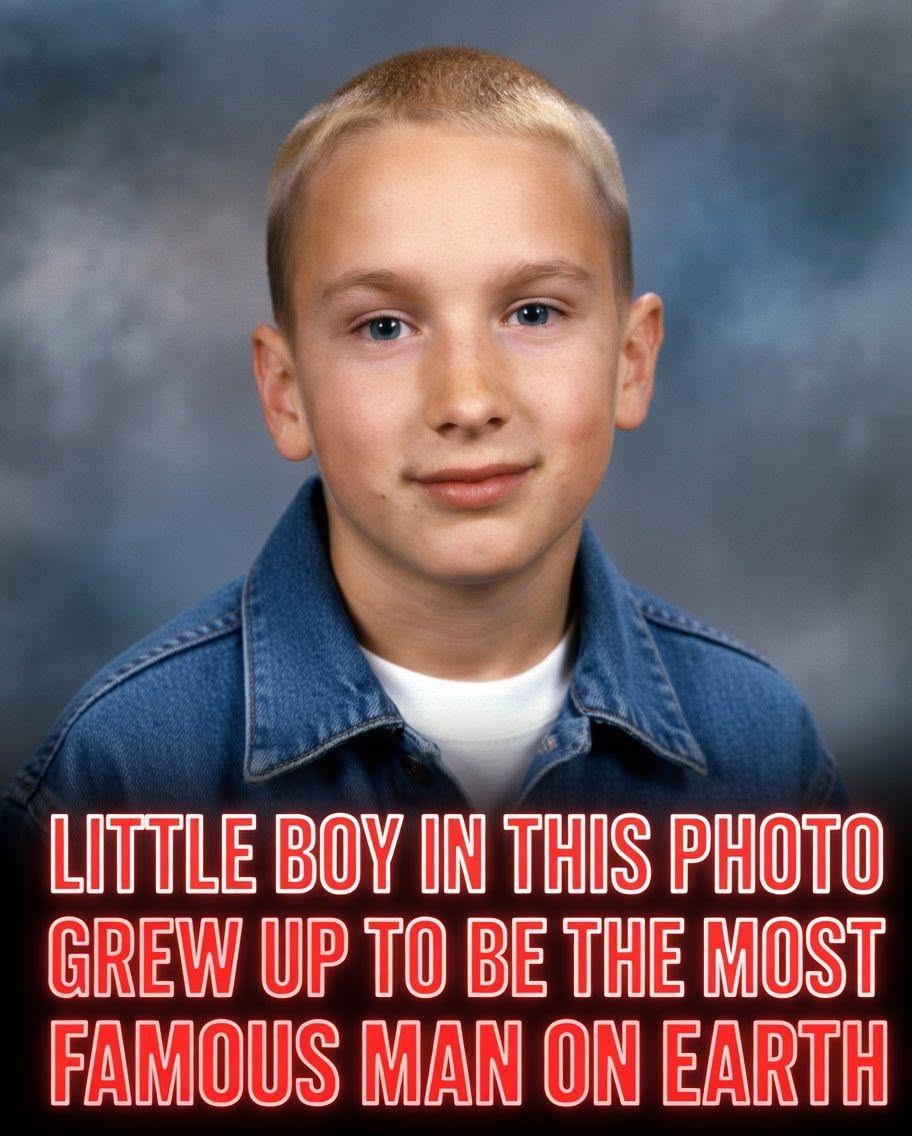
A Reality That Threatened the Dream
By his early twenties, Marshall’s world was at a breaking point. Living in poverty, working grueling hours as a short-order cook for minimum wage, and trying to provide for his newborn daughter, Hailie, his frustrations boiled over. His debut independent album, Infinite, flopped hard, with critics telling him he should try country music instead.
Desperate, broke, and evicted from his apartment just days before Christmas, Marshall hit rock bottom. He swallowed his despair and channeled his rage, anxiety, and dark humor into a malicious, unhinged alter-ego: Slim Shady.
He took his last remaining dollars to fly to the 1997 Rap Olympics in Los Angeles. Though he placed second, a copy of his tape found its way into the hands of legendary producer Dr. Dre.
Dre listened and didn’t care about Marshall’s background or the color of his skin—he only heard an undeniable, once-in-a-generation genius.
The First Breakthrough — From the Underground to the World
In 1999, The Slim Shady LP dropped like an atomic bomb on popular culture. With Dr. Dre’s masterful production backing him, Eminem’s nasal delivery, cartoonish violence, and terrifyingly complex rhyme schemes captivated the youth and horrified parents across the globe.
He wasn’t just a rapper; he was a cultural phenomenon.
By the time he released The Marshall Mathers LP in 2000, he had conquered the music industry, selling an unprecedented 1.76 million copies in its first week alone. He became the voice of an angry, misunderstood generation, shifting the boundaries of free speech and artistic expression forever.
