
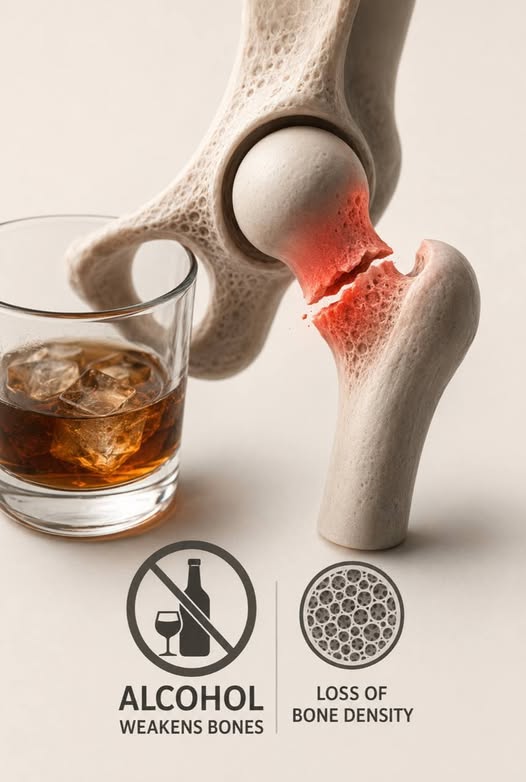
Alcohol, in particular, can reduce the activity of cells responsible for forming new bone tissue. Heavy drinking over many years may increase the risk of osteoporosis, a condition that causes bones to become thin and brittle. Similarly, people who consume large amounts of soft drinks may replace healthier beverages such as milk, reducing their calcium intake.
Advertisement
However, it is important to understand that no single drink instantly destroys bones. Bone health depends on many factors, including diet, physical activity, age, genetics, hormone levels, and overall lifestyle. Drinking a soft drink or an alcoholic beverage occasionally does not automatically lead to bone damage.
