
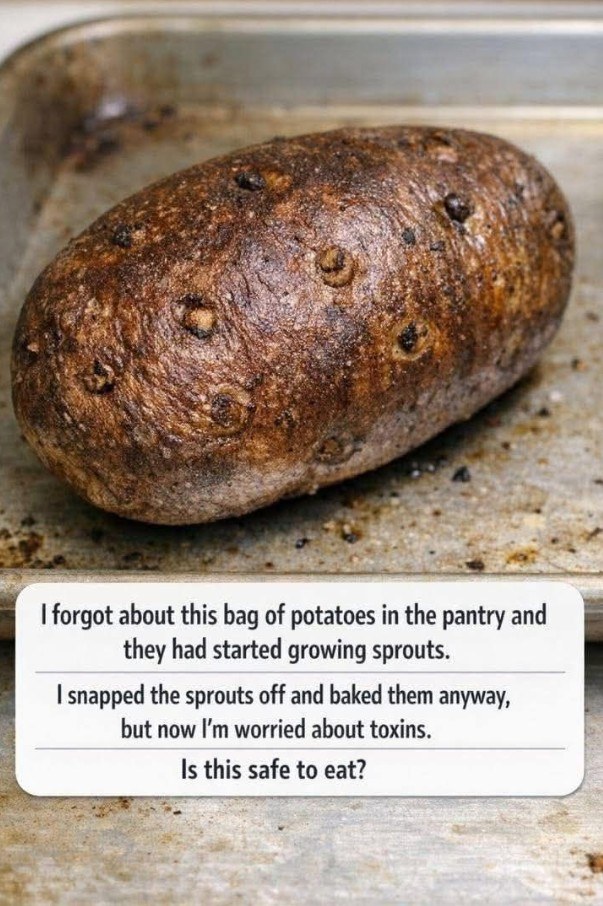
- Does Baking Destroy Solanine Or Other Potato Toxins?
Baking or cooking potatoes does not significantly reduce solanine levels. Solanine is heat-stable, meaning it does not break down easily at the temperatures typically used in cooking. Therefore, baking, boiling, or frying potatoes will not eliminate the risk of toxicity from solanine if it is present in high concentrations.
To minimize the risk, it is crucial to start with potatoes that are not heavily sprouted or green. If in doubt, it’s safer to discard potentially toxic potatoes rather than relying on cooking to make them safe.
Baked potatoes on a tray in a home oven setting
Baked potatoes on a tray in a home oven setting
- Symptoms To Watch For If You Already Ate Sprouted Potatoes
If you have consumed sprouted potatoes and are concerned about solanine poisoning, watch for symptoms such as nausea, vomiting, diarrhea, stomach cramps, and headaches. In more severe cases, symptoms can include neurological effects such as dizziness, confusion, or hallucinations.
If you experience any of these symptoms after eating sprouted potatoes, it is advisable to seek medical attention, especially if symptoms persist or worsen. While solanine poisoning is rare, it is better to be cautious and get evaluated by a healthcare professional.
- Safer Ways To Prep And Cook Slightly Sprouted Potatoes
If you choose to use slightly sprouted potatoes, take care to remove all sprouts and any green or discolored areas. Peel the potatoes to remove the skin, where solanine concentrations are highest. Cutting away any soft or damaged parts is also recommended.
After preparing the potatoes, cook them thoroughly. While cooking does not eliminate solanine, it ensures that the potatoes are safe from other microbial contaminants. Choose cooking methods that you enjoy, but ensure the potatoes are cooked through to enhance their palatability.
