
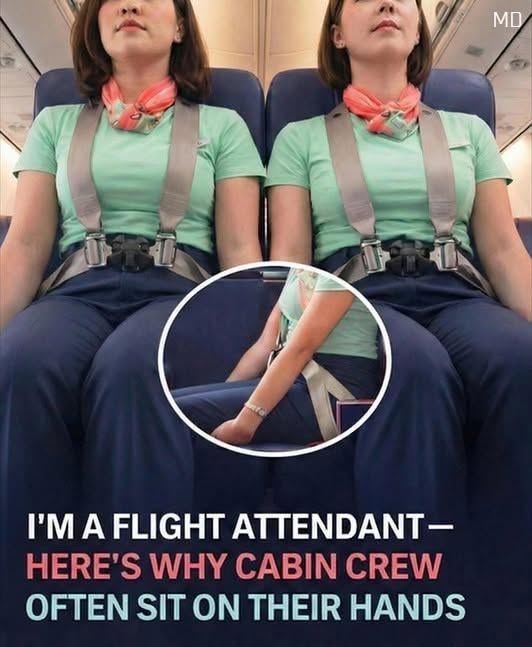
Takeoff and landing are widely recognized as the most sensitive stages of a flight. During these moments, the aircraft is closer to the ground, speeds are changing, and pilots are managing complex procedures. Because of
this, cabin crew members are trained to adopt a specific brace position whenever the aircraft is preparing for departure or arrival. This includes sitting upright with the back straight, shoulders aligned, feet flat on the floor, and hands placed palms-up beneath the thighs. The body is positioned in a way that limits sudden movement and helps maintainThe main purpose of this posture is injury prevention.
In the unlikely event of abrupt turbulence or a hard landing, keeping the arms secured reduces the risk of flailing or impact-related injuries. By stabilizing their bodies, flight attendants are better protected and more likely to remain physically capable of assisting passengers immediately
