
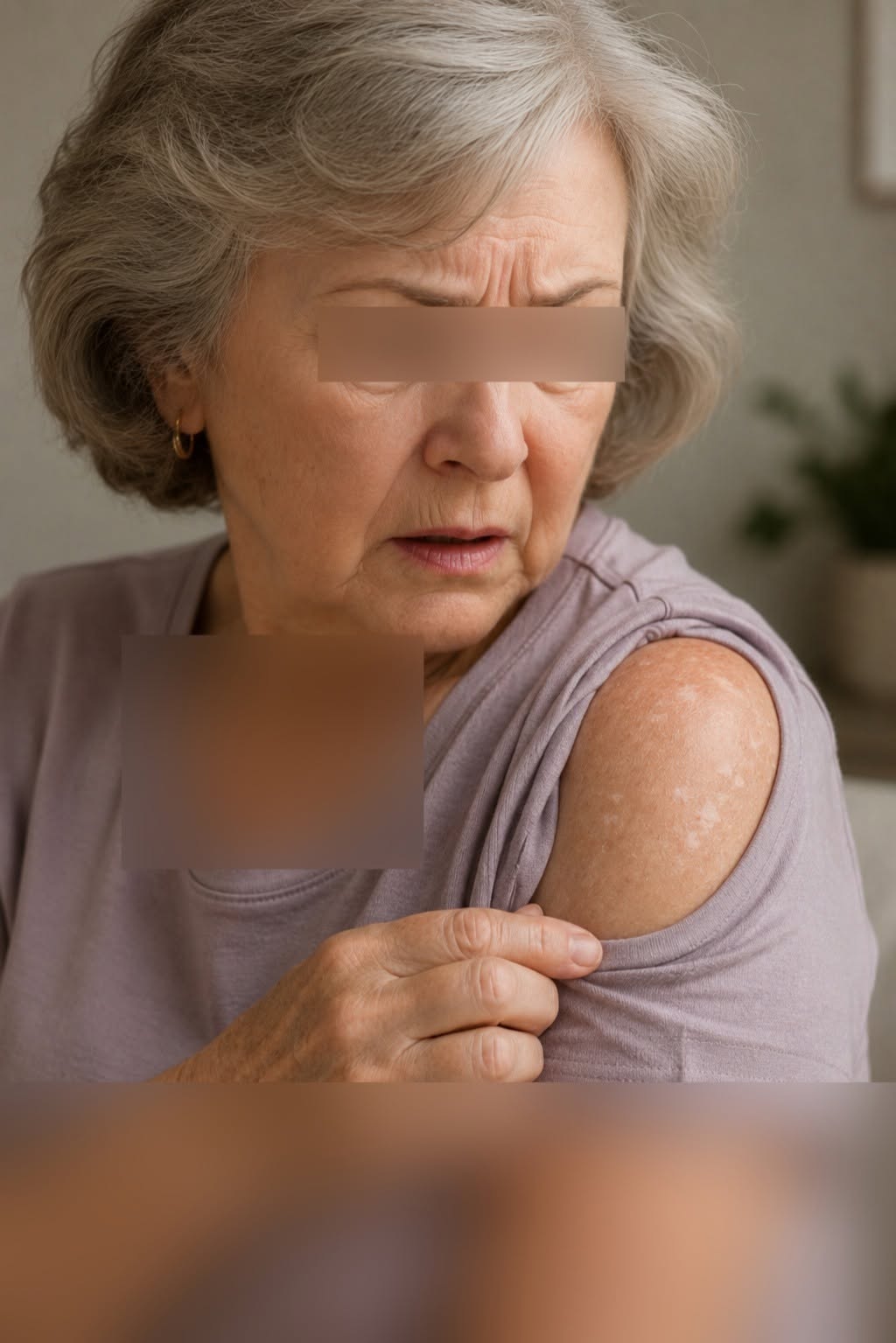
Tinea versicolor causes discolored, scaly patches on your skin due to fungal overgrowth. Common treatments include antifungal creams and shampoos.12
American Academy of Dermatology Association. Tinea versicolor: Diagnosis and treatment.
Tinea Versicolor Symptoms
The first symptom of tinea versicolor is oval-shaped, scaly patches on your skin. These spots may be hyperpigmented (darker in color) or hypopigmented (lighter in color) as compared to your normal skin tone. Keep in mind: this infection can look different on people with different skin tones. Patches may appear white, red, pink, salmon, brown, or tan in color and can develop anywhere in the body. In most cases, people notice these spots on their neck, back, arms, or trunk (butt).3
The spots tend to be dry, which may cause you to feel itchy. Over time, the patches can grow larger. But it’s worth noting that sometimes the patches can disappear during winter when the temperature drops and return in the summer or spring when the weather becomes warm and humid again. Generally, exposure to the sun also makes the spots more visible because the affected skin does not tan or darken like normal skin.3
Causes and Risk Factors
A fungus called Malassezia, which is a natural component of your normal skin flora is responsible for causing tinea versicolor. The fungus is most commonly found in oily areas of your skin including the scalp, face, and back. Malassezia is not harmful under normal circumstances. But an overgrowth of the fungus can cause this fungal infection.1
The following factors can increase your risk of experiencing this fungal infection:14
A weakened immune system
Steroid therapy
Excessive sweating
Family history of the infection
Pregnancy
Living in a hot and humid climate
Having oily skin
Experiencing hormonal changes
Tinea versicolor tends to be more common among children and adolescents since they experience an increase in sebum (oil) production due to hormonal changes as they get older. This creates a more lipid-rich environment that supports the growth of the fungus.5
Diagnosis
Healthcare providers can diagnose tinea versicolor based on the appearance of the discolored patches on your body. But your provider may also order additional testing to rule out other skin conditions and confirm the diagnosis of the infection. These tests include:62
Microscopic examination: Takes a sample of your skin and sends it into a lab to view the sample under a microscope and check for harmful pathogens (e.g., fungi, bacteria, etc.)
Wood’s light test: Uses a special device known as the Wood’s lamp which emits ultraviolet (UV) rays and shows the infected skin as a yellow or orange color under the UV light
Potassium hydroxide examination: Soaks patches of your skin with a solution mixed with potassium hydroxide to view the spots under a microscope, which checks for the presence of fungi
Tinea Versicolor Treatments
The most common treatments for tinea versicolor are topical antifungal shampoos, creams, soaps, and lotions that you can place directly on the infected skin. Topical treatments may include non-specific antifungal agents such as zinc-pyrithione, selenium sulfide 2.5%, and sulfur plus salicylic acid or specific antifungal drugs such as ketoconazole 2%, isoconazole, and clotrimazole 1%.1
Your healthcare provider will usually recommend Nizoral (ketoconazole) to treat your infection. This treatment usually comes in the form of a cream or foaming solution. But, if you have a more severe infection, your provider may recommend an oral medication. Options for medications typically include Azocan (fluconazole) which you take weekly for two to four weeks or Sporanox (itraconazole) which you take daily for seven days.1
If you live in a hot and humid climate, it’s common to experience this infection multiple times. It may help to use a medicated cleanser once or twice a month to prevent fungal growth. If you’ve experienced tinea versicolor multiple times, ask your provider about which preventative treatments are safe for you.2
Prevention
You can follow certain steps to prevent tinea versicolor, especially if you live in or are traveling to an area with a hot or humid climate. These prevention techniques include:7
Wearing loose-fitted clothes
Avoiding the use of oily skincare products
Putting on a broad-spectrum sunscreen at least 20 minutes before going out in the sun
You can also prevent mild cases of tinea versicolor from becoming severe by:7
Trying shampoos that contain selenium
Using antifungal ointments or creams that contain terbinafine, clotrimazole, or miconazole
Complications
Tinea versicolor is generally not harmful or contagious. But if the infection is left untreated, it can become more severe. Untreated tinea versicolor can lead to long-term skin discoloration that may last for weeks and even months. If you’re experiencing this infection on your scalp, lack of treatment may also increase your risk of hair thinning and hair loss due to excessive itching.6
Living With Tinea Versicolor
Tinea versicolor is easy to treat and does not cause any severe complications. Early diagnosis and treatment can help your skin discoloration return to normal within a few weeks. That’s why it’s so important to talk to your provider if you start noticing changes in your skin. As you treat your infection, it can also help to protect your skin from the sun such as by wearing long-sleeve and loose clothing, sunglasses, or a hat.
Frequently Asked Questions
- Does tinea versicolor ever go away?Tinea versicolor can sometimes go away with treatment. But if you don’t use proper antifungal treatment, the patches can take several months to return to their normal color. Untreated tinea versicolor can also increase your risk of experiencing repeat infections.
- Which deficiency causes tinea versicolor?Having a vitamin D deficiency can sometimes increase your risk of tinea versicolor indirectly because the deficiency causes a weakened immune system—a common risk factor for this type of infection.
