
in holidays marked by absence rather than celebration
in ordinary moments that suddenly feel extraordinary because they are being survived
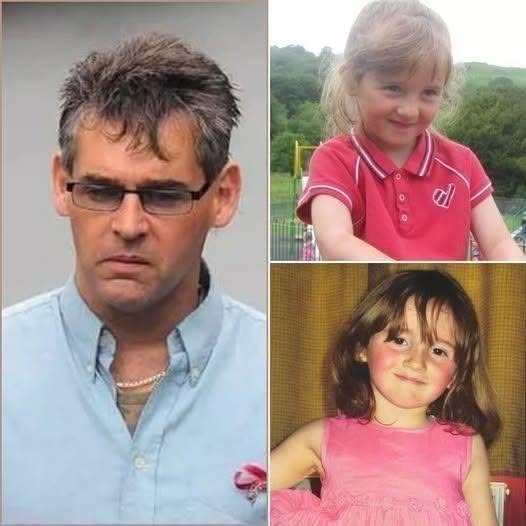
For the family of April Jones, each passing year has meant learning how to carry memory without being consumed by it.
There is no instruction manual for this.
No timeline.
No final stage where grief ends.
Only continuation.
The Weight of Public Attention
When a tragedy becomes widely known, it creates a second layer of experience for the family involved: public grief.
Strangers form emotional connections to the story.
Communities mourn collectively.
Media coverage ensures that the name becomes part of national memory.
While this attention can bring support and solidarity, it also introduces complexity.
For parents, private grief becomes partially public.
Their loss is discussed, remembered, and revisited by people they will never meet.
In the years following the disappearance of April Jones, her name became a symbol of both heartbreak and vulnerability in society.
But for her parents, she was never a symbol.
She was a child.
A daughter.
A daily presence that could not be replaced by public remembrance or collective mourning.
This gap between public narrative and private reality is one of the most difficult aspects of high-profile loss.
The Home That Changed Forever
After such a loss, a home does not remain the same.
Rooms hold different meanings.
Objects become reminders.
Even silence changes tone.
Parents often describe how the absence of a child becomes physically noticeable in ways that defy language.
It is not just emotional—it is environmental.
The way mornings feel different.
The way evenings stretch longer than they used to.
The way memories appear uninvited in everyday moments.
For the family of April Jones, the passage of time has not removed these echoes.
Instead, it has reshaped how they are carried.
Some memories become softer.
Others remain sharp.
And all of them coexist with the present.
How Parents Continue Forward Without “Moving On”
The phrase “moving on” is often used in conversations about grief, but it is rarely accurate in describing parental loss.
Parents do not move on from a child’s death.
They move forward with it.
This distinction is important.
Moving on suggests leaving something behind.
Moving forward suggests carrying it differently.
For grieving parents, life becomes an ongoing negotiation between memory and survival.
There are moments when grief is overwhelming.
There are moments when it is distant.
And there are moments when both exist at the same time.
The parents of April Jones, like many others who have experienced similar loss, have had to learn how to live within this contradiction.
To remember without being consumed.
To continue without forgetting.
To exist in a world that no longer feels complete.
The Role of Community in Long-Term Healing
In the aftermath of tragedy, communities often rally together in powerful ways.
Vigils.
Fundraisers.
Memorials.
Public statements of solidarity.
But what is less visible is what happens after the initial response fades.
True community support is measured not only in the immediate aftermath, but in the years that follow.
In continued acknowledgment.
In remembrance that does not fade with news cycles.
In quiet gestures that say: we still remember, even when the world has moved on.
For the community connected to April Jones, her memory continues to hold a place in collective awareness.
Not as a headline.
But as a name tied to reflection, caution, and compassion.
The Emotional Complexity of Remembering
Memory is not static.
It evolves with time.
For families who have experienced loss, remembering is not always comforting. Sometimes it is painful. Sometimes it is grounding. Sometimes it is both.
Parents often describe memory as something they must actively manage.
Too much focus on the past can make the present unbearable.
Too little can feel like abandonment.
So they find balance in small rituals:
speaking the child’s name
preserving photographs
maintaining personal traditions
acknowledging anniversaries in private ways
These acts do not resolve grief.
But they give it structure.
And structure makes it survivable.
What the Passage of Time Really Means
When people hear that years have passed since a tragedy, they often assume distance equals healing.
But time does not replace loss…
