
The best time is 2 to 5 minutes before you put your sandals on. That gives you just enough time to spread it evenly and let the excess settle so it is not sitting in a thick layer on the skin. If I am heading out for a long day—anything over 1 hour on my feet—I apply it before leaving and carry a small travel tin for reapplication.
For beach days, sightseeing, outdoor festivals, or shopping trips, reapply every 3 to 4 hours, especially if your feet get sandy, sweaty, or wet. If you towel your feet off or rinse them, the protective layer is partly gone, so renew it before the rubbing starts again.
4. Where to place it so it actually stops the rubbing
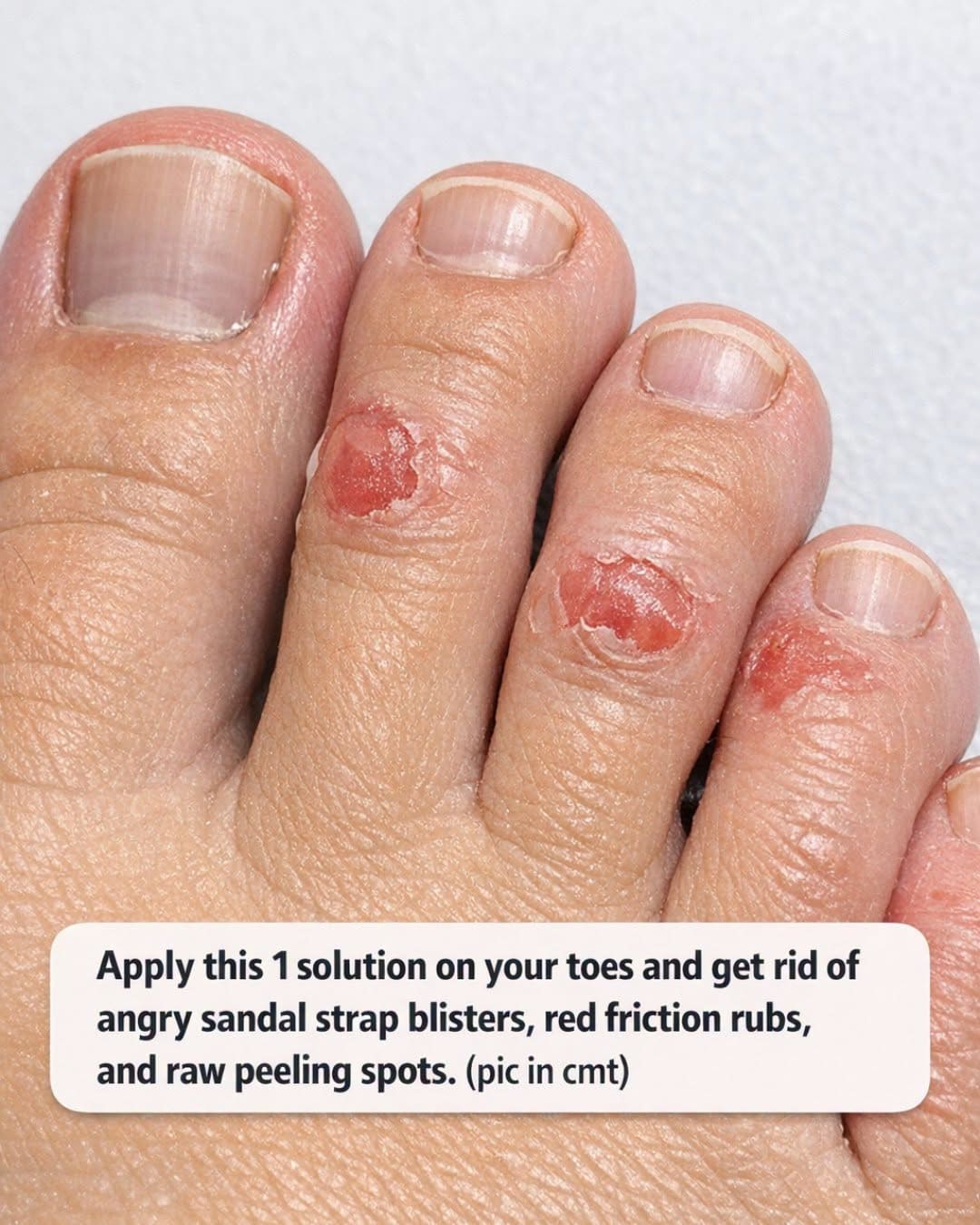
Focus on the contact zones, not the whole foot. Common hot spots include the top of the second and third toes, the side of the big toe, the skin between the big toe and second toe if you wear thong sandals, and the outside edge of the little toe where a narrow strap presses.
A quick way to identify your trouble spots is to put the sandal on for 30 seconds, take it off, and look for indent marks. Those marks show you exactly where the pressure and rubbing are happening. Apply the jelly 1 to 2 centimeters beyond those lines so the strap cannot “catch” the bare edge of the skin.
5. How to use it on red friction rubs before they blister
If the skin is red, warm, and sore but not broken, petroleum jelly is at its most helpful. Wash the area gently with lukewarm water, pat it fully dry, then apply a thin coat. If you can, give the skin 10 minutes out of shoes before putting sandals back on.
This is the stage where you can still stop things from getting worse. I’ve had many spots go from “this is definitely becoming a blister” to completely manageable just by cleaning the area, using a thin layer of petroleum jelly, and switching from a tight strap sandal to a softer pair for the rest of the day.
