
6. What to put on afterward
After rinsing, I reach for a bland, fragrance-free moisturizer. A cream with ceramides, glycerin, squalane, or petrolatum can help seal in moisture and support the skin barrier. For many people, a nickel-sized amount is enough for the whole face.
If it’s daytime and you’ll be near windows or heading outside, finish with a mineral sunscreen, ideally SPF 30 or higher with zinc oxide. Heat-flushed skin can be even more reactive to sun exposure. I usually wait 5 minutes after moisturizing before applying sunscreen so I’m not rubbing too much all at once.
I skip strong actives for the rest of the day: no exfoliating acids, no retinoids, no vitamin C if it tends to sting, and no cleansing brushes. On red-skin days, I treat my face the way I treat a child with a scraped knee—gently, calmly, and with as little fuss as possible.
7. What not to do when your face is hot and red
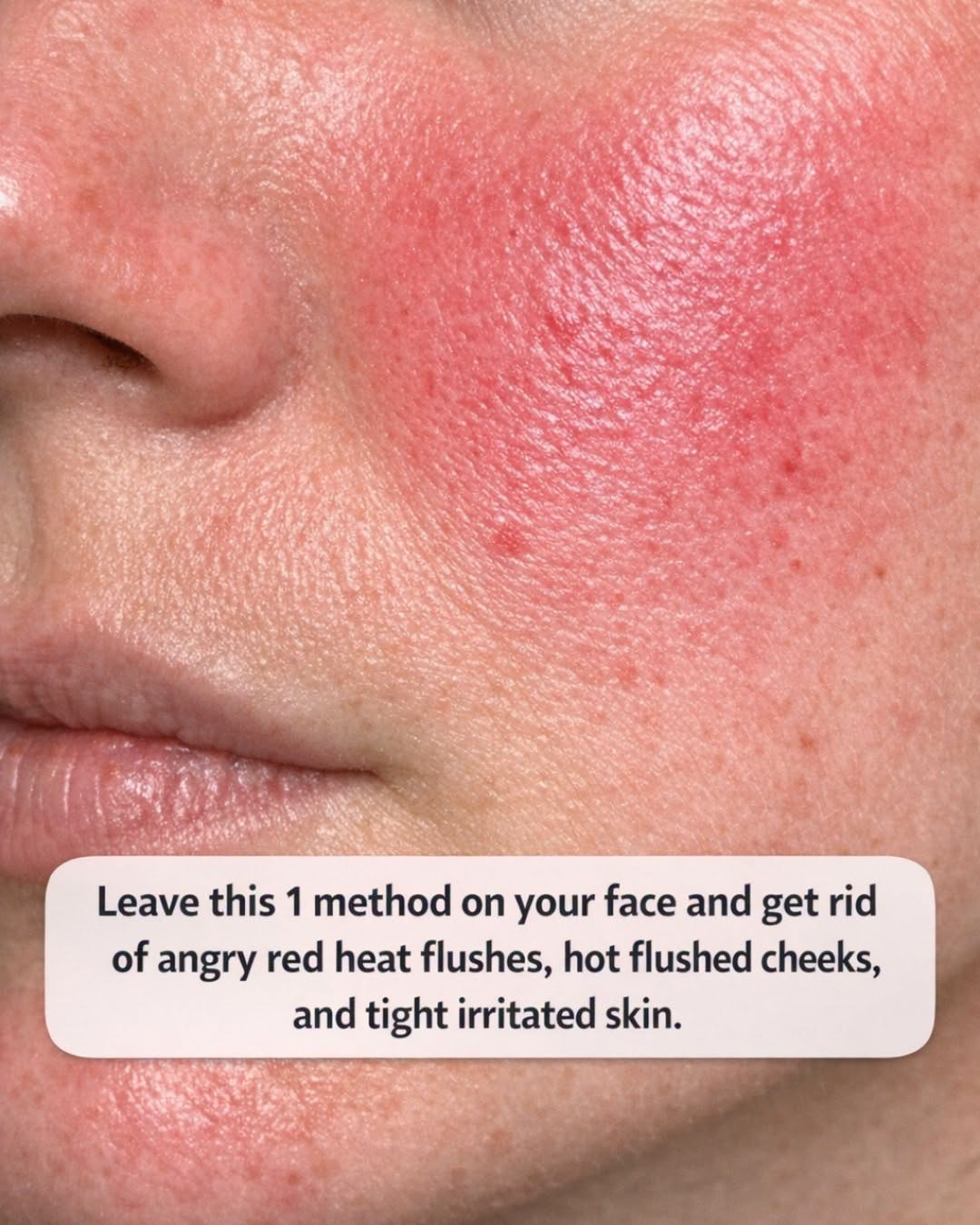
This part matters just as much as the soothing method itself. I avoid ice cubes directly on the face, very hot showers, harsh exfoliating scrubs, alcohol-heavy toners, menthol products, and anything strongly scented. Those can make skin feel temporarily “fresh” but often increase irritation afterward.
I also avoid layering on 4 or 5 different calming products at once. When skin is upset, too many ingredients can make it harder to figure out what is helping and what is making it worse. One soothing treatment, one moisturizer, and sunscreen if needed is usually enough for the day.
And if your skin is flushed from being out in the sun too long, don’t keep standing in a hot kitchen over the stove. Step into a cool room, sip water, and let your whole body cool down too. Face flushing often improves faster when you calm the heat trigger, not just the skin surface.
8. Variations for extra-sensitive or picky skin
Just like I cook one meal and tweak it for different family members, I think skin care sometimes needs a small adjustment instead of a whole new plan. If your skin is very sensitive, try using only plain chilled aloe vera gel first. Leave it on for 10 minutes and see how your skin responds before adding oats next time.
If aloe has bothered you before, you can try a colloidal oatmeal paste made with 1 tablespoon oat powder and 1 to 2 teaspoons cool water instead. It won’t feel as slick, but it can still be soothing. Another gentle option is a fragrance-free thermal water mist followed by moisturizer.
