
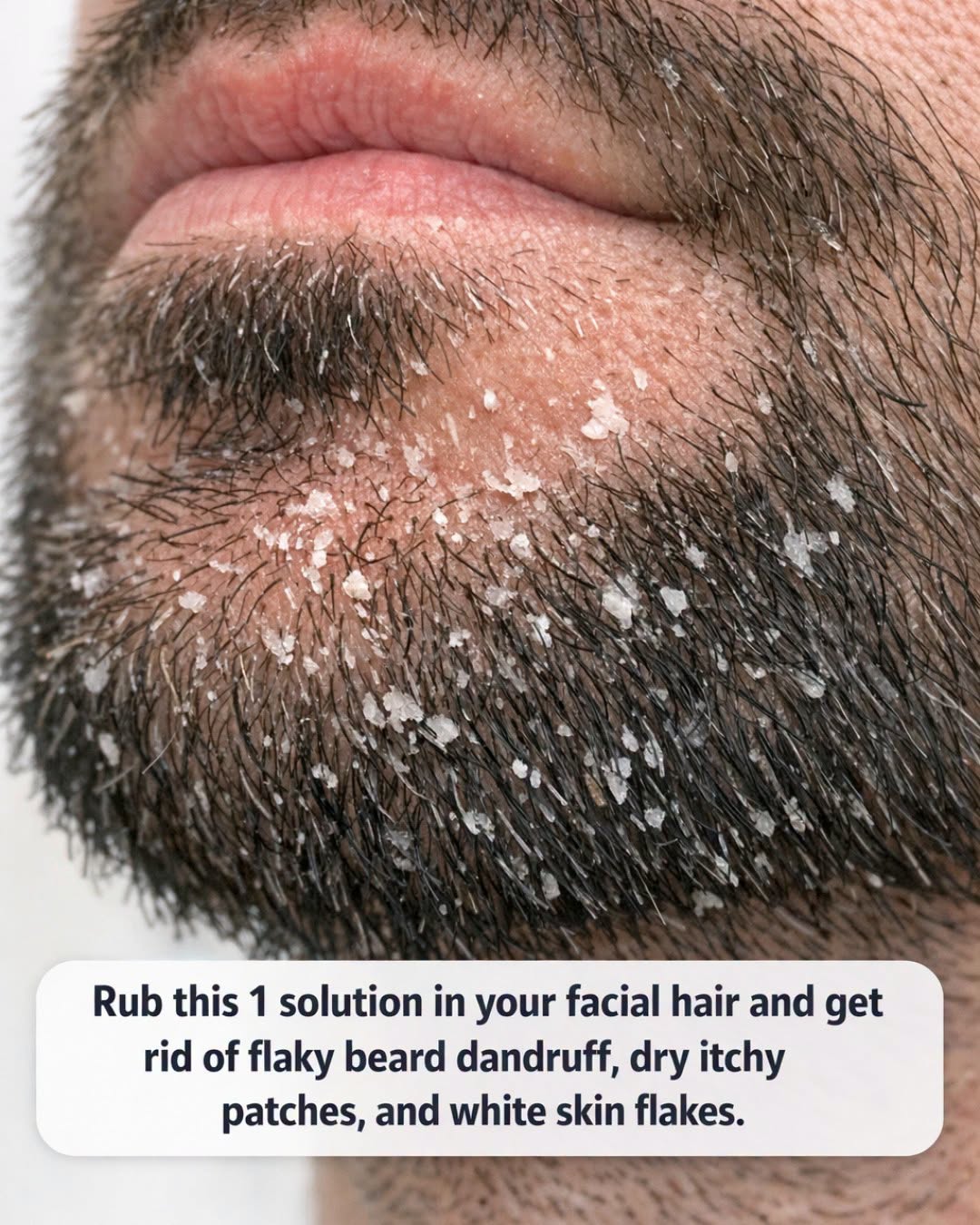
For a small batch, mix 1 tablespoon of jojoba oil, which is about 15 milliliters, with 3 drops of tea tree essential oil. That gives you a roughly 1% dilution, which is a sensible starting strength for the face. Stir or shake it in a clean amber glass bottle or a small dish right before use.
If you do not have jojoba oil, you can substitute 1 tablespoon of squalane oil or fractionated coconut oil. I would avoid heavy olive oil for this purpose because, while I love it in the kitchen, it can feel too dense on some faces and may leave the beard looking slick rather than clean. Castor oil is also usually too thick for many people’s facial skin.
4. How to apply it so it reaches the skin, not just the beard hair
Start with a clean, slightly damp beard. The best time is after washing or after a warm, not hot, shower. Pat the beard so it is about 80% dry. Place 3 to 6 drops of the oil mixture into your palm for a short beard, or 6 to 10 drops for a medium beard. Very full or long beards may need 10 to 14 drops.
Rub your hands together, then use your fingertips to work the oil down to the skin, especially along the chin, jawline, under the lower lip, and mustache area if that is where flakes collect. Spend about 30 to 45 seconds massaging the skin, not just smoothing the hair. Finish by combing the beard downward with a wide-tooth beard comb so the product distributes evenly.
5. How often to use it for the best results
For mild flaking, use the mixture once daily for 7 days, then reduce to 3 or 4 times per week as maintenance. For moderate itching and visible flakes, many people do well applying it nightly for 10 to 14 days. If your skin starts to feel greasy, reduce the amount before you reduce the frequency.
What I tell friends is this: give the routine a fair window. Skin turnover is not instant. You might notice less itching in 2 to 3 days, but visible flaking often takes 1 to 2 weeks to calm down. If there is zero improvement after 14 days, it is time to consider that the problem may be eczema, psoriasis, folliculitis, or a fungal issue that needs a different approach.
