
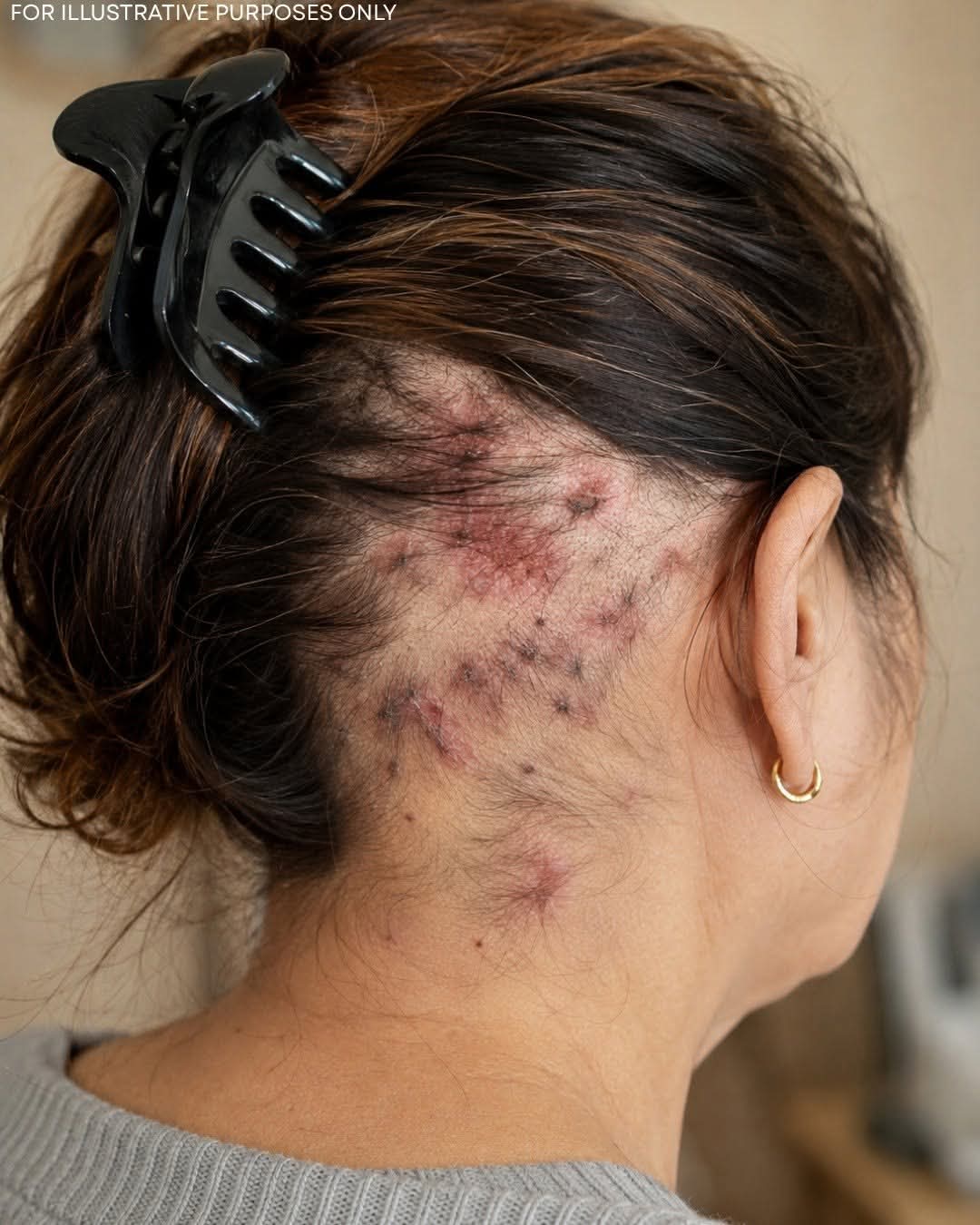
These Scalp Symptoms Shouldn’t Be Ignored
Have you ever noticed red patches, small bumps, dark spots, crusting, or irritated areas appearing on your scalp? While an occasional itchy scalp can be harmless, persistent redness or unusual changes beneath the hair may sometimes indicate an underlying skin condition that deserves attention.
The scalp contains thousands of hair follicles, oil glands, and sweat glands, making it particularly vulnerable to irritation and inflammation. When a hair follicle becomes inflamed, a condition known as folliculitis can develop. It may appear as small red or pink bumps around individual hairs and can sometimes cause itching, tenderness, burning, or discomfort. In some cases, the bumps may contain fluid or develop a crust as they heal.
There are many possible reasons for scalp irritation. Excessive sweating, friction, tight hairstyles, scratching, shaving, or the use of certain hair products can irritate the skin. Hair gels, dyes, oils, shampoos, and other styling products may also cause irritation or an allergic reaction in some people.
Another possibility is a fungal infection of the scalp, which can cause itching, scaling, inflammation, and sometimes areas of broken or thinning hair. Conditions such as eczema and psoriasis can also produce red, scaly, irritated patches on the scalp and may come and go over time.
Keeping the scalp damp for long periods can sometimes contribute to an uncomfortable environment, especially when combined with sweat, heat, or occlusive hair products. However, it is important to clarify that sleeping with wet hair by itself does not automatically cause a scalp infection. The actual cause depends on the individual and the condition affecting the skin.
If you frequently experience an itchy or irritated scalp, avoid scratching the affected area because scratching can damage the skin and increase the risk of secondary infection. Try to use gentle hair products and avoid applying multiple new products at once, particularly if you recently noticed the problem after changing your shampoo, conditioner, hair dye, or styling products.
Pay attention to other changes as well. Persistent pain, swelling, pus-filled bumps, thick crusting, bleeding, significant scaling, or patches of hair loss may require medical evaluation. A dermatologist can examine the scalp and determine whether the problem is caused by inflammation, infection, an allergic reaction, or another skin condition.
See more in the next page
