
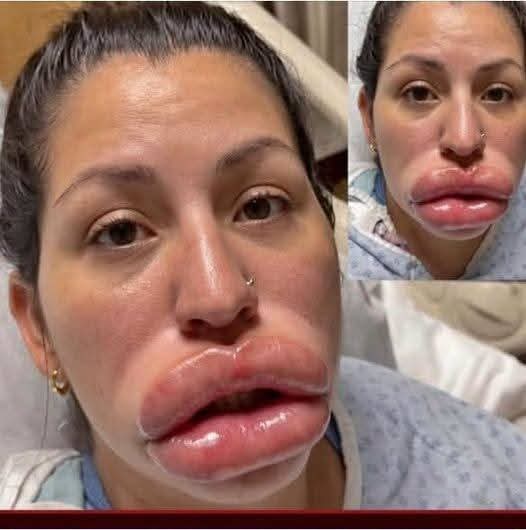
– Increasing redness and warmth accompanied by worsening pain
– Pus or other signs of infection
– Severe swelling involving the face or throat
– Difficulty breathing or swallowing
– Changes in vision
One particularly serious complication is vascular occlusion, which can occur if filler enters or compresses a blood vessel and interferes with blood flow.
This is considered a medical emergency and requires immediate professional assessment.
Why Choosing the Right Practitioner Matters
One of the biggest lessons from stories like Uorfi’s is the importance of choosing a qualified professional.
People sometimes choose cosmetic injections based mainly on price, social-media popularity, or attractive before-and-after photographs.
Those factors should not replace professional credentials and appropriate medical training.
Before undergoing treatment, a person should consider asking:
Who will perform the procedure?
Make sure the practitioner is appropriately qualified and legally permitted to perform injectable cosmetic procedures where you live.
What product will be used?
Ask for the exact product name and information about the product.
How much will be injected?
A responsible practitioner should be able to explain the treatment plan rather than simply promising a particular look.
What are the possible complications?
You should receive clear information about risks and what to do if something goes wrong.
What happens if I don’t like the result?
Knowing the correction plan beforehand can be extremely important.
Don’t Let Social Media Set Unrealistic Expectations
Social media can make cosmetic procedures appear effortless.
A short video might show someone receiving a few injections and immediately revealing a dramatically different appearance.
What viewers don’t always see are the consultation, swelling, bruising, follow-up appointments, possible corrections, and complications.
Uorfi’s decision to show the less glamorous side of the process gave people a glimpse of something rarely shown online: cosmetic procedures can sometimes be painful, unpredictable, and emotionally difficult.
A Bad Result Doesn’t Always Mean Permanent Damage
One reassuring aspect of many hyaluronic-acid filler complications is that correction may be possible.
Depending on the problem, a qualified professional may recommend waiting for swelling to resolve, monitoring the area, adjusting future treatment, or dissolving some or all of the filler.
However, there is no single solution for every situation.
The correct approach depends on the product used, how long ago it was injected, where it was placed, and what symptoms are present.
Trying to fix the problem by immediately injecting more filler can sometimes make the situation more complicated.
The Most Important Lesson
Uorfi’s experience is not evidence that all lip fillers are dangerous.
Millions of people undergo injectable cosmetic procedures, and many have satisfactory results.
Instead, her story demonstrates why people should understand that cosmetic procedures are not risk-free.
A treatment that takes only a few minutes can still involve anatomy, blood vessels, medication, sterile technique, and potential complications.
The fact that something is advertised as a “non-surgical” procedure does not mean that it should be treated casually.
Before Getting Lip Fillers, Ask Questions
Before making a decision, take time to research the practitioner and the procedure.
Don’t feel pressured to proceed because of a limited-time offer or because someone tells you that you need more volume.
A good consultation should give you enough information to make an informed decision.
If you are uncomfortable with the answers, it is completely reasonable to seek a second opinion.
After the Procedure, Follow Professional Instructions
Aftercare matters.
Your practitioner should provide instructions specific to the product and procedure used.
If something looks unusual or becomes progressively worse rather than gradually improving, contact the medical professional who performed the treatment or seek appropriate medical evaluation.
Do not attempt to inject, massage aggressively, puncture, or dissolve the filler yourself.
Uorfi’s Story Is a Reminder, Not a Diagnosis
The photographs circulating online can be dramatic, but photographs alone cannot tell us exactly what happened medically.
In Uorfi’s case, she publicly described her own experience and later shared her filler-dissolving procedure. News reports have documented her statements and the visible swelling associated with the procedure.
That does not allow anyone viewing a photograph to diagnose her or determine whether another person’s symptoms are the same.
Every patient and every filler treatment is different.
Final Thoughts
Lip fillers may seem like a simple beauty enhancement, but the experience of Uorfi Javed shows why people should approach them carefully.
Uneven results, lumps, migration, swelling, and other complications can occur. Some problems can be corrected, while rare complications can require urgent medical treatment.
The safest approach is not to avoid all cosmetic procedures automatically. Instead, it is to make informed decisions, choose an appropriately qualified medical professional, understand the product being used, and know the warning signs that require medical attention.
Beauty treatments may be temporary.
Your health and safety should never be treated as temporary.
