
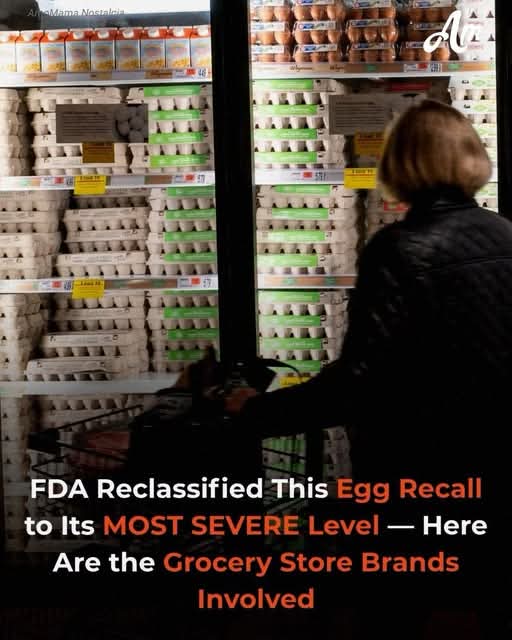
Nearly 19 Million Eggs Recalled Amid Salmonella Contamination Concerns
A major food-safety alert is putting eggs back in the spotlight after nearly 1.6 million dozen eggs — more than 19 million individual eggs — were recalled across parts of the United States because of possible contamination with Salmonella.
The recall has attracted widespread attention because the eggs were sold through well-known grocery chains, meaning many consumers may have purchased affected cartons without realizing they were part of the recall.
However, officials emphasize an important point: not every egg sold at the affected stores is included. Only specific products, dates and identifying codes are covered by the recall.
Why were the eggs recalled?
The eggs were voluntarily recalled because they may be contaminated with Salmonella Enteritidis, a type of bacteria that can cause foodborne illness.
Salmonella contamination can be difficult for consumers to detect because contaminated eggs may look, smell and taste completely normal. That means simply inspecting an egg before eating it is not enough to determine whether it is safe.
The recall therefore focuses on specific cartons that can be identified using information printed on the packaging.
Millions of eggs potentially affected
The recall involves approximately 1.6 million dozen eggs, representing more than 19 million individual eggs.
The products were distributed through retailers and food-service channels in several states. Some affected products were available at Kroger and Brookshire Grocery locations, among other retailers.
Because eggs are a common household food and are frequently used in breakfasts, baking and prepared meals, consumers are being encouraged to check their refrigerators rather than assuming that their eggs are safe simply because they were purchased recently.
How can consumers identify recalled eggs?
Consumers who purchased eggs from potentially affected stores should examine the side or end of the carton.
The recalled cartons may contain identifying information including plant codes such as:
P-1950 or 0840962
The affected cartons may also carry Julian dates ranging from 157 through 184, with sell-by or best-by dates falling within the specified recall period.
These details are important because the recall does not apply to every carton from the same store or brand.
A shopper might have two cartons of eggs from the same supermarket, for example, while only one is included in the recall.
Don’t rely only on the brand name
One of the biggest mistakes consumers can make is assuming that a brand name alone determines whether an egg carton is affected.
Several brands may have been involved in the distribution of recalled eggs, but the specific plant code and date information are what consumers should check.
If the carton matches the recalled identification information, consumers should not use the eggs even if they appear perfectly fresh.
What is Salmonella?
Salmonella is a type of bacteria that can cause an intestinal infection known as salmonellosis.
Common symptoms can include:
Continue reading on the next page
