
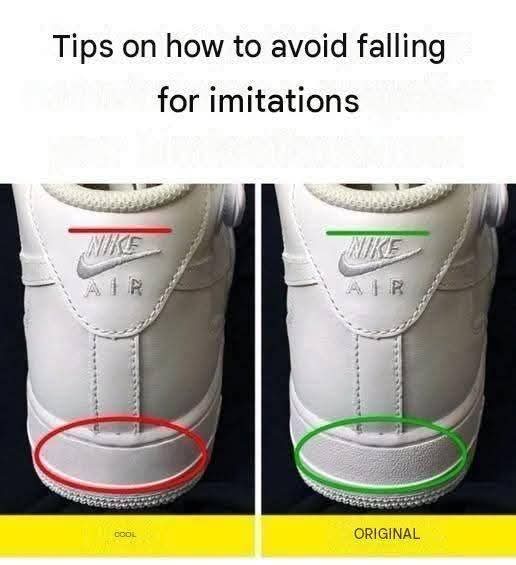
How to Recognize Authentic Shoes: Signs That Help You Spot Fakes
Buying a new pair of shoes can be exciting, especially when you find a popular brand at what seems like a great price. But there is one problem: counterfeit shoes have become increasingly difficult to distinguish from genuine products.
A fake pair may look almost identical at first glance, but small details can often reveal the truth. From the stitching and materials to the packaging, labels, and product codes, there are several things you can check before spending your money.
1. Examine the Overall Quality
One of the first things to look at is the overall craftsmanship.
Authentic shoes from established brands generally have consistent manufacturing quality. The materials should feel appropriate for the model, and the construction should look clean and carefully finished.
Pay attention to:
– Loose or uneven threads
– Excessive glue around the sole
– Poorly finished edges
– Uneven panels
– Scratches or imperfections
– Materials that feel unusually cheap or thin
One small imperfection does not automatically mean the shoes are fake, because genuine products can occasionally have manufacturing flaws. However, several quality problems together should make you more cautious.
2. Check the Stitching Carefully
Stitching is one of the easiest details to inspect.
Look closely at the seams around the upper part of the shoe, tongue, heel, and sides. The stitches should generally be straight, consistent, and evenly spaced.
Counterfeit manufacturers may reproduce the general appearance of a shoe without paying the same attention to small construction details.
If the stitching looks rushed, crooked, irregular, or noticeably different from official product photographs, investigate further.
3. Inspect the Logo
The logo is another important detail.
Compare the logo on the shoes with photographs from the brand’s official product listings. Look at the:
– Shape
– Font
– Position
– Size
– Spacing
– Embroidery or printing quality
A fake shoe may have a logo that looks correct from a distance but differs slightly in proportions, lettering, or placement.
Small differences can be particularly noticeable when you compare the suspected pair directly with an authentic version of the same model.
4. Look at the Label Inside the Shoe
Many shoes contain a label on the inside that includes information such as the size, country of manufacture, production details, and a product or style code.
Check whether the information looks professionally printed and consistent.
The label should not contain obvious spelling mistakes, strange fonts, poor printing, or information that conflicts with the box or product description.
Remember that the exact information and label format vary between brands and models, so it is better to compare it with reliable photographs of the same model rather than relying on a generic rule.
5. Verify the Product or Style Code
A product code can be particularly useful when checking branded footwear.
Look for the code on the shoe and compare it with the code shown on the box or the brand’s product information.
If the codes are supposed to correspond but are completely different, that deserves further investigation.
However, a matching code by itself does not guarantee authenticity. Counterfeit products can sometimes copy legitimate codes from genuine products.
Think of the code as one piece of evidence, not absolute proof.
6. Examine the Box and Packaging
Don’t forget about the packaging.
Look at the shoe box, labels, barcode, printing quality, and other included materials.
A genuine package should normally have clean and professional printing. Be suspicious of:
– Blurry text
– Incorrect spelling
– Poor-quality labels
– Strange fonts
– Missing information
– Incorrect model names
– Damaged or unusually cheap-looking packaging
Continue reading on the next page
