
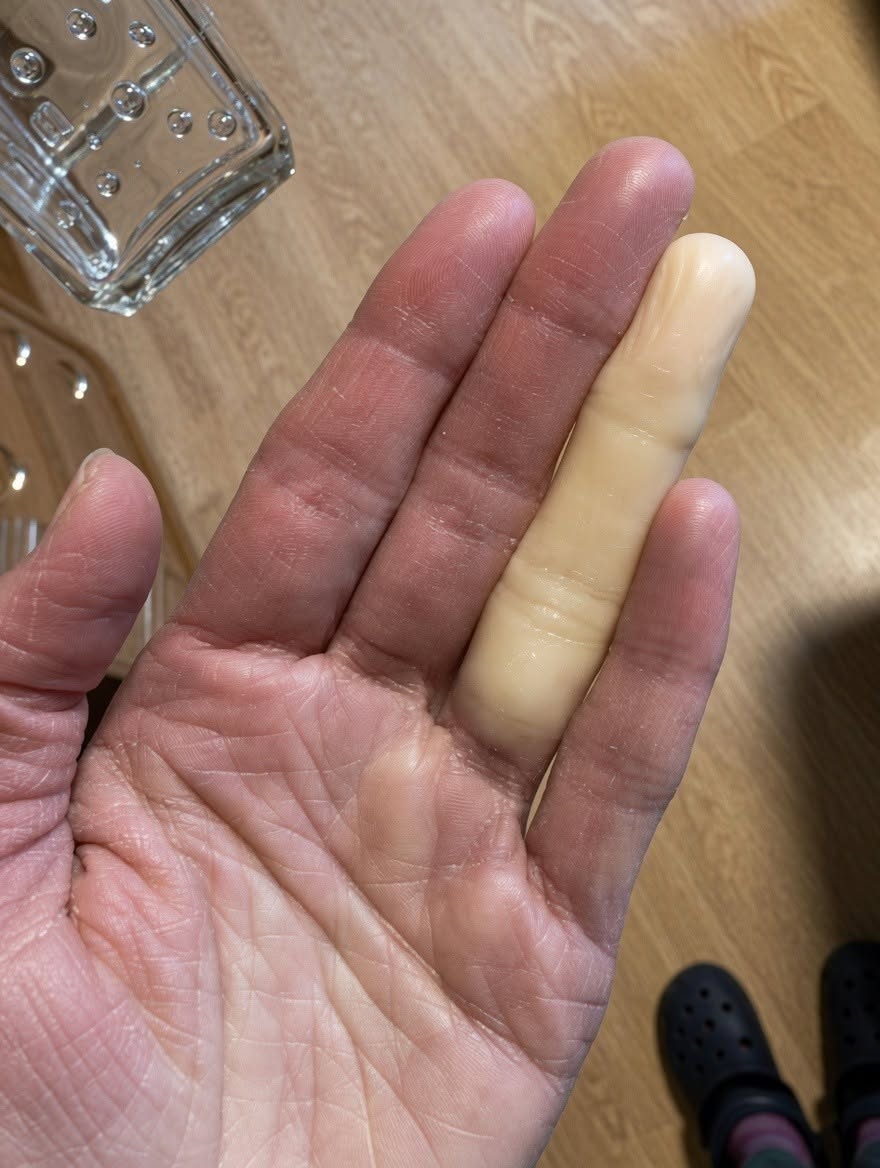
The Impact of Low Air Conditioning and Chilly Room Environments
One of the most frequent contemporary culprits is the improper management of indoor climate control. Sleeping with an air conditioning unit set to an excessively low temperature—or positioning your bed directly beneath a continuous, downward stream of cold air—can cool the skin surface dramatically over several hours.
Because your metabolic rate naturally drops and your core body temperature lowers slightly during deep sleep cycles, your extremities become highly vulnerable to external temperature drops. A continuous chilly draft blowing over an exposed hand resting outside the blankets is often all it takes to activate a localized vascular spasm, leaving a finger looking entirely bloodless by morning.
Physical Compression and Awkward Sleep Postures
Another highly common reason for localized numbness, tingling, and paleness upon waking is physical compression. If you roll over onto your arm or tuck your hand tightly beneath your body, pillow, or partner during sleep, the sustained weight can compress both the local nerves and peripheral blood vessels.
While resting on a limb typically causes the classic “pins and needles” sensation (temporary nerve compression), it can also physically impede surface-level blood flow. When combined with a cool bedroom environment, this physical pressure makes it even easier for sensitive micro-vessels to narrow fully.
3. Practical Strategies for Maintaining Optimal Nighttime Circulation
Preventing these uncomfortable morning surprises involves creating an optimal sleeping environment and adopting mindful evening habits that encourage steady, uninterrupted peripheral blood flow.
Optimization of Bedroom Climate Control
Managing your ambient room temperature is the single most effective way to protect sensitive fingers and toes from overnight chills.
- Set Moderate Temperatures: Instead of cooling your bedroom excessively, aim to keep your air conditioning set to a stable, comfortable range between 24°C and 26°C.
- Redirect Air Currents: Adjust the louvers or directional flaps on your air conditioning unit so that the cold air circulates evenly along the ceiling or walls rather than blowing directly down onto your bed.
- Utilize Programmable Timers: If your unit has a sleep mode or an automatic timer, program it to turn off or slightly raise the temperature a few hours after you fall asleep, matching your body’s natural metabolic changes.
