
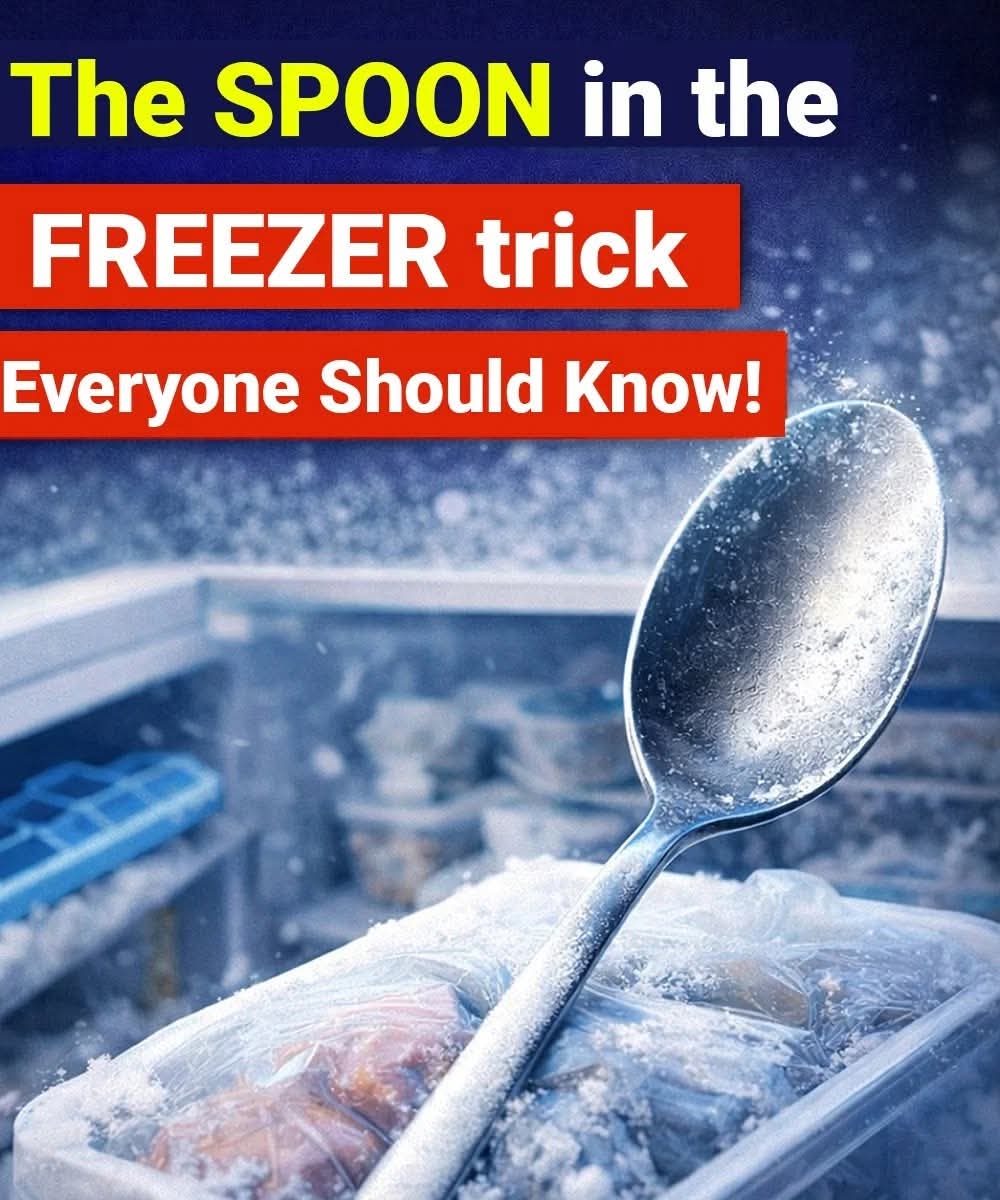
For example, if chewing gum gets stuck to fabric, cooling the affected area can make the gum less soft and easier to remove carefully.
The exact method depends on the material, so it’s always better to test a cleaning approach on an inconspicuous area first.
🧊 Could a Spoon Tell You If Your Freezer Lost Power?
This is one of the more interesting claims associated with the freezer-spoon trick.
Some people use a frozen object as a rough indication that something has thawed and refrozen. However, a spoon isn’t a reliable food-safety test.
If you’re concerned that your freezer stopped working, the safest option is an appliance thermometer. Food-safety guidance recommends keeping a freezer at about 0°F (-18°C) or below.
A spoon might give you a clue that something unusual happened, but it cannot tell you how long food was at an unsafe temperature.
⚠️ Don’t Put Extremely Cold Metal Directly on Your Skin
There’s an important safety point that viral versions of this trick sometimes overlook.
A spoon that has been sitting in a freezer can become extremely cold. If it feels painful, don’t put it directly against your skin. Allow it to warm slightly first.
Never use intense cold on irritated or damaged skin, and stop immediately if you experience pain, burning, or numbness.
For the eye area especially, a cool—not painfully cold—spoon is the better approach.
🥄 So, Is It Worth Trying?
Absolutely—if you treat it as a simple household trick rather than a miracle solution.
A chilled spoon may provide a quick, temporary way to make puffy eyes look less swollen, and cold can be useful for certain sticky household messes.
But when it comes to food safety, don’t rely on a spoon. A freezer thermometer is much more dependable.
Sometimes the most useful household tricks aren’t complicated at all. A simple spoon, a little cold, and the right situation may be all you need.
