
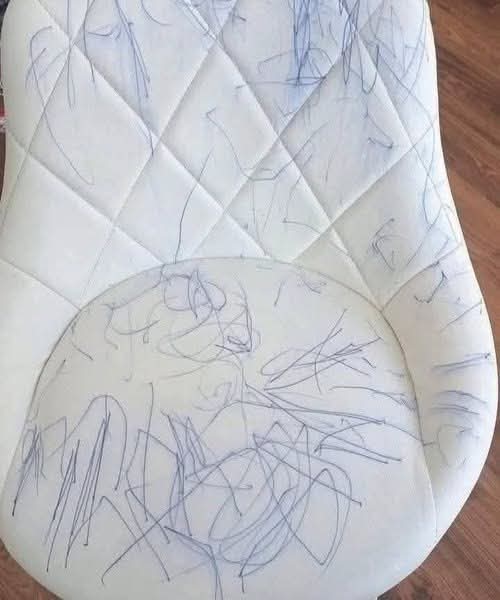
A loose screw may be easy to fix.
A damaged cushion may be replaceable.
A scratch may be repairable.
Even a broken component may sometimes be restored by someone with the right skills.
If the chair has sentimental value, professional restoration may be worth considering.
Something that initially looks completely destroyed may actually be repairable.
Set Clear Rules for the Future
If your nephew will continue visiting your home, it may help to establish clear boundaries.
Children usually respond better to specific instructions than vague warnings.
Instead of saying:
“Don’t touch my things.”
say:
“Please don’t climb on this chair.”
Or:
“Ask me before using anything in this room.”
Clear rules make it easier for a child to understand exactly what is expected.
Don’t Humiliate Him
Being angry is understandable.
You may have paid a lot of money for the chair. Perhaps it has sentimental value. Perhaps you simply don’t like people touching your belongings without permission.
Those feelings are valid.
But humiliating the child won’t repair the chair.
Avoid insulting him, calling him names, threatening him, or embarrassing him in front of other people.
There is a major difference between correcting behavior and attacking someone’s character.
Saying:
“What you did was wrong.”
teaches a lesson.
Saying:
“You’re a bad kid.”
can create shame without explaining what the child should do differently next time.
What If He Lies or Refuses to Admit It?
If you have clear evidence that your nephew damaged the chair but he refuses to admit it, try not to turn the situation into an endless argument.
Give him an opportunity to explain himself.
Tell him what you know and why you’re concerned.
If necessary, allow his parents to handle the disciplinary side of the situation.
If lying, deliberate destruction, or ignoring boundaries becomes a repeated pattern, then the issue is bigger than one damaged chair.
That is when a more serious conversation with the parents may be appropriate.
Remember What Matters Most
A damaged chair can be repaired.
If it can’t be repaired, it can potentially be replaced.
But the opportunity to teach a child how to respect other people’s belongings is much more valuable.
Children are still learning how the world works. They make mistakes, test boundaries, and sometimes make decisions without understanding the consequences.
Adults have the responsibility to teach them.
That doesn’t mean allowing bad behavior.
It means correcting it in a way that helps the child understand what went wrong and what should happen differently next time.
The Chair Is Only Part of the Story
The real question isn’t simply:
“How do I fix my chair?”
It’s also:
“What can my nephew learn from what happened?”
If the damage was accidental, he can learn to be more careful.
If he was playing dangerously, he can learn about safety.
If he deliberately damaged the chair, he can learn about responsibility and respecting other people’s property.
And if the same behavior keeps happening, the adults can work together to establish stronger boundaries.
The furniture may be the immediate problem, but the lesson can last much longer.
So before losing your temper, take a breath.
Find out what happened.
Listen to the child.
Talk to his parents if necessary.
Repair the chair if possible.
And most importantly, use the situation as an opportunity to teach responsibility rather than creating unnecessary resentment within the family.
Sometimes a broken chair isn’t just a problem to solve.
It can also become a lesson that a child remembers for years.
