
Cooking fish thoroughly provides an additional level of protection against many parasites.
Wash Your Hands
Good hand hygiene is especially important after using the bathroom and before preparing or eating food.
This is particularly important for preventing the spread of Taenia solium eggs.
Wash Food Properly
Fresh fruits and vegetables should be handled and washed appropriately, particularly when they may be eaten raw.
Pay Attention to Sanitation
Access to clean water, proper sewage disposal, and good sanitation practices are important in reducing transmission of several parasitic infections.
When Should You Talk to a Doctor?
You should consider speaking with a healthcare professional if you notice possible worm segments in your stool, develop persistent digestive symptoms after eating potentially contaminated food, or experience unexplained weight loss or other concerning symptoms.
Medical evaluation is especially important if there is a possibility of exposure to Taenia solium, because the parasite can cause conditions beyond an intestinal infection.
Do not assume that every unusual object found in stool is a parasite, and don’t attempt to remove a suspected worm yourself.
The Bottom Line
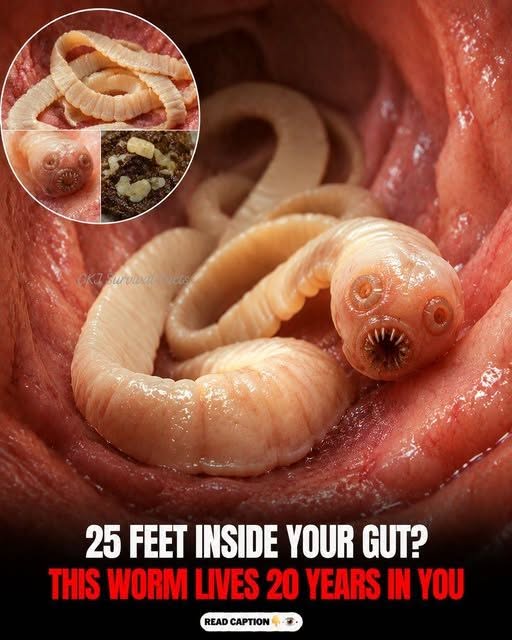
Tapeworms are real intestinal parasites capable of reaching impressive lengths, and some species can survive in the human intestine for years without causing obvious symptoms.
They can be acquired through different routes depending on the species, including eating raw or undercooked infected meat or fish and, in the case of Taenia solium, ingesting parasite eggs through contaminated food or poor hygiene.
The good news is that tapeworm infections are preventable and treatable.
Cooking meat and fish properly, practicing good hand hygiene, maintaining good sanitation, and seeking medical advice when an infection is suspected can significantly reduce the risks.
And while the idea of a parasite several feet long living inside the intestine is certainly disturbing, the most important takeaway isn’t the frightening number.
It’s knowing how these infections happen, how to prevent them, and when to get tested.
