
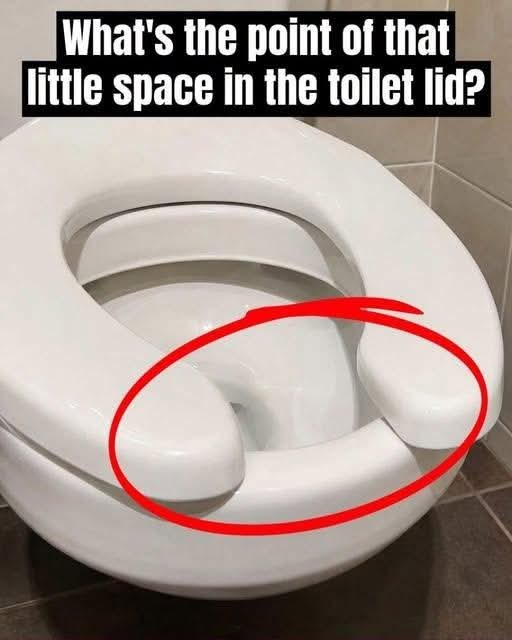
One common misconception is that the U-shaped seat somehow makes a public toilet completely safe from germs.
It doesn't.
The seat can still become contaminated, especially when many people use the same restroom.
The most important protection is still basic hygiene.
Wash your hands thoroughly with soap and water after using the restroom.
Avoid touching your face before washing your hands, particularly your mouth, nose, and eyes.
If the toilet seat is visibly dirty, it's reasonable to choose another stall when possible or clean the surface before use.
Why don't all toilets have the U-shape?
You may have noticed that toilets in private homes usually have a completely closed seat.
That's because a home bathroom has different requirements.
The toilet is generally used by a small number of people, cleaning is controlled by the household, and there is less need to design the seat specifically for heavy public use.
Homeowners also tend to prioritize comfort, appearance, and personal preference.
That's why round, elongated, soft-close, heated, bidet-compatible, and other toilet-seat designs are common in private bathrooms.
The design can also improve accessibility
Another consideration is accessibility.
Public restroom fixtures need to accommodate a wide variety of users.
The open-front design can provide additional clearance at the front of the seat and may make certain types of personal hygiene easier.
However, the U-shape itself should not be confused with accessibility compliance. Accessible restrooms involve many other factors, including stall dimensions, grab bars, toilet height, door clearance, sink placement, and maneuvering space.
A small design with a big purpose
The next time you see a U-shaped toilet seat, you may look at it differently.
What initially appears to be an unusual or incomplete toilet seat is actually the result of decades of thinking about hygiene, maintenance, comfort, and public use.
The missing section at the front isn't an accident.
It's designed to reduce unnecessary contact, make cleaning and maintenance more practical, and provide a functional solution for busy public restrooms.
And there's a simple lesson behind it:
Sometimes the smallest details in everyday objects have a very practical reason for being there.
That strange-looking gap in a public toilet seat is one of those details that most people never think about—until they finally learn why it exists.
